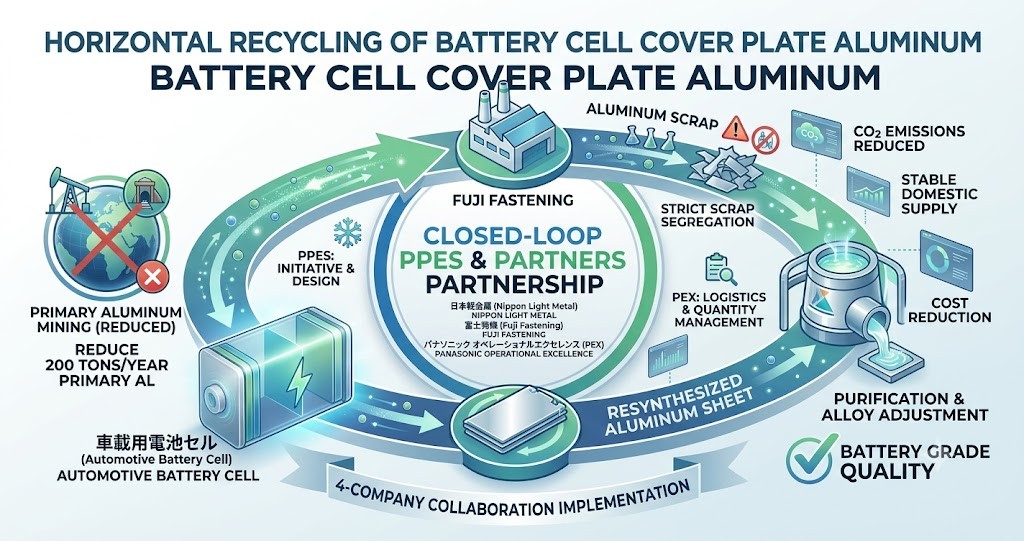
車載用蓄電池の需要急増に伴い、主要材料であるアルミニウムの環境負荷低減や安定的かつ持続可能な調達体制の構築が自動車・電池産業における重要な課題となっています。こうした背景のもと発表された、車載電池用アルミ材の水平リサイクルに関する取り組みの概要は以下の通りです。
車載電池用アルミ材の水平リサイクル実現について
1. 発表概要
プライムプラネットエナジー&ソリューションズ株式会社(PPES)、日本軽金属株式会社、冨士発條株式会社、パナソニック オペレーショナルエクセレンス株式会社(PEX)の4社は、車載用電池セルの「封口板」製造時に生じるアルミスクラップを、再び同一の電池部品材料として再利用する「水平リサイクル(クローズドループ型資源循環)」スキームを構築・実装しました。
2. 背景と技術的課題
アルミニウムは異物や他材質が混入すると品質維持が困難になる特性を持ちます。高い品質管理基準が求められる車載電池用途への再利用には、スクラップ発生時から回収、運搬、再資源化の全行程にわたる厳格な管理が必要となるため、従来は異用途へのダウンリサイクルが主流でした。今回の取り組みでは、サプライチェーン上の4社が密接に連携することで高精度な品質管理を実現し、同一部品へのリサイクルを可能にしました。
3. 各社の主な役割
- PPES:構想の立案、関係各社への参画呼びかけ、全体スキーム設計の主導
- 冨士発條:製造工程におけるスクラップの徹底した分別・管理と安定供給
- 日本軽金属:回収スクラップの再溶解・成分調整、電池グレードの品質確保および再資源化
- PEX:スクラップの回収・流通管理、支給単価方式による価格安定化および数量管理
4. 期待される効果と今後の展開
- 環境負荷の低減:アルミ新地金の使用量を年間約200トン削減。採掘や精錬工程に由来するCO2排出などの環境負荷を大幅に抑えます。
- コスト削減と資源安保:新地金の購入抑制による原材料コスト削減に加え、国内循環を通じた資源調達リスクの緩和に寄与します。
- 今後の展開:4社は得られた知見を活用し、対象材料や適用範囲の拡大、サプライチェーン全体での資源循環推進を目指します。
【関連情報】背景と業界動向
- 水平リサイクル(クローズドループ)の重要性:使用済み製品や製造スクラップを同等の品質・用途の製品へ戻す手法です。アルミニウムは新地金を新しく精錬する際に膨大な電気エネルギー(「電気の缶詰」と称されるほど)を消費しますが、リサイクル材の再溶解に必要なエネルギーは新地金製造時の約3パーセント程度と極めて低いため、脱炭素化(GX)へのインパクトが非常に大きい技術です。
- 電池業界における環境・規制動向:欧州の「欧州電池規則(EU Battery Regulation)」をはじめ、世界的にバッテリーのライフサイクル全体におけるCO2排出量(カーボンフットプリント)の開示やリサイクル材の使用割合規制が強化されています。車載電池の封口板という精密な部材で水平リサイクルを実現したことは、グローバルな環境規制対応やサプライチェーンの競争力強化において重要な意味を持ちます。
出典:https://www.jiji.com/jc/article?k=000000002.000186639&g=prt
Four Companies, Including PPES, Establish and Implement a Closed-Loop Recycling Scheme for Battery-Grade Aluminum Scrap
With the rapid surge in demand for automotive batteries, reducing the environmental impact of aluminum—a primary material—and establishing a stable, sustainable procurement system have become critical challenges for the automotive and battery industries. Against this backdrop, the overview of the initiative regarding the closed-loop recycling of aluminum materials for automotive batteries is as follows:
Implementation of Closed-Loop Recycling for Automotive Battery Aluminum Materials
- Announcement Overview Four companies—Prime Planet Energy & Solutions, Inc. (PPES), Nippon Light Metal Co., Ltd., Fuji Hatsujo Manufacturing Co., Ltd., and Panasonic Operational Excellence Co., Ltd. (PEX)—have established and implemented a horizontal recycling (closed-loop resource circulation) scheme. This system reuses aluminum scrap generated during the manufacturing of sealing plates for automotive battery cells as material for the exact same battery components.
- Background and Technical Challenges Aluminum properties make maintaining quality difficult if contamination or foreign materials are introduced. Because reuse in automotive battery applications demands stringent quality control standards, rigorous management is required across all stages—from scrap generation and collection to transportation and recycling. Consequently, downcycling into different applications was previously the standard practice. In this initiative, close collaboration among the four supply chain companies achieved high-precision quality management, enabling recycling back into identical components.
- Key Roles of Each Company PPES: Formulated the initiative concept, invited participating companies, and led the overall scheme design. Fuji Hatsujo Manufacturing: Ensured thorough sorting and management of scrap during manufacturing processes, providing a stable supply suitable for recycling. Nippon Light Metal: Remelted and adjusted the composition of collected scrap, recycling it into aluminum material that meets battery-grade quality standards. PEX: Managed scrap collection and distribution, stabilized pricing through a client-furnished material model, and tracked quantities to support continuous horizontal recycling.
- Expected Benefits and Future Outlook Environmental Impact Reduction: Reduces the use of primary aluminum ingots by approximately 200 metric tons per year. This significantly lowers environmental impacts, including CO2 emissions from mining and refining. Cost Reduction and Resource Security: Lowers raw material costs by curbing primary ingot purchases and helps mitigate resource procurement risks through domestic resource circulation. Future Outlook: Leveraging the insights gained from this effort, the four companies aim to expand the target materials and scope of application, promoting resource circulation across the entire supply chain.
[Related Information] Background and Industry Trends Importance of Closed-Loop Recycling: This method returns used products or manufacturing scrap to products of equivalent quality and application. Primary aluminum smelting consumes vast amounts of electrical energy, but remelting recycled material requires only about 3 percent of the energy needed for primary ingot production, making it a technology with a major impact on decarbonization (Green Transformation / GX). Environmental and Regulatory Trends in the Battery Industry: Globally, regulations regarding battery lifecycle CO2 emissions (carbon footprint) disclosures and recycled content requirements are tightening, notably led by the EU Battery Regulation. Achieving closed-loop recycling for precise components like automotive battery sealing plates holds significant strategic value for global regulatory compliance and strengthening supply chain competitiveness.


コメント