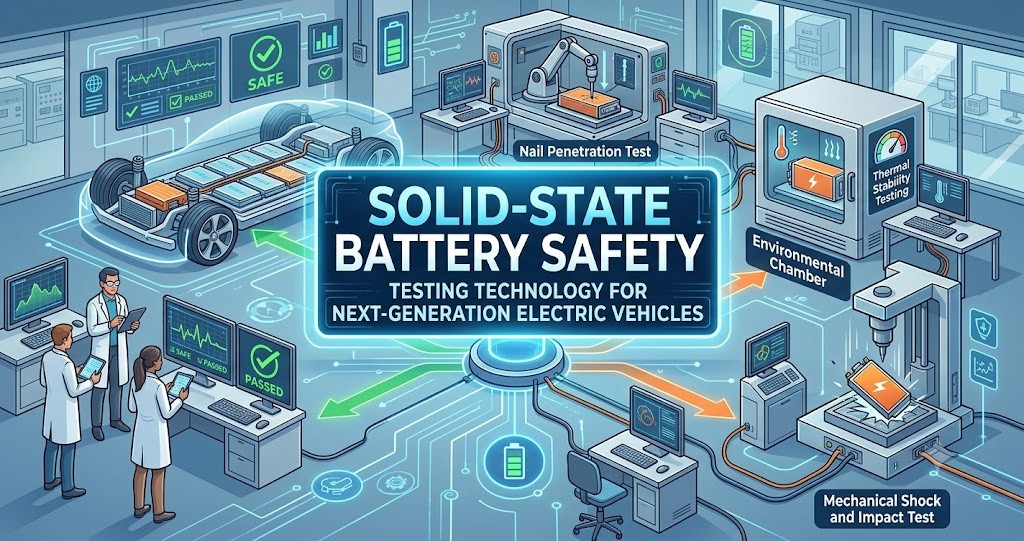
次世代の自動車用バッテリーとして期待を集める固体電池は、高いエネルギー密度を持つ一方で、産業規模での実用化に向けては厳格な安全性基準のクリアと圧力管理などの技術的課題が壁となっていました。
このような背景の中、フランスの固体電池メーカーであるBlue Solutions社と、オーストリアに本社を置く世界的なパワートレイン開発・検証企業のAVL社は、次世代全固体電池(リチウム金属負極)の安全性向上と量産化を目的とした共同評価プログラムを成功裏に完了させました。今回の提携成果は、設計の初期段階からシミュレーション技術を用いて安全性を組み込むアプローチの有効性を示しており、全固体電池の市場投入と新エネルギー車(NEV)の安全性規格対応を大幅に加速させる画期的な出来事です。
発表内容の要点まとめ
1. 共同プログラムの成果と目的
- 目的:急速に厳格化する運用・規制条件に対応するため、セルおよびシステムレベルでの圧力管理や機械的完全性を含めた固体電池の安全挙動を予測・検証すること。
- 役割分担:Blue Solutions社のリチウム金属負極を用いた固体電池技術と、AVL社のシミュレーション・検証・安全性評価技術を融合。
2. 「熱伝播(サーマル・プロパゲーション)ゼロ」への道筋
- 熱暴走の防止:高度なモデリングと圧力を考慮したアーキテクチャ設計により、バッテリー安全性における極めて高い目標である「熱伝播(あるセルの熱暴走が他セルへ連鎖すること)リスクの排除」に向けた道筋を実証。
- 厳格な安全基準への適合:中国の新エネルギー車安全規格である「GB 38031-2025」の要件を完全に満たす試験・シミュレーション結果を獲得。
3. 高エネルギー密度と安全性の両立
- 性能比較:十分な安全マージンを確保した上で、同等のNMC(ニッケル・マンガン・コバルト)リチウムイオン電池パックと比較して以下の性能向上を達成。
- 体積エネルギー密度:最大25パーセント向上
- 重量エネルギー密度:13パーセント向上
4. 今後の展望と両社幹部のコメント
- 実用化への手応え:両社は主要な国際会議や業界イベントで今回の成果を発表予定。
- Blue Solutions(オリヴィエ・コーモン氏):AVLとの協業により、製造経験と専門知識が融合し、最も厳しい安全要件を満たしつつ市場ニーズに合致したソリューションが完成したと評価。
- AVL(ポール・シフベンカー氏):次世代化学の安全特性に対する理解が深まり、高度なシミュレーションモデルを用いた体系的な安全設計手法を確立できたとコメント。
関連情報・補足解説
- Blue Solutions社の技術的背景: Blue Solutions社は、フランスの巨大複合企業ボロレ(Bollore)グループ傘下の企業であり、金属リチウムを負極に使用したポリマー系全固体電池(LMP:Lithium Metal Polymer)をすでに電気バス向けなどで商用化した実績を持つ、数少ない全固体電池の量産企業です。
- 中国の安全規格「GB 38031-2025」の重要性: GB 38031は、世界最大のEV市場である中国における「新エネルギー車用駆動バッテリーの安全要求」を定めた国家標準規格です。最新の2025年版要件を満たしていることは、同社の全固体電池が中国市場をはじめとする世界の厳しい安全規制をクリアしてグローバル展開できる水準にあることを意味します。
- 全固体電池における「圧力管理」の重要性: リチウム金属負極を使用する全固体電池は、充放電に伴う負極の膨張・収縮(デンドライトの発生など)を抑えるため、セル外部から均一な圧力をかけ続ける必要があります。今回のプログラムで圧力管理や機械的完全性が重点的に検証されたのは、実車搭載時にバッテリーパックの構造をコンパクトに保ちつつ耐久性を確保するための不可欠なプロセスだからです。
[Next-Generation Batteries] Toward Achieving the “Ultimate Safety Goal” for Solid-State Batteries: Results of the Partnership Between Blue Solutions and AVL
While solid-state batteries hold great promise as next-generation automotive batteries due to their high energy density, technical hurdles such as meeting strict safety standards and managing internal pressure have posed significant barriers to industrial-scale commercialization.
Against this backdrop, French solid-state battery manufacturer Blue Solutions and Austria-headquartered AVL, a global powertrain development and verification firm, successfully completed a joint evaluation program aimed at enhancing the safety and mass production readiness of next-generation all-solid-state batteries featuring lithium-metal anodes. The results of this partnership demonstrate the effectiveness of incorporating safety from the initial design phase through simulation technologies, marking a breakthrough event that will significantly accelerate the market deployment of all-solid-state batteries and their compliance with safety standards for New Energy Vehicles (NEVs).
Summary of Key Announcement Points
1. Results and Objectives of the Joint Program
- Objective: Predict and verify the safety behavior of solid-state batteries under rapidly tightening operational and regulatory conditions, including pressure management and mechanical integrity at both the cell and system levels.
- Division of Roles: Combined Blue Solutions’ solid-state battery technology utilizing lithium-metal anodes with AVL’s expertise in simulation, validation, and safety assessment.
2. Path Toward “Zero Thermal Propagation”
- Preventing Thermal Runaway: Through advanced modeling and pressure-aware architectural design, the study demonstrated a clear path toward eliminating thermal propagation risk (the cascading spread of thermal runaway from one cell to others), widely considered the ultimate goal in battery safety.
- Compliance with Strict Safety Standards: Achieved testing and simulation results that fully meet the requirements of China’s safety standard for new energy vehicles, GB 38031-2025.
3. Balancing High Energy Density and Safety
- Performance Comparison: While maintaining an ample safety margin, the technology achieved the following performance improvements compared to equivalent NMC (nickel manganese cobalt) lithium-ion battery packs:
- Volumetric energy density: Up to 25 percent increase
- Gravimetric energy density: 13 percent increase
4. Future Outlook and Executive Comments
- Commercialization Momentum: Both companies plan to present their findings at major international conferences and industry events.
- Blue Solutions (Olivier Caumont): Noted that collaborating with AVL merged manufacturing experience with specialized expertise, producing a solution that meets the strictest safety requirements while aligning perfectly with market needs.
- AVL (Paul Schiffbaecker): Commented that the partnership deepened understanding of the unique safety characteristics of next-generation chemistry and established a systematic safety design methodology using advanced simulation models.
Related Information and Supplementary Commentary
- Technical Background of Blue Solutions: Blue Solutions is a subsidiary of the French conglomerate Bollore Group and one of the few mass-producers of all-solid-state batteries, having already commercialized lithium-metal polymer (LMP) batteries for applications such as electric buses.
- Significance of China’s “GB 38031-2025” Safety Standard: GB 38031 is the national standard defining safety requirements for traction batteries of new energy vehicles in China, the world’s largest EV market. Meeting the latest 2025 edition requirements indicates that the company’s solid-state battery technology has reached a level capable of satisfying rigorous global safety regulations for worldwide deployment.
- Importance of “Pressure Management” in Solid-State Batteries: Solid-state batteries using lithium-metal anodes require consistent pressure applied externally to suppress the expansion and contraction of the anode during charge and discharge cycles (such as dendrite formation). The intensive verification of pressure management and mechanical integrity in this program was an essential step toward ensuring durability while keeping the battery pack structure compact for vehicle integration.

コメント