インドのEV二輪車市場でトップシェアを誇るオラ・エレクトリックは、今後数四半期以内に営業コストを最大50%削減し、早期の黒字化を目指す方針を明らかにしました。
以下に、最新の決算内容と、同社が直面している課題・戦略を整理します。
1. 第3四半期決算の要点:赤字幅は縮小
売上は減少したものの、製造コストの抑制により損失額は改善傾向にあります。
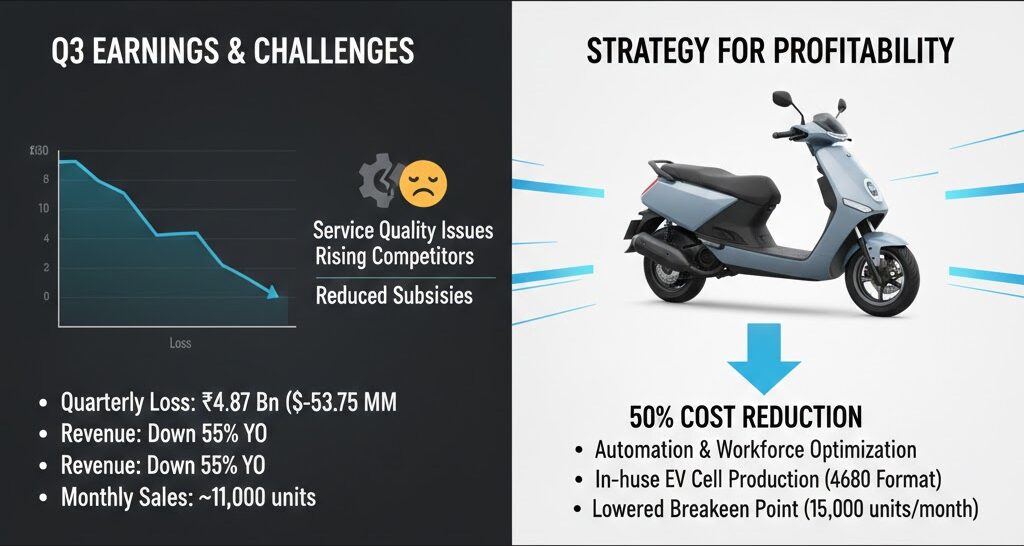
- 四半期損失: 48億7000万ルピー(約5375万ドル)。前年同期比で赤字幅が縮小。
- 売上の現状: 12月までの3か月間で売上高は61%減少、収益は55%減少。
- 販売台数: 12月四半期の平均月間売上高は1万1000台。
2. 「コスト50%削減」に向けた具体的戦略
同社は、営業費用を現在の48億4000万ルピーから、25億ルピー~30億ルピー水準まで引き下げる計画です。
- 自動化と人員削減: 製造工程のオートメーション化を推進し、労働コストを圧縮。
- EVセルの自社生産: 外部調達から、自社開発の「4680形式」セルへの切り替えを急ぎ、バッテリーコストを大幅削減。
- 損益分岐点の引き下げ: コスト削減により、黒字化に必要な月間販売台数を「1万5000台」まで引き下げる(以前より低いハードルで利益が出る構造へ)。
3. 関連情報:市場環境と直面する課題
かつて50%の市場シェアを誇ったオラですが、現在はいくつかの大きな壁にぶつかっています。
- サービス品質問題: 顧客からの修理遅延や製品不良に関する苦情が殺到。規制当局の監視対象となり、ブランドイメージが低下。
- 競合の台頭: TVSモーターやバジャージ・オートといったインドの既存バイク大手がEVシフトを加速させ、オラのシェアを浸食中。
- 補助金の縮小: インド政府によるEV購入補助金(FAME-II)の変更により、市場全体の普及スピードが一時的に鈍化。
まとめ:2026年の展望
オラは2026年3月までの販売目標を10万台、通期売上目標を300億〜320億ルピーに据え置いています。コスト削減と並行して、自社製セルを搭載した「航続距離の長い新型モデル」を投入することで、信頼回復と販売拡大を同時に進める構えです。
Ola Electric Announces 50% Cost Reduction to Improve Profitability: Aiming for Black Ink through In-house Cells and Automation
Ola Electric, the leader in India’s electric two-wheeler market, has revealed a plan to slash operating costs by up to 50% within the next few quarters. The company aims to achieve profitability as early as possible.
The following is a breakdown of the latest financial results, the challenges the company faces, and its future strategies.
1. Key Points from Q3 Results: Narrowing Losses
While sales have decreased, the loss amount is showing an improving trend due to the suppression of manufacturing costs.
- Quarterly Loss: 4.87 billion rupees (approx. 53.75 million USD). The loss has narrowed compared to the same period last year.
- Current Sales Status: In the three months leading up to December, revenue decreased by 61% and earnings fell by 55%.
- Sales Volume: Average monthly sales for the December quarter stood at 11,000 units.
2. Specific Strategies for “50% Cost Reduction”
The company plans to lower operating expenses from the current 4.84 billion rupees to a level of 2.5 billion to 3.0 billion rupees.
- Automation and Workforce Reduction: Driving automation in manufacturing processes to compress labor costs.
- In-house EV Cell Production: Accelerating the shift from external procurement to self-developed “4680 format” cells to significantly reduce battery costs.
- Lowering the Break-even Point: Through cost reductions, the monthly sales volume required to turn a profit will be lowered to 15,000 units (creating a structure that generates profit at a lower threshold).
3. Context: Market Environment and Current Challenges
Once boasting a 50% market share, Ola is now facing several significant hurdles:
- Service Quality Issues: A surge in customer complaints regarding repair delays and product defects. The company has come under regulatory scrutiny, impacting its brand image.
- Rising Competition: Established Indian motorcycle giants like TVS Motor and Bajaj Auto are accelerating their EV shifts, eroding Ola’s market share.
- Reduction in Subsidies: Changes to the Indian government’s EV purchase subsidy (FAME-II) have caused a temporary slowdown in the overall market adoption speed.
Conclusion: Outlook for 2026
Ola has maintained its sales target of 100,000 units by March 2026, with a full-year revenue target of 30 billion to 32 billion rupees. Alongside cost-cutting, the company intends to restore trust and expand sales by introducing new models with longer ranges equipped with its in-house battery cells.

コメント