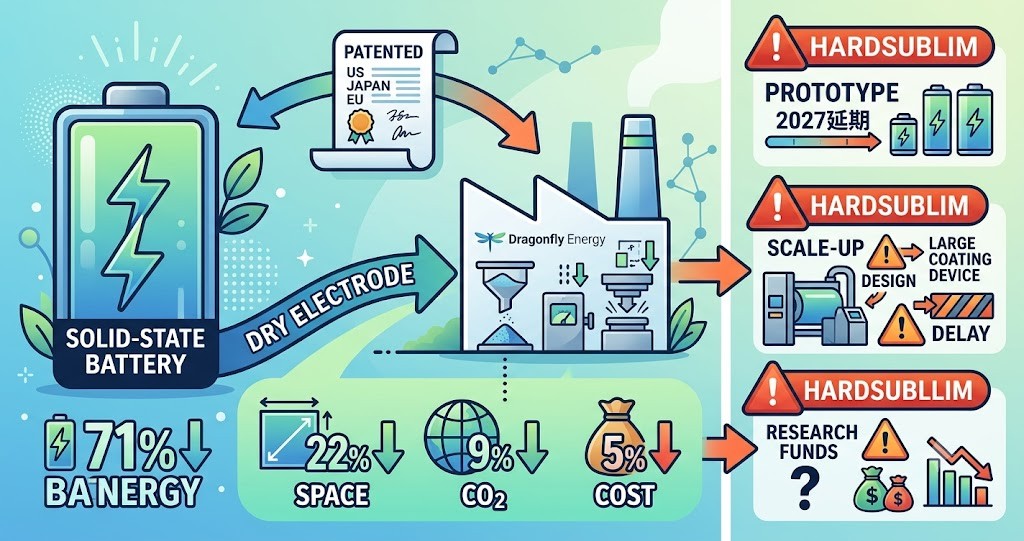
次世代のバッテリー技術として本命視される全固体電池。その製造コストと環境負荷を劇的に下げると期待される「乾式電極製造技術」において、米Dragonfly Energy社が重要な一歩を踏み出しました。同社が日米欧で特許網を急速に構築している背景と、商業化に向けた現在地について、関連情報を交えて分かりやすくまとめます。
1. ニュースの概要と特許戦略
Dragonfly Energy社は、粉末化した固体電解質と電極活物質を扱う製造プロセスに関する特許(Powderized Solid-State Electrolyte and Electroactive Materials)について、米国特許商標庁から許可通知を受けました。
- グローバルな特許網の構築: 同様の特許や乾式粉体コーティングに関する特許の許可通知は、2026年4月に日本、6月中旬に欧州、そして今回の米国と、主要市場で相次いで獲得しています。
- 製造工程の保護: 製品そのものだけでなく、「乾いた粉体のまま電極や固体電解質層を形成する」という製造プロセス(工程)の権利化を進めている点が特徴です。
2. 乾式電極製造(ドライコーティング)の狙い
従来のバッテリー製造(湿式)では、材料を有機溶剤(NMPなど)と混ぜてペースト状(スラリー)にし、それを塗布した後に巨大なオーブンで乾燥させる必要がありました。これに対し、Dragonfly Energy社が目指す乾式製造には以下のメリットがあります。
期待される削減効果(Sphere Energy社による評価)
| 評価項目 | 削減・改善効果 |
| 電極製造時のエネルギー使用量 | 71% 減少 |
| 必要床面積(工場スペース) | 22% 減少 |
| セル製造における炭素排出量 | 9% 減少 |
| 工程関連コスト | 最大 5% 削減 |
【関連情報】業界のトレンドと乾式技術の重要性
バッテリーの乾式電極技術は、米テスラ(Tesla)社が次世代の「4680セル」量産化に向けて本格導入を試みていることで、車載・エネルギー業界から極めて高い注目を集めています。溶剤を使わないため環境負荷が低く、乾燥工程が不要になることで工場の投資コスト(CAPEX)を大幅に削減できるため、全固体電池に限らず次世代バッテリー量産化の切り札とされています。
3. 商業化へのタイムラインと足元の課題
特許の取得は「防御線を引いた」段階であり、量産や商業化にはまだ複数の高いハードルが残されています。
- 試作セルの現在地: 現在はコインセルによるサイクル試験の段階です。プロトタイプとなるパウチセルの生産は2027年初めまで延期されています。
- 装置の大型化: 材料を大量かつ安定して処理するための大型電極コーティング装置の設計に集中するため、新型スプレードライヤーの導入を2027年第3四半期まで遅らせています。
- 資金調達の必要性: 2026年第1四半期の売上高は970万ドル(前年同期比 27.3% 減)、純損失は660万ドルを計上。手元資金(四半期末で860万ドル)を補うため、研究開発や設備投資に向けた追加の資金調達が不可欠な状況です。
4. まとめ:次に見るべきポイント
Dragonfly Energy社は現在、既存事業(Battle Born Batteriesブランドなどのトラック・RV向け電源システム)で目先の収益を稼ぎつつ、政府の助成金(Nevada Tech Hubからの52万7000ドルなど)も活用して社内の検証体制を整えるという、二階建ての戦略をとっています。
今後、同社が市場で優位性を証明するためには、特許の数だけでなく、「2027年以降に登場する試作セルの性能データ」、「製造装置の大型化の成否」、そして「どの程度有利な条件で開発資金を追加調達できるか」という実務的な進捗が焦点となります。
出典:https://xenospectrum.com/dragonfly-energy-solid-state-battery-patent-dry-electrode/#google_vignette
Building a Patent Network across the US, Japan, and Europe! Dragonfly Energy Secures US Patent for “Dry Manufacturing” of Solid-State Batteries
Solid-state batteries are widely considered the ultimate next-generation battery technology. In the field of “dry electrode manufacturing technology,” which is expected to drastically reduce both production costs and environmental impact, US-based Dragonfly Energy has taken a major step forward. This article provides a clear overview of the background behind the company’s rapid patent network expansion across Japan, the US, and Europe, alongside its current standing toward commercialization, incorporating relevant industry context.
1. News Overview and Patent Strategy
Dragonfly Energy has received a Notice of Allowance from the United States Patent and Trademark Office (USPTO) for its patent application titled “Powderized Solid-State Electrolyte and Electroactive Materials,” which covers manufacturing processes utilizing powderized materials.
- Building a Global Patent Network: Notice of allowances for similar patents and dry powder coating technologies have been secured back-to-back in major markets: Japan in April 2026, Europe in mid-June 2026, and now the US.
- Protecting the Manufacturing Process: A key characteristic of their strategy is securing rights for the manufacturing process itself—forming electrodes and solid-state electrolyte layers directly from dry powder—rather than just protecting the end product.
2. Objectives of Dry Electrode Manufacturing (Dry Coating)
Conventional battery manufacturing (wet process) requires mixing materials with organic solvents (such as NMP) to create a paste (slurry), coating it onto substrates, and then drying it in massive ovens. In contrast, the dry manufacturing process pursued by Dragonfly Energy offers the following advantages:
Expected Reduction Benefits (Evaluated by Sphere Energy)
| Evaluation Item | Reduction / Improvement Effect |
| Energy Use in Electrode Manufacturing | 71% Reduction |
| Required Floor Space (Factory Footprint) | 22% Reduction |
| Carbon Emissions in Cell Manufacturing | 9% Reduction |
| Process-Related Costs | Up to 5% Reduction |
[Related Information] Industry Trends and the Importance of Dry Technology
Dry electrode technology has garnered immense attention from the automotive and energy industries, notably because Tesla has been attempting to fully implement it for the mass production of its next-generation “4680 cells.” Because it eliminates solvents, the process has a lower environmental impact and removes the need for drying stages. This drastically reduces capital expenditure (CAPEX) for factories, making it a potential game-changer for mass-producing next-generation batteries of all types, not just solid-state.
3. Timeline to Commercialization and Current Challenges
Securing patents is merely establishing a “defensive line,” and several steep hurdles remain before mass production and commercialization can be achieved.
- Current Status of Prototype Cells: The company is currently at the stage of cycle-testing coin cells. The production of prototype pouch cells has been pushed back to early 2027.
- Scaling Up Equipment: To focus on designing larger electrode coating equipment capable of processing materials stably and in high volumes, the deployment of a new spray dryer has been delayed until Q3 2027.
- Need for Funding: For Q1 2026, the company reported revenue of 9.7 million USD (a 27.3% decrease year-over-year) and a net loss of 6.6 million USD. With 8.6 million USD in cash at the end of the quarter, securing additional funding is vital to sustain R&D and capital expenditures.
4. Conclusion: Key Points to Watch Next
Dragonfly Energy is currently executing a two-pronged strategy: generating short-term revenue from its core business (power systems for trucks and RVs, including its Battle Born Batteries brand) while simultaneously using government grants (such as 527,000 USD from the Nevada Tech Hub) to build up its internal validation capabilities.
Moving forward, proving market dominance will require more than just a high patent count. The real focus shifts to practical milestones: “the performance data of prototype cells arriving after 2027,” “the success of scaling up manufacturing equipment,” and “the favorability of the terms under which they can secure additional development funding.”
コメント