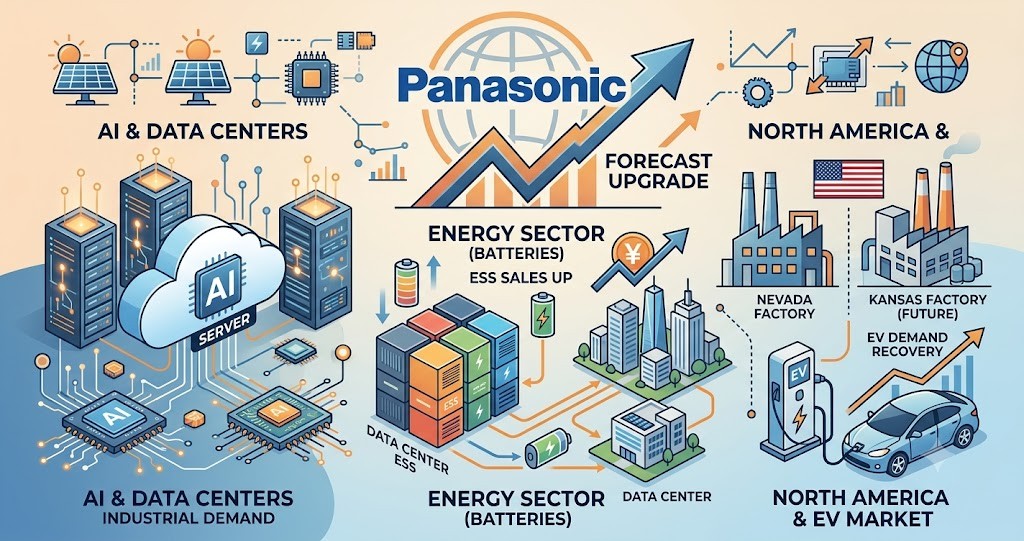
AI(人工知能)市場の急成長とデータセンター需要の拡大に伴い、日本の製造大手パナソニックホールディングスが業績予想を上方修正しました。本まとめでは、同社が発表した決算の主要ポイントと利益押上げの要因に加え、AI需要とバッテリー事業を取り巻く市場背景などの関連情報を分かりやすく解説します。
1. 業績予想の上方修正(通期見通し)
- 営業利益予想の引き上げ: 2027年3月期の通期グループ営業利益予想を、従来より400億円(7パーセント)引き上げ、5900億円(約36億ドル)へと上方修正。
- 主な要因: 産業事業における生成AI用サーバー向けアプリケーションなどの需要急伸。
2. エネルギー部門(バッテリー事業)の四半期決算
- 営業利益の増加: 第1四半期(4〜6月期)の営業利益は前年同期比 28パーセント増の409億円。
- 利益増の背景: データセンター向けのエネルギー貯蔵システム(ESS)の販売増加、および円安など有利な為替レートの影響。
- 通期見通し: エネルギー部門の通期利益予想(1710億円)は据え置き。
3. 北米工場およびEV向け電池の現状と見通し
- 北米工場の状況: 第1四半期は工場の稼働率低下によりバッテリー販売量が計画を下回ったものの、第2四半期(7〜9月期)以降は回復を見込んでおり、通期目標の達成を目指す。
- 米国EV市場の動向: 税額控除終了後の低迷から第1四半期に持ち直しており、回復傾向が持続すると分析。
関連情報・背景解説
- 生成AI爆発に伴うデータセンター・ESS需要の急増: AIサーバーの爆発的な増加に伴い、データセンターでの電力消費量が世界的に課題となっています。これに伴い、停電対策や電力平準化に不可欠な産業用バッテリー・ESS(電力貯蔵システム)の需要が急拡大しており、パナソニックのエネルギー部門の新たな収益の柱として貢献しています。
- テスラ依存からのリスク分散と事業ポートフォリオの変化: パナソニックの電池事業はこれまでテスラ(EV)向け車載電池が主力を占めていましたが、世界的なEV需要の伸び鈍化(EVキャズム)に対応するため、データセンター向けESSなど産業用電池の比率を高める構造転換を進めています。
- 北米での新型電池「4680」量産と製造体制: 同社は北米(ネバダ工場およびカンザス州の新工場など)において、テスラ向けなどの次世代大容量セル「4680」の量産化・安定供給を進めています。今回の第1四半期の稼働率低下を乗り越え、下半期にかけて生産・出荷能力を正常化させることが今後のカギとなります。
Panasonic HD Raises Full-Year Forecast to 590 Billion Yen | Driven by Surge in AI Demand and ESS Business
Introduction
Driven by the rapid growth of the AI (artificial intelligence) market and expanding data center demand, major Japanese manufacturer Panasonic Holdings has raised its full-year earnings forecast. This summary presents the key highlights of the company’s financial results and earnings growth drivers, alongside relevant background information on the market conditions surrounding AI demand and the battery business.
1. Upward Revision of Full-Year Forecast
- Operating Profit Forecast Increase: Raised its full-year group operating profit forecast for the fiscal year ending March 2027 by 40 billion yen (7 percent) from the previous projection, to 590 billion yen (approx. 3.6 billion USD).
- Primary Driver: Rapidly surging demand for generative AI server applications within the industrial segment.
2. Quarterly Results for the Energy Segment (Battery Business)
- Operating Profit Growth: First-quarter (April-June) operating profit rose 28 percent year-on-year to 40.9 billion yen.
- Key Growth Factors: Increased sales of Energy Storage Systems (ESS) for data centers, along with favorable foreign exchange impacts due to the weaker yen.
- Full-Year Segment Outlook: Kept the full-year profit forecast for the energy segment unchanged at 171 billion yen.
3. Current Status and Outlook for North American Plants and EV Batteries
- North American Plant Operations: Although Q1 battery sales volume fell short of plans due to lower factory utilization rates, recovery is expected from Q2 (July-September) onward, keeping the company on track to meet its full-year targets.
- U.S. EV Market Trends: U.S. EV sales rebounded in Q1 following a slump after the end of EV tax credits, with the recovery trend expected to continue.
Related Context and Background
- Surging Data Center and ESS Demand Driven by the Generative AI Boom: With the explosive increase in AI servers, global power consumption at data centers has become a major challenge. Consequently, demand for industrial batteries and ESS (Energy Storage Systems)—essential for outage prevention and power load leveling—is expanding rapidly, serving as a new revenue driver for Panasonic’s energy division.
- Diversifying Away from Tesla Dependence and Shifting Business Portfolio: Panasonic’s battery business has historically relied primarily on automotive batteries for Tesla (EVs). However, to navigate the global slowdown in EV demand growth (the EV chasm), the company is executing a strategic shift to increase the proportion of industrial batteries, such as ESS for data centers.
- Mass Production of “4680” Cells in North America and Manufacturing Network: In North America (including its Nevada plant and new Kansas plant), Panasonic is advancing the mass production and stable supply of its next-generation high-capacity “4680” cells for Tesla and other clients. Overcoming the temporary Q1 utilization dip and normalizing production and shipping capacity through the second half of the year will be a critical focal point moving forward.
コメント