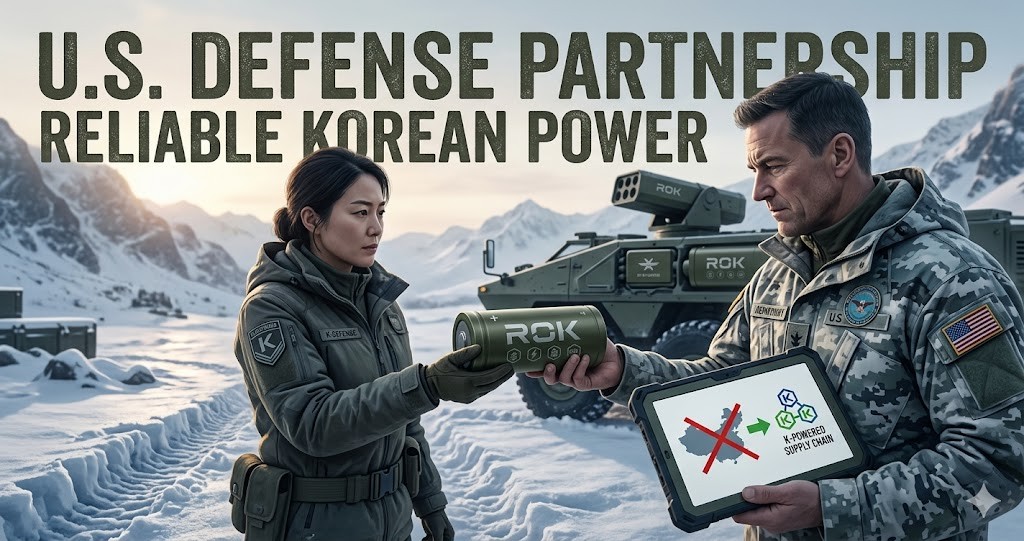
2026年3月、米国国防総省は軍事用バッテリーのサプライチェーンから中国製品を排除する方針を強めており、その代替パートナーとして韓国のバッテリーメーカー(サムスンSDI、LGエナジーソリューション、SKオン)が急浮上しています。EV需要の減速に直面する韓国企業にとって、防衛分野は新たな長期安定成長エンジンとなる見通しです。
- 1. 米国国防総省の戦略:標準化と脱中国
- 2. 韓国主要3社の動向と強み
- 3. 関連情報:背景と市場の展望
- 発表の意義
- Offsetting the EV Slowdown with Defense: Military Batteries as a New Growth Engine for Samsung, LG, and SK
- 1. US Department of Defense Strategy: Standardization and Decoupling from China
- 2. Trends and Strengths of the Three Major Korean Companies
- 3. Related Information: Background and Market Outlook
- Significance of These Developments
1. 米国国防総省の戦略:標準化と脱中国
米国は国家安全保障の観点から、兵器システムに使用されるバッテリーの「脱中国」と「標準化」を急いでいます。
- 中国依存のリスク: 現在、防衛・電子機器用円筒形電池の約90%が中国製であり、これが大きな脆弱性と見なされています。
- 国防権限法(NDAA)による規制:
- 2028年〜: 新型兵器システムへの中国製バッテリー採用を事実上禁止。
- 2031年〜: 潜水艦などの既存兵器にも制限を拡大。
- 標準化の推進: 現在5000種類以上存在する軍用バッテリーを、弾薬や燃料のように標準化(例:18650型円筒形セル等)することで、コスト削減と相互運用性の向上を図ります。
2. 韓国主要3社の動向と強み
韓国企業は、高度な技術力と大規模生産能力を兼ね備えた「中国以外で唯一の実行可能な選択肢」として米国から期待されています。
| 企業名 | 主な防衛・特殊分野の取り組み | 強み・特徴 |
| サムスンSDI | 潜水艦用角型リチウムイオン電池(2027-2028年実用化予定)、18650型円筒形セル。 | 円筒形セルの世界シェアが高く、既存ラインを転用可能。不良率が低く信頼性が高い。 |
| LGエナジーソリューション | NASA・SpaceX向け航空宇宙用、GMディフェンスを通じた米軍車両の電化支援。 | 高性能・極限環境での実績が豊富。Ultium Cellsの技術を軍用プラットフォームに転用。 |
| SKオン | 無人システム向け高ニッケルポーチ型電池、AI潜水艦、電動垂直離着陸機(eVTOL)。 | 現代ロテム等との協力実績があり、次世代の無人兵器システムに注力。 |
3. 関連情報:背景と市場の展望
防衛市場が「成長エンジン」となる理由
- 収益の安定性: EV市場のような急激な需要変動が少なく、長期契約・固定数量での発注が多いため、予測可能な収益源となります。
- 高い信頼性の要求: 故障が生死に関わる防衛分野では、安価な中国製品よりも、信頼性の高い韓国製品のプレミアムが認められやすい傾向にあります。
- 非EV分野への拡大: 指向性エネルギー兵器(レーザー兵器)、ドローン、潜水艦、宇宙兵器など、バッテリーの用途が爆発的に広がっています。
技術的補足:18650型バッテリーとは
- 規格: 直径18mm、長さ65mmの円筒形リチウムイオン電池。
- メリット: 長年の製造実績により低コストかつ高品質。複数のセルを組み合わせることで、無線機から電気自動車、潜水艦まで柔軟に容量を調整可能です。
発表の意義
米中対立によるサプライチェーンの再編(デカップリング)は、民間EV市場だけでなく、国家安全保障の根幹である防衛産業においても決定的な段階に入りました。韓国バッテリー業界は、米国の「戦略的パートナー」としての地位を固めることで、中国企業が参入できない巨大な防衛市場を独占的に獲得するチャンスを迎えています。
出典:https://www.koreaherald.com/article/10700657
Offsetting the EV Slowdown with Defense: Military Batteries as a New Growth Engine for Samsung, LG, and SK
In March 2026, the US Department of Defense (DoD) is intensifying its policy to exclude Chinese products from the military battery supply chain. South Korean battery manufacturers—Samsung SDI, LG Energy Solution, and SK On—are rapidly emerging as the primary alternative partners. For these Korean companies currently facing a slowdown in electric vehicle (EV) demand, the defense sector is expected to become a new engine for long-term stable growth.
1. US Department of Defense Strategy: Standardization and Decoupling from China
The United States is accelerating the “decoupling from China” and “standardization” of batteries used in weapons systems from a national security perspective.
- Risks of China Dependency: Currently, approximately 90% of cylindrical batteries for defense and electronics are made in China, which is viewed as a significant vulnerability.
- Regulations under the National Defense Authorization Act (NDAA):
- From 2028: Virtual ban on the adoption of Chinese batteries in new weapons systems.
- From 2031: Restrictions expand to existing weaponry, such as submarines.
- Promotion of Standardization: By standardizing the more than 5,000 types of military batteries currently in use into common formats (e.g., 18650 cylindrical cells), the DoD aims to reduce costs and improve interoperability, treating batteries like ammunition or fuel.
2. Trends and Strengths of the Three Major Korean Companies
South Korean companies are expected to be the “only viable alternative outside of China” that possesses both advanced technical capabilities and large-scale production capacity.
| Company | Key Defense and Special Sector Initiatives | Strengths and Characteristics |
| Samsung SDI | Prismatic Li-ion batteries for submarines (slated for 2027-2028), 18650 cylindrical cells. | High global market share in cylindrical cells; existing lines can be repurposed. Low defect rates and high reliability. |
| LG Energy Solution | Aerospace applications for NASA/SpaceX; supporting electrification of US military vehicles via GM Defense. | Extensive track record in high-performance and extreme environments. Repurposing Ultium Cells technology for military platforms. |
| SK On | High-nickel pouch cells for unmanned systems, AI-powered submarines, and eVTOL aircraft. | Proven collaboration with Hyundai Rotem and others; focusing on next-generation unmanned weapons systems. |
3. Related Information: Background and Market Outlook
Why the Defense Market is a “Growth Engine”
- Revenue Stability: Unlike the EV market, which faces volatile demand, the defense sector offers predictable revenue through long-term contracts and fixed-volume orders.
- Requirement for High Reliability: In the defense sector, where failure can lead to life-or-death situations, a premium is more likely to be placed on highly reliable Korean products over cheaper Chinese alternatives.
- Expansion into Non-EV Fields: Battery applications are exploding in areas such as directed-energy weapons (lasers), drones, submarines, and space weaponry.
Technical Note: What is an 18650 Battery?
- Standard: A cylindrical lithium-ion battery measuring 18mm in diameter and 65mm in length.
- Advantages: Low cost and high quality due to decades of manufacturing history. By combining multiple cells, capacity can be flexibly adjusted for everything from handheld radios to electric vehicles and submarines.
Significance of These Developments
The restructuring of supply chains (decoupling) driven by US-China tensions has entered a decisive phase, not only in the civilian EV market but also in the defense industry—the backbone of national security. By solidifying their status as “strategic partners” to the US, the South Korean battery industry has the opportunity to gain exclusive access to a massive defense market where Chinese competitors are barred from entry.


コメント