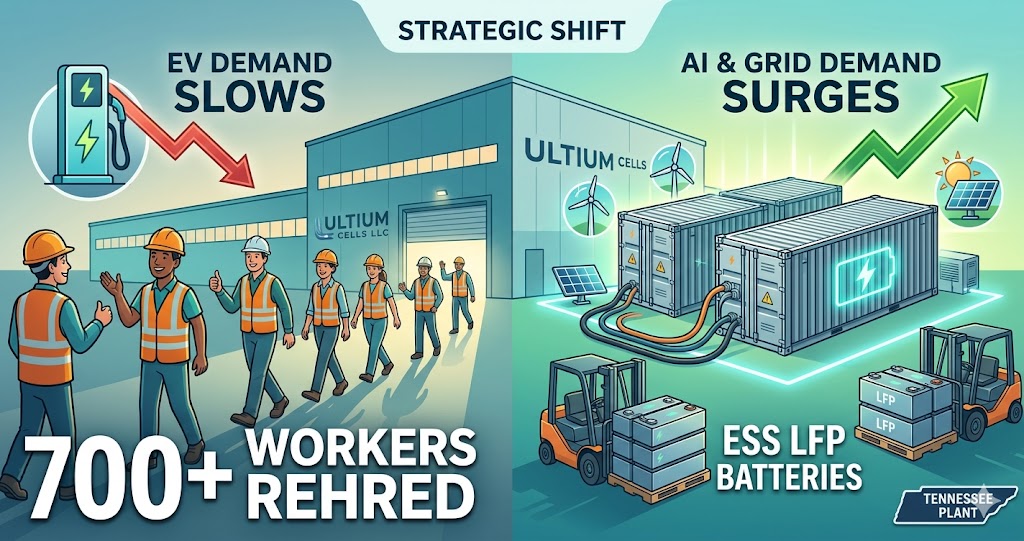
GMとLGエナジーソリューションズの合弁会社であるUltium Cellsは、テネシー州の製造拠点を電気自動車(EV)用からエネルギー貯蔵システム(ESS)用に転換することを発表しました。
1. 工場改修と雇用への影響
EV市場の停滞により一時解雇を余儀なくされていた労働環境に、ポジティブな変化が生じています。
- 再雇用: 一時解雇されていた約700人の従業員を復職させます。
- 生産開始時期: 2026年第2四半期に生産を開始する予定です。
- 採用技術: 生産されるのはリン酸鉄リチウム(LFP)電池です。LFPはコスト競争力と安全性が高く、定置型の蓄電システムに非常に適しています。
2. 戦略転換の背景:EVからAIデータセンターへ
この転換は、北米におけるエネルギー需要の構造変化を反映しています。
- EV需要の低迷: 政策転換や販売不振を受け、GMはEV生産を縮小。ミシガン州の工場の株式をLGに売却し、他拠点での建設ペースも落としています。
- エネルギー貯蔵(ESS)の急増: 一方で、AIデータセンターの爆発的な増加に伴い、安定した電力供給を支えるための蓄電池需要が供給を大幅に上回っています。
- 競合他社の動き: SK Onなど他の韓国系メーカーも、同様にEV用からESS用への生産能力転換を進めています。
3. GMの新しいビジネスモデル
GMのバッテリー担当副社長カート・ケルティ氏は、「3つの工場をフル稼働させるほどのEV需要はない」と認める一方で、ESS市場の将来性に強い自信を示しています。
- 需要過多: ESS市場では現在、需要が供給を大幅に上回っており、今後数年間はこの傾向が続くと予測されています。
- パートナーシップの再編: 自社でのEV専業から、パートナー企業(LG、サムスンなど)との柔軟な生産体制へとシフトし、リスク分散を図っています。
比較:用途別のバッテリー需要推移(2026年時点の概況)
| 項目 | 電気自動車(EV)向け | エネルギー貯蔵(ESS)向け |
| 現在の状況 | 供給過剰・需要減速 | 供給不足・需要急増 |
| 主な推進要因 | 政策の影響、消費者の様子見 | AIデータセンター、再生可能エネルギー |
| 主な電池種類 | 三元系(NMC)、高密度LFP | LFP(コスト・寿命重視) |
| 戦略的優先度 | 慎重な投資、在庫調整 | 迅速な増産、設備転換 |
Prioritizing Storage Over EVs: GM and LG Pivot Tennessee Plant to LFP Production
Ultium Cells, a joint venture between General Motors (GM) and LG Energy Solution, has announced the conversion of its Tennessee manufacturing facility from electric vehicle (EV) battery production to Energy Storage System (ESS) battery production.
1. Plant Renovation and Employment Impact
A positive shift is occurring in the labor environment, which had previously faced layoffs due to the stagnation of the EV market.
- Rehiring: Approximately 700 laid-off employees will be reinstated.
- Production Start: Production is scheduled to commence in the second quarter of 2026.
- Technology Adopted: The facility will produce Lithium Iron Phosphate (LFP) batteries. LFP is highly suited for stationary storage systems due to its cost competitiveness and high safety profile.
2. Strategic Background: From EVs to AI Data Centers
This pivot reflects a structural change in energy demand across North America.
- Sluggish EV Demand: Following policy shifts and slowing sales, GM has reduced EV production. The company sold its stake in a Michigan plant to LG and slowed the construction pace at other sites.
- Surge in Energy Storage (ESS): Conversely, the explosive growth of AI data centers has created a demand for storage batteries to ensure stable power supplies, significantly outstripping current supply.
- Competitor Moves: Other South Korean manufacturers, such as SK On, are similarly shifting production capacity from EVs to ESS.
3. GM’s New Business Model
Kurt Kelty, GM’s Vice President of Battery, Propulsion, and Sustainability, admitted that “there isn’t enough demand to run three plants at full capacity” for EVs, while expressing strong confidence in the future of the ESS market.
- Excess Demand: In the ESS market, demand currently far exceeds supply, a trend expected to persist for several years.
- Partnership Restructuring: GM is shifting from an EV-centric approach to a flexible production system with partners like LG and Samsung to diversify risk.
Comparison: Battery Demand Trends by Application (2026 Overview)
| Item | For Electric Vehicles (EV) | For Energy Storage (ESS) |
| Current Status | Oversupply / Demand slowdown | Supply shortage / Rapid demand surge |
| Primary Drivers | Policy impact, consumer hesitation | AI data centers, renewable energy |
| Main Battery Types | Ternary (NMC), High-density LFP | LFP (Focus on cost and lifespan) |
| Strategic Priority | Cautious investment, inventory adjustment | Rapid production increase, facility pivot |

コメント