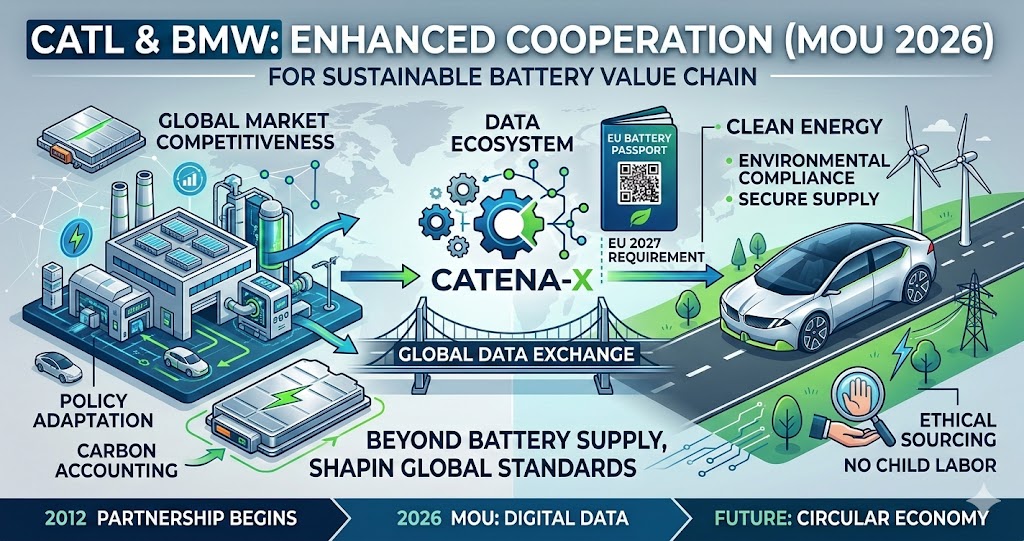
2026年2月25日、世界最大の車載電池メーカーであるCATLとBMWグループは、北京にて協力強化に関する覚書(MOU)を締結しました。この合意は、ドイツのメルツ首相の訪中に合わせて行われ、両社の提携を製品供給の枠組みから、デジタルデータ管理や政策対応へと拡大するものです。
主な協力内容
- バッテリーパスポートの運用: 国境を越えたデータ転送のパイロットプロジェクトを実施し、信頼性の高いデータ交換ツールを開発します。
- 炭素会計の標準化: バッテリーの製造から廃棄までの炭素フットプリント(CO2排出量)を計算するための共通ルールを探求します。
- データ基盤「Catena-X」の活用: 自動車業界のデータ共有プラットフォームを活用し、技術標準の整合を図ります。
- 規制への適合: 中国およびEUの厳しい環境規制(欧州電池規則など)を遵守し、グローバル市場での競争力を高めます。
関連情報と背景解説
今回の提携を理解する上で重要な、3つの関連情報を補足します。
1. バッテリーパスポートとは
バッテリーの原材料調達から製造、利用、リサイクルに至るまでの情報をデジタル上で記録・追跡する仕組みです。
- 目的: サプライチェーンの透明性を高め、児童労働の排除や環境負荷の低減を証明すること。
- EU規則: 欧州では2027年以降、一定容量以上の産業用・EV用バッテリーに対して、このパスポートの帯同が義務付けられる予定です。
2. データ基盤「Catena-X(カテナX)」
ドイツ政府の主導で始まった、自動車産業向けのデータ共有エコシステムです。
- 特徴: 個別の企業がデータを独占するのではなく、安全に共有できる仕組み。BMWをはじめ、欧州の主要メーカーやサプライヤーが参加しており、CATLがこれに深く関与することは、中欧間のデータ連携において大きな意味を持ちます。
3. CATLとBMWの長年の関係
両社は2012年から戦略的パートナーシップを組んでおり、BMWが初期のCATLの技術向上を支援した歴史があります。
- 次世代電池: BMWの次世代EVプラットフォーム「ノイエ・クラッセ(Neue Klasse)」向けに、CATLはエネルギー密度を高めた円筒形リチウムイオン電池の供給を予定しています。
今後の展望
この協力により、BMWは環境負荷の低いクリーンなバッテリーを安定調達でき、CATLは欧州市場での規制リスクを回避し、デファクトスタンダード(事実上の標準)の策定において優位に立つことができます。
ポイント: 今回の合意は、単なる「電池の売り買い」ではなく、「排出量データの算出ルール」という、EV業界の新たなルール作りに両社が共同で取り組むことを示しています。
出典:https://www.catl.com/en/news/6754.html
CATL and BMW Sign MOU to Strengthen Cooperation on Decarbonization and Battery Passport
On February 25, 2026, CATL, the world’s largest automotive battery manufacturer, and the BMW Group signed a Memorandum of Understanding (MOU) in Beijing to enhance their cooperation. This agreement, signed during German Chancellor Friedrich Merz’s visit to China, expands the partnership beyond a product-supply framework to include digital data management and regulatory policy alignment.
Key Areas of Cooperation
- Battery Passport Implementation: Launching a pilot project for cross-border data transfer and developing reliable data exchange tools.
- Standardization of Carbon Accounting: Exploring common rules to calculate the carbon footprint (CO2 emissions) of batteries from production to disposal.
- Utilization of Catena-X: Leveraging the automotive industry’s data-sharing ecosystem to align technical standards.
- Regulatory Compliance: Ensuring adherence to strict environmental regulations in China and the EU (such as the EU Battery Regulation) to enhance global competitiveness.
Related Information and Context
Three key elements are essential to understanding the significance of this partnership:
1. What is a Battery Passport?
A digital system that records and tracks information throughout a battery’s lifecycle, from raw material procurement and manufacturing to usage and recycling.
- Objective: To increase supply chain transparency and prove the reduction of environmental impact and the exclusion of child labor.
- EU Regulations: Starting in 2027, the EU will mandate these passports for industrial and EV batteries above a certain capacity.
2. Data Infrastructure: Catena-X
An automotive data-sharing ecosystem initiated by the German government.
- Features: A secure system where data is shared rather than monopolized by individual companies. With BMW and other major European manufacturers participating, CATL’s deep involvement is a significant milestone for data collaboration between China and Europe.
3. Long-standing Relationship Between CATL and BMW
The two companies have held a strategic partnership since 2012, with BMW historically supporting CATL’s early technical development.
- Next-Generation Batteries: CATL is set to supply high-energy-density cylindrical lithium-ion batteries for BMW’s next-generation EV platform, the “Neue Klasse.”
Future Outlook
Through this cooperation, BMW can secure a stable supply of low-impact, clean batteries, while CATL can mitigate regulatory risks in the European market and gain an advantage in establishing de facto industry standards.
Key Point: This agreement signifies that the collaboration has moved beyond “buying and selling batteries.” Both companies are now jointly working on “new rules” for the EV industry, specifically the methodology for calculating emission data.


コメント