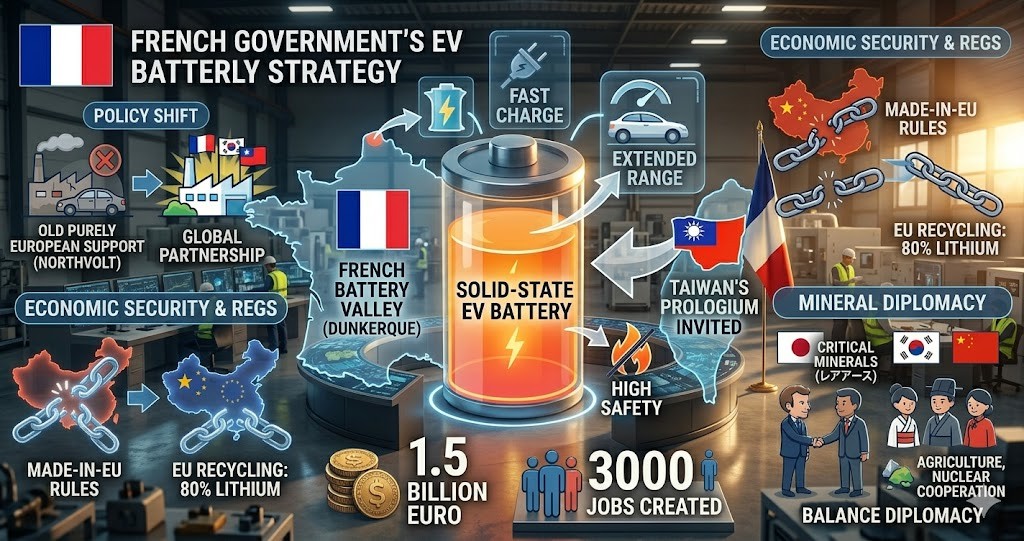
フランス政府は、電気自動車(EV)向け電池の国内生産を加速させるため、従来の欧州企業中心の支援(自前主義)を転換し、台湾の全固体電池メーカー輝能科技(プロロジウム・テクノロジー)などの有力な海外企業の誘致を本格化させています。
1. 台湾企業「プロロジウム」の誘致と背景
- 新工場建設: 仏北部ダンケルクに2028年末の稼働を目指す全固体電池工場を着工。
- 巨額支援: 総事業費の約3割にあたる15億ユーロ(約2700億円)の補助金を投入。
- 狙い: 3000人の雇用創出と、次世代電池技術の確保。
- 全固体電池の優位性: 従来のリチウムイオン電池に比べ、「高い安全性」「航続距離の延長」「充電時間の短縮」が可能。
2. 「自前主義」の限界と方針転換
欧州は当初、域内企業(スウェーデンのノースボルトなど)の育成に注力してきましたが、量産化の遅れや中国勢との価格競争により経営破綻が相次ぎました。
- バッテリー・バレー: 仏北部に国内外の工場を集積させ、産業クラスター化を推進。
- 経済安全保障: 世界シェア80%以上を握る中国への依存を下げ、域内供給網を構築。
3. 欧州連合(EU)の産業保護策と規制
EU全体でも、中国を念頭に置いた強力な産業促進策を打ち出しています。
- メード・イン・EU規定: 一定の域内生産比率を満たした製品のみを補助金対象とする。
- 技術移転の義務化: 世界シェア40%以上の国(中国など)からの大規模投資に対し、技術移転や現地雇用を義務づける。
- リサイクル強化: 2031年までにリチウムのリサイクル率を80%に引き上げるなど、資源の循環利用で中国からの新規調達を減らす。
4. マクロン大統領の外交と重要鉱物戦略
- 日韓訪問(2026年3月末): 日本とは2025年にレアアースの共同精製で合意済み。今回の訪日でも重要鉱物の供給確保に向けた協力を確認。
- 対中バランス: 経済安保を重視しつつも、農業や原子力分野での協力、フランス産品の輸出拡大など、中国との経済的つながりも維持する「バランス外交」を展開。
【関連情報】補足と解説
欧州の「バッテリー・バレー(Battery Valley)」
フランス北部のオー・ド・フランス地域圏を指します。プロロジウムのほか、ステランティスとメルセデス・ベンツの合弁会社ACCや、中国のエンビジョンAESCなど、複数のギガファクトリー計画が集中しており、欧州の電池生産の一大拠点となっています。
産業促進法(ネットゼロ産業法など)の背景
米国が「インフレ抑制法(IRA)」で自国製EVに巨額の補助金を出したことに対抗し、欧州も域内産業が流出しないよう、ルール作りを急いでいます。今回の「技術移転の義務化」は、かつて中国が外資企業に求めていた手法を、今度は欧州が中国企業に対して適用する形となり、象徴的な動きと言えます。
出典:https://www.nikkei.com/article/DGXZQOGR190UR0Z10C26A3000000/
A New Phase in Europe’s EV Battery Strategy: The France-Taiwan Alliance for Next-Generation Solid-State Battery Dominance
To accelerate domestic production of batteries for electric vehicles (EVs), the French government is shifting away from its previous “self-reliance” policy of supporting only European firms. Instead, it is intensifying efforts to attract leading foreign companies, such as the Taiwanese solid-state battery manufacturer ProLogium Technology.
1. Attraction of Taiwan’s ProLogium and Background
- New Factory Construction: Construction has begun on a solid-state battery plant in Dunkirk, northern France, aiming for operations to start by late 2028.
- Massive Financial Support: The government is providing 1.5 billion euros (approximately 270 billion yen) in subsidies, covering about 30% of the total project cost.
- Objectives: Creation of 3,000 jobs and securing next-generation battery technology.
- Advantages of Solid-State Batteries: Compared to conventional lithium-ion batteries, they offer higher safety, extended driving range, and shorter charging times.
2. Limitations of “Self-Reliance” and Policy Shift
Europe initially focused on nurturing regional companies (such as Sweden’s Northvolt), but many faced bankruptcy due to delays in mass production and price competition with Chinese rivals.
- Battery Valley: France is promoting an industrial cluster by concentrating domestic and foreign factories in northern France.
- Economic Security: The goal is to build a regional supply chain and reduce dependence on China, which currently holds over 80% of the global market share.
3. European Union (EU) Industrial Protection and Regulations
The EU is launching powerful industrial promotion measures with China in mind.
- “Made in EU” Provisions: Subsidies will be restricted to products that meet a certain threshold of regional production.
- Mandatory Technology Transfer: Large-scale investments from countries holding more than 40% of global production capacity (such as China) will be required to transfer technology and ensure local hiring and procurement.
- Enhanced Recycling: By 2031, the recycling rate for lithium will be raised from 50% to 80%. This aim is to stabilize resource procurement and reduce new purchases from Chinese firms.
4. President Macron’s Diplomacy and Critical Minerals Strategy
- Visit to Japan and South Korea (Late March 2026): Following a 2025 agreement with Japan on joint rare earth refining, this visit reaffirms cooperation in securing critical mineral supplies.
- Balancing China: While prioritizing economic security, France maintains a “balanced diplomacy,” continuing economic ties with China in sectors like agriculture and nuclear energy while expanding French exports.
[Related Information] Supplemental Notes and Commentary
Europe’s “Battery Valley”
This refers to the Hauts-de-France region in northern France. It has become a major European hub for battery production, hosting multiple gigafactory projects including ProLogium, ACC (a joint venture between Stellantis and Mercedes-Benz), and China’s Envision AESC.
Background of Industrial Promotion Acts (e.g., Net-Zero Industry Act)
In response to the massive subsidies provided by the U.S. Inflation Reduction Act (IRA) for American-made EVs, Europe is rushing to establish rules to prevent the exodus of its regional industries. The “mandatory technology transfer” is a symbolic move, as Europe is now applying the same tactics once used by China against foreign companies to Chinese firms instead.
コメント