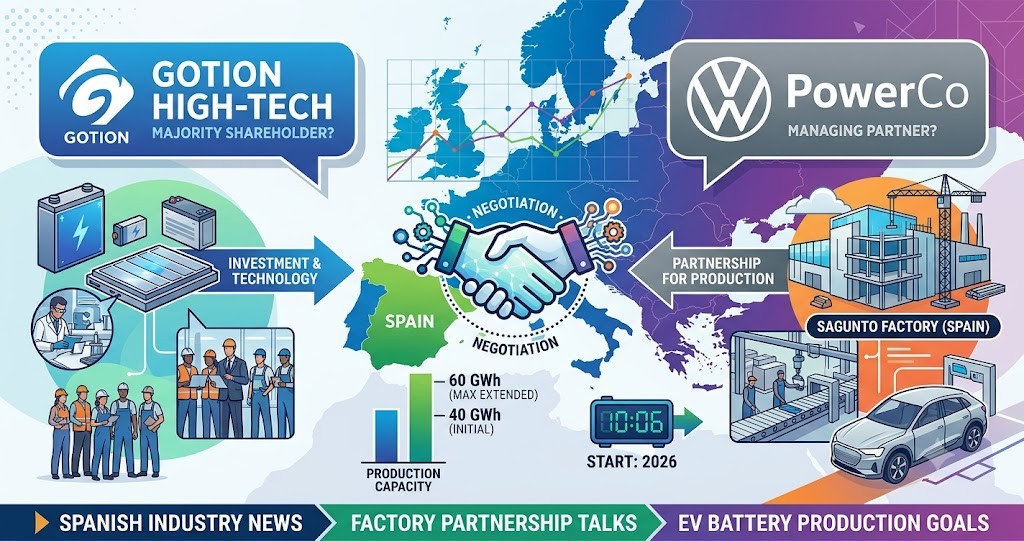
欧州における電動化(EVシフト)の競争が激化する中、中国の電池大手ゴティオン・ハイテック(Gotion High-tech)が、フォルクスワーゲングループの電池子会社PowerCoが建設中のサグント工場(スペイン)への出資に向けて最終交渉を進めていることが報じられました。
1. 報道の主なポイント
- 過半数株式の取得を検討: スペインの自動車業界誌「ラ・トリブナ・デ・オートモシオン」によると、ゴティオンがサグント工場の合弁事業の過半数株式を取得し、PowerCoが一部を保有する構造が検討されています。
- 現地での直接協議: 交渉は数ヶ月前から続いており、ゴティオンの李振CEOが現地を訪れ、技術面および商業面の評価を実施したとされています。なお、交渉対象はサグント工場のみであり、PowerCo自体の事業全体ではありません。
- 各社の反応: PowerCoは「特定の報道にはコメントしない」としつつも、「管理権を手放す予定はない」と表明。パートナーシップの機会は常に評価しているとしています。ゴティオン側はコメントを出していません。
2. サグント工場の概要
サグント(Sagunto)工場は、フォルクスワーゲングループの欧州EV戦略を支える中核拠点の一つです。
- 建設開始: 2023年
- 生産開始予定: 2026年末まで
- 生産能力: 当初は年間40ギガワット時(GWh)、将来的に最大60ギガワット時(GWh)まで拡張可能
- 現在の進捗: 製造設備の設置、試運転、クリーンルームおよびドライルームの建設が進行中
- 主な供給先: フォルクスワーゲンのスペイン国内にある車両製造工場など
3. 関連情報・補足解説
【背景と関連情報】
- VWとゴティオンの深い資本関係: 実は、フォルクスワーゲングループは**ゴティオン・ハイテックの筆頭株主(株式の約26パーセントを保有)**です。両社はすでに中国市場を中心に強固なアライアンスを組んでおり、今回のスペインでの提携交渉もこの資本関係の延長線上にあると見られます。
- PowerCo(パワーコ)とは: フォルクスワーゲンが2022年に設立した電池専門の子会社。ドイツのザルツギッター工場、カナダのセントトーマス工場、そしてスペインのサグント工場など、世界中にギガファクトリーを建設・運営する計画を進めています。
- 出資・合弁検討の背景(コスト削減と技術導入): 欧州でのEV需要の伸び悩みや高コスト構造を受け、VWをはじめとする欧州自動車メーカーは電池製造のコスト削減を急いでいます。電池技術や製造ノウハウで先行するゴティオンから出資や技術協力を仰ぐことで、工場立ち上げのリスクを低減し、コスト競争力を高める狙いがあると分析されています。
China’s Gotion in discussions to acquire stake in Volkswagen’s Spanish gigafactory and expand joint venture
Amid intensifying competition in Europe’s electrification (EV shift) market, Chinese battery giant Gotion High-Tech is reportedly in final negotiations to acquire an equity stake in the Sagunto cell factory in Spain, currently under construction by Volkswagen Group’s battery subsidiary, PowerCo.
1. Key Highlights of the Report
- Acquisition of a Majority Stake Under Consideration: According to the Spanish automotive trade publication La Tribuna de Automocion, a structure is being considered where Gotion acquires a majority stake in a joint venture for the Sagunto plant, with PowerCo retaining a minority interest.
- Direct On-Site Negotiations: Discussions have been ongoing for several months, with Gotion CEO Li Zhen visiting the site to conduct both technical and commercial evaluations. Negotiations are strictly limited to the Sagunto plant and do not cover PowerCo’s overall battery business.
- Corporate Responses: PowerCo stated it “does not comment on specific reports,” while adding that it “regularly evaluates strategic opportunities”. PowerCo also stated it has no plans to relinquish operational control of the facility. Gotion has not issued an official comment.
2. Overview of the Sagunto Gigafactory
The Sagunto (Valencia) plant is a core hub supporting Volkswagen Group’s electrification strategy in Europe.
- Construction Start: 2023
- Scheduled Production Start: By the end of 2026
- Production Capacity: Initially designed for an annual capacity of 40 gigawatt-hours (GWh), with potential expansion up to 60 GWh in the future
- Current Progress: Installation and commissioning of manufacturing equipment, as well as construction of cleanrooms and dry rooms, are currently underway.
- Primary Off-Takers: Volkswagen’s vehicle assembly plants in Spain.
3. Additional Information & Background Notes
Background and Context
- Deep Capital Relationship between VW and Gotion: Volkswagen Group is the largest shareholder in Gotion High-Tech (holding approximately 26 percent of its shares). The two companies already share a strong alliance centered in the Chinese market, and these negotiations in Spain are seen as an extension of that capital relationship.
- What is PowerCo? A dedicated battery subsidiary established by Volkswagen in 2022. It is executing plans to build and operate gigafactories worldwide, including the Salzgitter plant in Germany, the St. Thomas plant in Canada, and the Sagunto plant in Spain.
- Rationale for Joint Venture Discussions (Cost Reductions & Technology Integration): Facing sluggish EV demand growth and high-cost structures in Europe, European automakers including VW are under pressure to cut battery manufacturing costs. Partnering with Gotion—which possesses advanced battery technology and manufacturing expertise—aims to mitigate factory ramp-up risks and enhance cost competitiveness.
コメント