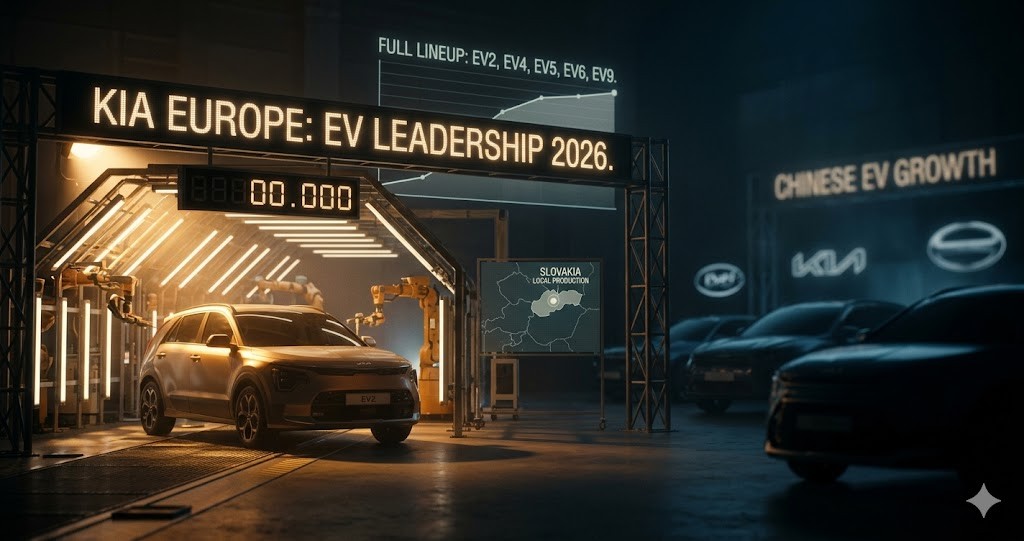
欧州の自動車市場は今、かつてない激変期を迎えています。米国市場から事実上締め出された中国の電気自動車(EV)メーカーが、圧倒的な価格競争力を武器に欧州へ急速に攻勢をかけているためです。この激しい競争の渦中において、韓国の起亜自動車(KIA)は一時的な販売減速という苦境を乗り越え、欧州市場での主導権を奪還するための新たなEV戦略を打ち出しました。
本稿では、2026年5月に起亜の宋浩成(ソン・ホソン)CEOが投資家向けに示した戦略をベースに、欧州における規制環境の変化や同社の具体的なコスト削減策など、関連情報を交えて分かりやすく整理・解説します。
- 1. 現状の課題と2026年の転換点
- 2. 对中国メーカー:欧州の規制強化による「追い風」
- 3. コスト削減と価格戦略(〜2030年)
- まとめ:起亜自動車の欧州EVロードマップ
- [Europe EV Strategy] Kia Motors to Clash with Chinese Rivals Using 2026 as a Turning Point—Aiming to Expand Market Share Backed by European Regulatory Tailwinds
- 1. Current Challenges and the 2026 Turning Point
- 2. Countering Chinese Rivals: Tailwinds from Stricter European Regulations
- 3. Cost Reduction and Pricing Strategy (Toward 2030)
- Conclusion: Kia’s EV Roadmap for Europe
1. 現状の課題と2026年の転換点
起亜自動車は欧州市場において大きな変革期を迎えています。
- 直近の苦戦と背景: これまで欧州での量販を支えていたガソリン車のハッチバック「シード(Ceed)」の販売を段階的に終了し、EVシフトを急ぎました。しかし、想定を下回る欧州のEV需要の冷え込み(EVキャズム現象)が重なり、欧州での販売台数は2年連続で減少していました。
- 反転の兆し(2026年1〜4月): 西ヨーロッパにおける売上高は前年同期比3.2%増と回復基調にあります。これはEV需要の持ち直しと、低価格帯モデルの投入によるものです。
- フルラインナップの完成: 起亜は2026年を「転換点」と位置付け、コンパクトカーから大型SUVまでを網羅するEVフルラインナップ(EV2、EV4、EV5、EV6、EV9)を完成させました。
2. 对中国メーカー:欧州の規制強化による「追い風」
中国の自動車メーカー(BYDやNIOなど)が欧州へ攻勢をかける中、起亜は「欧州の産業政策の厳格化」を逆手に取り、価格競争を優位に進める戦略です。
欧州の「産業加速法」と補助金要件(2027年〜)
- 規制内容: 2027年以降、欧州で販売されるEVは「現地(欧州)生産されたバッテリー」を搭載している場合のみ、補助金(インセンティブ)の対象となります。
- 起亜へのメリット: 中国メーカーが得意とする「中国国内の低コスト生産+政府補助金」のコンボが封じられるため、起亜と中国勢との価格差が大幅に縮まると予想されています。
【関連情報の補足:起亜の欧州現地生産化】 起亜はすでにスロバキアのジリナ(Base)工場に2億ユーロ以上を投資。直近の2026年初頭より、欧州市場の戦略車となるコンパクト電動SUV「EV2」の現地生産を開始(2025年には「EV4」の生産も開始済)。これにより、2027年以降の欧州バッテリー現地調達規制にいち早く適合する体制を整えています。
3. コスト削減と価格戦略(〜2030年)
起亜のコア戦略は、「EVと内燃機関(ガソリン)車の価格同等化(プライスペリティ)」を進め、大衆市場へ普及させることです。
車両価格の推移予測(独CセグメントSUV市場の例)
- 初期: ガソリン車(約3.5万ユーロ)に対し、起亜EV6は5.5万〜6万ユーロと大きな開き。
- 2030年予測: ともに約4万ユーロ(約650万円)に収束し、価格差がほぼなくなると予測。
バッテリーコストの削減目標
原材料価格の下落や、電力システム(E-GMP等の次世代プラットフォームなど)の改善により、バッテリーコストを削減します。
- 現在: 1 kWhあたり約130ドル
- 2030年まで: 30%削減し、100ドル未満へ。
マルチサプライヤー戦略
車両のセグメント(大衆向けか高級向けか)や価格帯に応じて、最適なバッテリーを柔軟に選択・採用します。
- 提携先: LGエナジーソリューション、サムスンSDI、SKオン(韓国勢) + CATL(中国最大手)
まとめ:起亜自動車の欧州EVロードマップ
起亜は、直近の「CEOインベスターデイ」にて、2030年までに欧州市場で年間74万6,000台の販売(市場シェア4.8%)を掲げています。
中国勢の低価格攻勢に対しては、「スロバキア工場での現地生産(EV2/EV4)」によって欧州の優遇補助金を確実に獲得しつつ、2030年までにバッテリーコストを3割削減することで、ガソリン車と同等価格のEVを大量投入して迎え撃つ構えです。
出典:https://www.koreaherald.com/article/10742077
[Europe EV Strategy] Kia Motors to Clash with Chinese Rivals Using 2026 as a Turning Point—Aiming to Expand Market Share Backed by European Regulatory Tailwinds
The European automotive market is currently undergoing unprecedented upheaval. Having been effectively locked out of the US market by Washington’s decoupling measures, Chinese electric vehicle (EV) manufacturers are rapidly aggressively expanding into Europe, leveraging their overwhelming price competitiveness. In the midst of this fierce competition, South Korea’s Kia Motors (KIA) has rolled out a new EV strategy to overcome its recent slump in sales and reclaim dominance in the European market.
Based on the strategy presented to investors by Kia CEO Ho-sung Song in May 2026, this article provides a clear overview and analysis of the changing regulatory landscape in Europe and the company’s specific cost-cutting measures, integrated with relevant supplementary insights.
1. Current Challenges and the 2026 Turning Point
Kia Motors is facing a major period of transformation in the European market.
- Recent Struggles and Background: Kia accelerated its transition to EVs by phasing out the gas-powered “Ceed” hatchback, which was once its mainstay model in Europe. However, this transition was heavily burdened by a sharper-than-expected cooling of European EV demand—often referred to as the EV chasm—leading to a decline in European sales for two consecutive years.
- Signs of a Turnaround (January–April 2026): Sales in Western Europe are on a recovery track, rising 3.2% year-over-year. This rebound is driven by a recovery in EV demand and a reinforced lineup of lower-priced EV models.
- Completion of the Full Lineup: Kia views 2026 as a turning point, having finalized a comprehensive EV lineup spanning from compact cars to large SUVs, including the EV2, EV4, EV5, EV6, and EV9.
2. Countering Chinese Rivals: Tailwinds from Stricter European Regulations
As Chinese automakers like BYD and NIO step up their offensive in Europe, Kia plans to leverage the tightening of European industrial policies to narrow the price gap and gain a competitive edge.
The EU Net-Zero Industry Act and Subsidy Requirements (From 2027 onward)
- Regulatory Details: From 2027 onward, EVs sold in Europe will only qualify for subsidies (incentives) if they are equipped with batteries produced locally within Europe.
- Benefits for Kia: This policy is expected to neutralize the core advantage of Chinese automakers—namely, their low-cost domestic manufacturing bases and government subsidies. Consequently, the price gap between Kia and its Chinese rivals is anticipated to shrink substantially.
[Supplementary Information: Kia’s European Localization] Kia has already invested over €200 million in its Žilina plant in Slovakia. At the beginning of 2026, the company commenced local production of the EV2, a compact electric SUV designed strategically for the European market (production of the EV4 also began in 2025). This proactive move ensures Kia is well-positioned to comply with the 2027 European local battery procurement regulations ahead of the competition.
3. Cost Reduction and Pricing Strategy (Toward 2030)
Kia’s core strategy centers on achieving price parity between EVs and internal combustion engine (ICE) vehicles to accelerate mass-market adoption.
Vehicle Price Projections (Example: Germany’s C-segment SUV Market)
- Initial Phase: A wide gap existed between ICE vehicles (priced around €35,000) and the Kia EV6, which initially launched at €55,000 to €60,000 due to low initial production volumes and high early-stage costs.
- 2030 Projection: The price gap is expected to virtually disappear, with both ICE and EV models in this segment converging around a €40,000 price point.
Battery Cost Reduction Targets
Kia aims to slash battery costs by capitalizing on falling raw material prices and making internal cost-cutting efforts, including improvements to its power electric systems (such as next-generation platforms like E-GMP).
- Current Cost: Around $130 per kWh
- By 2030: A 30% reduction, bringing the cost down to under $100 per kWh.
Multi-Supplier Strategy
Kia plans to strategically select and deploy batteries based on vehicle positioning and pricing strategy, tailoring them to whether a model is for the mass market or premium segment.
- Partners: LG Energy Solution, Samsung SDI, SK On (South Korean suppliers) + CATL (China’s largest supplier).
Conclusion: Kia’s EV Roadmap for Europe
During its recent “CEO Investor Day,” Kia outlined an ambitious goal to reach annual sales of 746,000 vehicles in Europe by 2030, securing a 4.8% market share.
To counter the low-cost offensive from Chinese rivals, Kia is poised to secure European subsidies through local production at its Slovakia plant (EV2/EV4). By coupling this with a 30% reduction in battery costs by 2030, the automaker is preparing a strong defense, ready to flood the market with high-volume EVs priced on par with conventional gasoline cars.

コメント