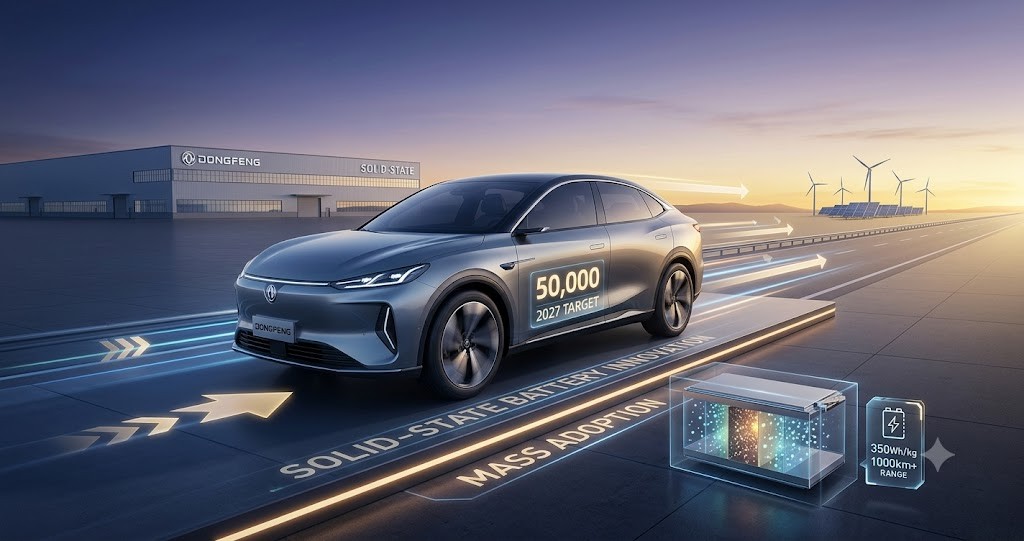
次世代の車載バッテリーとして世界中で開発競争が加速している「全固体電池」。中国の主要自動車メーカーである東風汽車(Dongfeng Motor)が、自社開発の全固体電池を搭載した車両を2027年までに5万台販売するという、具体的な量産・普及へのロードマップを発表しました。本記事では、この発表の概要とともに、同社の技術的特徴や中国市場における競争環境などの関連情報を交えて解説します。
概要と主なポイント
- 2027年までに5万台の販売を目指す 東風汽車は、自社開発の全固体電池を搭載した車両を2027年までに5万台納入する目標を掲げました。直近の計画として、今年(2026年)末までに全固体電池を搭載したデモ車両を100台投入する予定です。
- 量産化に向けたタイムライン 同社は、2030年頃に固体電池搭載車の小規模量産(パイロット生産)を実現し、2035年頃には大規模な量産と市場への本格的な普及を達成する見込みです。
- 自社開発による垂直統合 電極材料や固体電解質といったコアコンポーネントから、バッテリーパック全体の統合システムに至るまで、すべての主要技術を東風汽車が自社で開発しています。すでに2025年6月には固体電池研究所と0.2GWh(ギガワット時)の試作生産ラインを稼働させています。
- 過酷な環境での実証と進捗 開発中の350Wh/kg(ワット時毎キログラム)の固体電池は、今年1月に冬季の車両走行試験を完了。第4四半期(10~12月)には実際の車載用途への展開を計画しており、すでに安定した量産体制を確立しつつあります。また、2027年にはこの350Wh/kgの「急速充電対応版」の試作生産も開始する予定です。
技術的特徴:東風汽車の固体電池の強み
全固体電池は、従来の液体電解質を用いるリチウムイオン電池に比べ、高いエネルギー密度、航続距離の延長、そして発火リスクが極めて低いという優れた安全性を備えています。
従来型(LFP電池など)との比較メリット
- エネルギー密度が約2倍: 東風汽車が開発した350Wh/kgの固体電池は、現在市場で広く普及しているリン酸鉄リチウム(LFP)電池(約140~210Wh/kg)の約2倍のエネルギー密度を誇ります。
- 航続距離1,000km以上を達成: この高いエネルギー密度により、1回のフル充電で1,000キロメートル以上の走行が可能となり、EVユーザーの最大の懸念点である「航続距離への不安」を解消します。
関連情報・補足:中国EV市場における全固体電池の動向
1. 中国自動車大手の動き
全固体電池への投資を強化しているのは東風汽車だけではありません。中国第一汽車集団(FAW)の高級ブランド「紅旗(Hongqi)」も、今年初めに固体電池を搭載した初の試作車をラインオフ(公開)させており、国有自動車大手各社が国を挙げて実用化を急いでいます。
2. 電池サプライヤー(CATLやBYD)との競争と協調
車載電池の世界最大手であるCATL(寧徳時代)や、EV大手であり自社で電池も製造するBYDも開発のピッチを上げています。両社ともに「2027年までの少量生産・実車搭載」を目標として掲げており、東風汽車の「2027年に5万台販売」という目標は、これら電池専業大手のスケジュールとも合致する、非常に現実的かつ野心的なタイムラインと言えます。
3. 「全固体電池」と「半固体電池」の過渡期
現在、中国市場では完全に液体を排除した「全固体(All-Solid-State)」の前に、少量の液体を残した「半固体(Semi-Solid-State)」バッテリーを搭載したEV(NIO(蔚来汽車)など)がすでに一部実用化されています。東風汽車が今回目指す2027年の5万台や2030年の小規模量産は、技術的ハードルが極めて高い「全固体」の本格的な商業化フェーズへの突入を意味しており、今後の世界のEV勢力図を大きく塗り替える可能性があります。
出典:https://cnevpost.com/2026/07/08/dongfeng-50000-solid-state-battery-cars-2027/
Dongfeng Motor Aims to Sell 50,000 All-Solid-State Battery EVs by 2027 — Competing with In-House Developed 350 Wh/kg Battery
Introduction
The global race to develop “all-solid-state batteries” as the next-generation automotive power source is accelerating. Dongfeng Motor, a major Chinese automaker, has announced a concrete roadmap for mass production and commercialization, aiming to deliver 50,000 vehicles equipped with its in-house developed all-solid-state batteries by 2027. This article provides an overview of the announcement, along with its technical features and relevant context regarding the competitive landscape in the Chinese market.
Overview and Key Points
- Aiming to Sell 50,000 Vehicles by 2027 Dongfeng Motor has set a target to deliver 50,000 vehicles equipped with its self-developed all-solid-state batteries by 2027. As an immediate plan, the company intends to deploy 100 demonstration vehicles equipped with solid-state batteries by the end of this year (2026).
- Timeline for Commercialization The company expects to achieve small-scale mass production (pilot production) of solid-state battery vehicles around 2030, followed by large-scale mass production and full-scale market penetration around 2035.
- Vertical Integration via In-House Development Dongfeng Motor has developed all key technologies in-house, ranging from core components such as electrode materials and solid electrolytes to the integrated system of the entire battery pack. In June 2025, the company completed and commenced operations at its solid-state battery laboratory and a 0.2 GWh (gigawatt-hour) pilot production line.
- Validation in Harsh Environments and Progress The 350 Wh/kg (watt-hour per kilogram) solid-state battery currently under development completed winter vehicle testing in January this year. The company plans to implement vehicle applications in the fourth quarter (October–December) and is already establishing a stable mass-production system. Furthermore, it plans to start pilot production of a “fast-charging compatible version” of this 350 Wh/kg solid-state battery in 2027.
Technical Features: Strengths of Dongfeng Motor’s Solid-State Battery
Compared to conventional lithium-ion batteries that use liquid electrolytes, all-solid-state batteries offer higher energy density, extended driving ranges, and superior safety with an extremely low risk of catching fire.
Advantages Over Conventional Formats (Such as LFP Batteries)
- Approximately Double the Energy Density: The 350 Wh/kg solid-state battery developed by Dongfeng Motor boasts roughly twice the energy density of lithium iron phosphate (LFP) batteries (approximately 140 to 210 Wh/kg), which are currently widely used in the market.
- Achieving a Driving Range of Over 1,000 km: This high energy density enables a driving range of more than 1,000 kilometers on a single full charge, addressing “range anxiety,” which remains the primary concern for EV users.
Related Insights & Context: Trends in the Chinese EV Market for All-Solid-State Batteries
1. Moves by Major Chinese Automakers
Dongfeng Motor is not alone in ramping up investment in all-solid-state batteries. Hongqi, a premium brand under China FAW Group, also rolled out its first prototype car equipped with a solid-state battery earlier this year. State-owned automotive giants are rushing to commercialize this technology backed by national initiatives.
2. Competition and Collaboration with Battery Suppliers (CATL and BYD)
CATL, the world’s largest automotive battery manufacturer, and BYD, an EV giant that also manufactures its own batteries, are both accelerating their development paces. Both companies have set targets for “small-scale production and vehicle integration by 2027.” Dongfeng Motor’s goal of “selling 50,000 vehicles by 2027” aligns closely with the schedules of these battery specialists, representing a highly realistic yet ambitious timeline.
3. Transition Period Between “All-Solid-State” and “Semi-Solid-State”
Currently, in the Chinese market, EVs equipped with “semi-solid-state” batteries (such as those from NIO)—which retain a small amount of liquid before completely eliminating it—have already been partially commercialized. Dongfeng Motor’s target of 50,000 units by 2027 and small-scale mass production by 2030 signifies the market’s entry into a true commercialization phase for “all-solid-state” batteries, despite the extremely high technical hurdles involved.

コメント