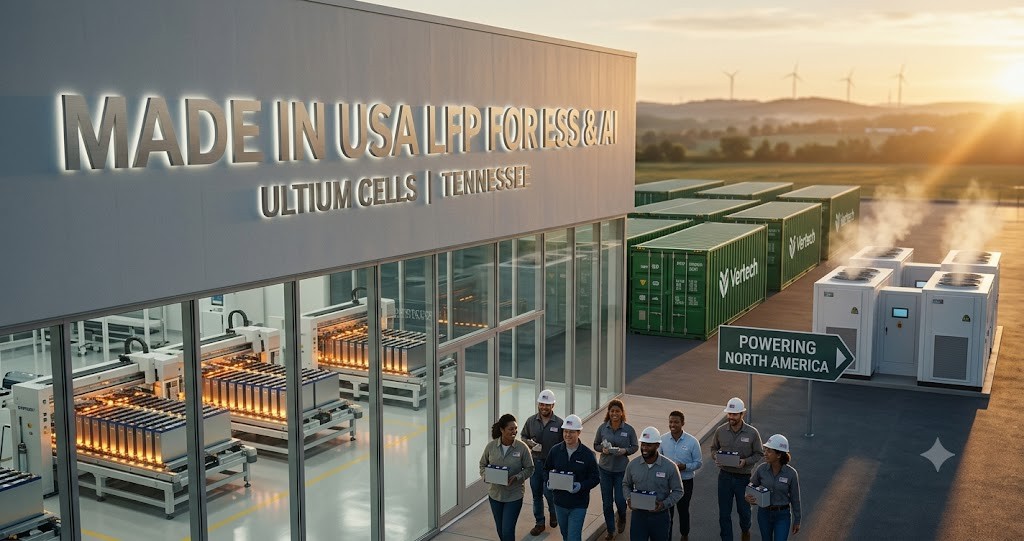
韓国の電池大手LGエナジーソリューション(LGES)と米ゼネラルモーターズ(GM)の合弁会社「ウルティウムセルズ(Ultium Cells)」が、テネシー州の工場でエネルギー貯蔵システム(ESS)向けのリン酸鉄リチウム(LFP)電池セルの量産を開始しました。電気自動車(EV)市場の成長鈍化が指摘される中、生成AIデータセンターの急増などで需要が爆発している北米の電力インフラ市場を狙う、同社の戦略的な転換点となる動きです。本記事では、この発表の概要と技術的・市場的な背景を交えて解説します。
発表の概要と主なポイント
- 投資からわずか4か月でのスピード量産開始 ウルティウムセルズは、EV用バッテリーからESS向けLFPバッテリーへのライン転換に約7000万ドル(約110億円)を投資する計画をわずか4か月前に発表したばかりでした。この迅速な製造能力の調整により、市場の需要変化へ柔軟に対応できる体制を証明しました。
- 一時解雇された従業員の復職 今回のライン稼働にともない、EV需要の減速を受けて今年1月に一時解雇(レイオフ)されていたテネシー工場の従業員が職場に復帰しました。雇用維持の観点でも現地でポジティブに受け止められています。
- AIデータセンターや再生可能エネルギーへ供給 生産されたLFPセルは、LGESの北米ESSシステムインテグレーション子会社である「Vertech」を通じて顧客へ供給されます。主な用途は、電力系統の安定化プロジェクト、再生可能エネルギーの蓄電システム、そして急速に電力量が増大しているAIデータセンター向けの電力インフラです。
技術的・戦略的特徴:なぜ「米国製LFP」なのか?
現在、世界のLFP(リン酸鉄リチウム)バッテリー市場は中国メーカーが圧倒的なシェアを握っていますが、今回の米国生産開始には極めて重要な戦略的意味があります。
1. 米インフレ抑制法(IRA)の国内製造要件をクリア
米国製のバッテリーは、米国のIRA(インフレ抑制法)に基づく税制優遇措置(製造補助金や税額控除)の対象となります。
- 中国サプライチェーンの遮断: 安全保障や通商規制の観点から中国製品への風当たりが強まる中、事実上「地産地消」の米国製LFPを確保することで、地政学的なリスクや規制のハードルを完全に排除しています。信頼性を重視する米国の電力会社やIT大手(データセンター事業者)にとって、非常に魅力的な選択肢となります。
2. コストと安全性を両立するLFPの採用
ESS(定置用蓄電池)市場では、EVのように「軽さ」や「極限のエネルギー密度」よりも、「低コスト」「長寿命」「高い安全性(発火リスクの低さ)」が重視されます。そのため、高価なニッケルやコバルトを使わないLFP電池はESSに最適とされており、LGESはこの分野での主導権獲得を狙っています。
関連情報・補足:LGESの北米ESS戦略と巨大な顧客網
1. 北米で「50GWh」を超える巨大な生産能力へ
テネシー工場の稼働は、LGESが北米全域に構築を進める5つの主要ESSバッテリー製造拠点計画の一環です。
- すでにミシガン州ホランド工場、およびホンダとの合弁会社(LH Battery Company)でESS向け生産実績があります。
- 今年(2026年)後半に操業開始予定のミシガン州ランシング施設が加わることで、同社の北米における年間ESS生産能力は50GWh(ギガワット時)を超える見込みです。これは大規模なギガファクトリーに匹敵する規模です。
2. 錚々たるグローバル企業との供給契約
LGESは北米市場で圧倒的な顧客基盤を急速に固めています。
- テスラ(Tesla)
- ハンファQcells(太陽光大手)
- テラジェン(Teragen)、エクセルシオール・エナジー・キャピタル(再生エネ開発大手)
- EG4
- さらに今年5月には、米IT大手オラクル(Oracle)のAIデータセンター向けプロジェクトなどを視野に、DTEエナジーと6GWhの大型供給契約を締結した実績もあります。
EV市場の荒波を、急速に伸びる「AI・クリーンエネルギー向け蓄電池(ESS)」という第二の柱でカバーする、同社の迅速な経営舵取りが明確になった発表と言えます。
出典:https://www.koreaherald.com/article/10802660
Ultium Cells, a LG-GM Joint Venture, Begins Mass Production of LFP Batteries for ESS at Tennessee Plant
Ultium Cells, a US-based battery joint venture between South Korean battery giant LG Energy Solution (LGES) and General Motors (GM), has commenced mass production of lithium iron phosphate (LFP) battery cells for energy storage systems (ESS) at its factory in Tennessee. Amid a reported slowdown in the electric vehicle (EV) market growth, this strategic pivot targets the booming North American power infrastructure market, which is experiencing explosive demand driven by the surge in generative AI data centers. This article delivers an overview of the announcement, along with its technical and market implications.
Overview and Key Points
- Rapid Production Launch Just Four Months Post-Investment Ultium Cells announced its plan to invest approximately 70 million USD to convert a portion of its EV battery production lines into ESS LFP battery manufacturing just four months ago. This swift adjustment of manufacturing capabilities demonstrates the company’s agility in adapting flexibly to shifting market demands.
- Reinstatement of Furloughed Employees With the line conversion now operational, Tennessee plant workers who had been furloughed in January due to the EV demand slowdown have returned to the workplace. This move has been positively received locally from an employment retention perspective.
- Supplying AI Data Centers and Renewable Energy Projects The manufactured LFP cells will be supplied to customers through Vertech, LGES’s North American ESS system integration subsidiary. Key applications are expected to support grid-stabilization projects, renewable energy storage systems, and power infrastructure for AI data centers, where electricity demand is rising rapidly.
Technical and Strategic Features: Why “US-Made LFP”?
While Chinese manufacturers currently hold an overwhelming share of the global LFP (lithium iron phosphate) battery market, the launch of this US production line carries critical strategic significance.
1. Meeting Domestic Manufacturing Requirements Under the US Inflation Reduction Act (IRA)
US-manufactured batteries qualify for tax incentives, such as manufacturing credits and tax deductions, under the US Inflation Reduction Act (IRA).
- Bypassing the Chinese Supply Chain: Amid tightening scrutiny on Chinese products due to national security and trade regulations, securing virtually “locally produced and consumed” US-made LFP cells eliminates geopolitical risks and regulatory hurdles. This makes it a highly attractive option for US utilities and major IT firms (data center operators) that prioritize supply chain reliability.
2. Adopting LFP to Balance Cost and Safety
In the stationary ESS market, “low cost,” “long cycle life,” and “high safety (low fire risk)” are prioritized over features like “lightweight” or “extreme energy density” required by EVs. Consequently, LFP batteries—which eliminate expensive nickel and cobalt—are ideal for ESS applications, and LGES aims to secure a leadership position in this segment.
Related Insights & Context: LGES’s North American ESS Strategy and Massive Customer Base
1. Scaling to a Massive Capacity Exceeding 50 GWh in North America
The activation of the Tennessee facility marks a new milestone in LGES’s blueprint to establish five major ESS battery manufacturing footprints across North America.
- The company already produces ESS batteries at its Holland plant in Michigan and at LH Battery Company, a Michigan-based joint venture with Honda.
- With the Lansing facility in Michigan scheduled to begin operations later this year (2026), LGES’s annual ESS production capacity in North America is projected to exceed 50 GWh (gigawatt-hours), a scale comparable to a massive gigafactory.
2. Supply Agreements with Prominent Global Enterprises
LGES is rapidly solidifying an dominant customer base in the North American market.
- Tesla
- Hanwha Qcells (a major solar energy company)
- Teragen and Excelsior Energy Capital (leading renewable energy developers)
- EG4
- Furthermore, in May, the company secured a large-scale 6 GWh ESS battery supply agreement with DTE Energy, eyeing projects such as Oracle’s AI data centers.
This announcement highlights the company’s swift corporate steering, successfully weathering the volatility of the EV market by capturing the fast-growing second pillar of “ESS for AI and clean energy.”

コメント