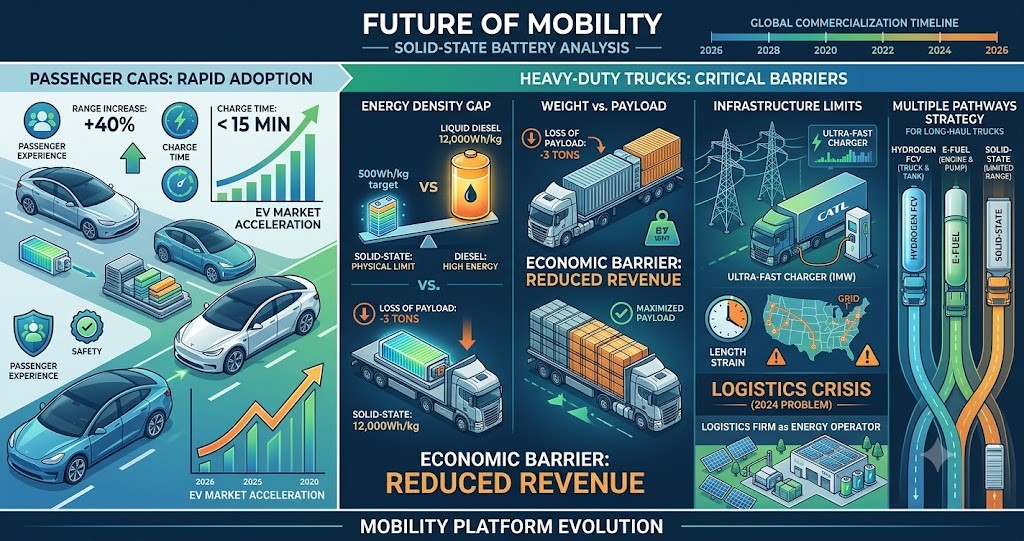
次世代バッテリーの切り札として期待される「全固体電池」。乗用車への搭載が進めばEV(電気自動車)シフトが一気に加速するという見方がある一方、大量の荷物を長距離へと運ぶ「大型トラック輸送」の領域では、全固体電池をもってしても超えられない物理的・経済的な壁が存在します。
本稿では、提供された情報をベースに、2026年現在の最新動向や背景となる関連情報を補足しながら、商用車脱炭素化の現実とこれからのモビリティ戦略について分かりやすくまとめます。
- 1. 全固体電池の期待と「物理的な壁」
- 2. 重量増がもたらす「積載量減少」の死活問題
- 3. 充電インフラと送配電網(グリッド)の限界
- 4. 商用車脱炭素戦略の多角化(マルチパスウェイ)
- 5. 物流危機(2024年問題など)とコスト転嫁のリスク
- まとめ:次世代の「モビリティ・プラットフォーマー」へ
- The Wall Even Solid-State Batteries Can’t Cross: The Reality of Weight and Payload Obstructing Logistics Electrification
- 1. Expectations for Solid-State Batteries and the “Physical Wall”
- 2. The Critical Issue of Payload Reduction Caused by Increased Weight
- 3. Limitations of Charging Infrastructure and the Grid
- 4. Diversification of Commercial Decarbonization: The Multi-Pathway Strategy
- 5. Logistics Crises and the Risk of Cost Pass-Through
- Conclusion: Moving Toward Next-Generation “Mobility Platformers”
1. 全固体電池の期待と「物理的な壁」
全固体電池は、安全性や充電速度の大幅な向上が見込めるものの、エネルギー密度の面で液体リチウムイオン電池の延長線上の物理的制約を抱えています。
- エネルギー密度の圧倒的な差日本の開発ロードマップでは、2030年頃の本格実用化に向けて重量エネルギー密度500Wh/kgレベルを目指しています。しかし、従来のガソリンや軽油のエネルギー密度(約12,000Wh/kg)と比較すると依然として大きな開きがあります。
- 乗用車と商用車の評価軸の違い乗車体験や付加価値を重視する乗用車では、電池性能の向上に伴って市場が拡大します。一方、徹底した経済合理性が求められる商用トラック(特に長距離・大量輸送)では、現在の運行ルートや稼働率を維持するために現行比約4倍のエネルギー密度向上が必要とされており、全固体電池だけでこれを解決するのは極めて困難です。
2. 重量増がもたらす「積載量減少」の死活問題
物流の電動化において最も大きなネックとなるのが、「バッテリー重量」と「最大積載量」のトレードオフ(二律背反)です。
- 運賃収入への直撃長距離走行のために大容量バッテリーを搭載すると車両自体が重くなり、法規制(総重量上限)の手前、荷物を載せるスペースや重量が数トン単位で削られます。これは物流企業の収益減少に直結します。
- 取引構造への波及車体の軽量化だけでこの巨大な質量をカバーすることには限界があります。積載量の減少は、従来のチャーター契約や運賃制度といった荷主企業との取引構造そのものの見直しを迫る、物流全体の構造的課題です。
3. 充電インフラと送配電網(グリッド)の限界
バッテリー容量を抑えてこまめに充電する運用モデルも検討されていますが、ここにも新たなインフラの壁が立ちはだかります。
- 時間効率の損失数分で燃料補給が終わる内燃機関車に対し、EVトラックの充電時間は機会損失(稼働停止)につながります。
- 社会インフラとしての電力網の課題超急速充電器を拠点に整備するには莫大な投資が必要です。さらに、複数台の大型トラックを同時に急速充電する場合、地域の電力網(送配電網)への負荷が跳ね上がります。
- 関連情報:エネルギー運用者としての物流企業現在、日本国内でも地域間連系線や周波数変換設備の増強といった広域インフラ整備が急ピッチで進められていますが、物流側の導入計画との同期が不可欠です。物流事業者は単なる運行管理だけでなく、受変電管理などを行う「エネルギー運用者」としての役割も求められ始めています。
4. 商用車脱炭素戦略の多角化(マルチパスウェイ)
一時期の世界的な「EV一辺倒」の潮流から、現在は実際の稼働率や用途を重視し、複数の技術を組み合わせる「マルチパスウェイ(全方位)戦略」への移行が進んでいます。
| 技術・燃料 | メリット | 課題・物理的弱点 |
| バッテリーEV (BEV) | 街乗りや短距離配送、小・中型車に最適 | 長距離大型トラックでは重量と充電時間の壁がある |
| 燃料電池車 (FCV) (水素) | 短時間での充填が可能、長距離輸送に対応しやすい | 体積エネルギー密度が低い。 700気圧への圧縮等に膨大な電力を消費するため、製造から使用まで(Well-to-Wheel)の総合エネルギー効率がBEVに劣る。 |
| 合成燃料 (e-fuel) | 既存の内燃機関(エンジン)や給油インフラの資産をそのまま活用できる | 製造コストの低減やサプライチェーンの確立にまだ時間がかかる |
【関連・補足情報】企業間協調の動き
従来の自前主義から脱却する象徴的な動きとして、トヨタ自動車といすゞ自動車による国内初の量産燃料電池(FC)小型トラックの共同開発(2026年4月合意)などが挙げられます。また、ポルシェなどが推進する合成燃料プロジェクト(Haru Oniなど)も世界的に注目を集めており、商用車領域での競争軸は多角化しています。
5. 物流危機(2024年問題など)とコスト転嫁のリスク
現場の経済的負担と環境負荷低減のバランスをどう取るかが、社会全体の命題となっています。
- 効率化への逆行リスク現在、物流業界はドライバーの時間外労働規制強化に伴う「2024年問題」の渦中にあり、「ダブル連結トラック」の普及や新東名高速での「レベル4自動運転トラック」の実用化(2026年度以降目標)など、必死の省人化・効率化を進めています。ここに技術的理想論だけで過度な電動化を強硬すれば、積載効率が落ちて必要な車両台数が増え、せっかくの効率化の効果を相殺してしまいます。
- 経済学的な懸念:ジェボンズのパラドックス仮に技術革新でエネルギー効率が向上しても、運用コストが下がったことでかえって物流需要が増え、社会全体の総エネルギー消費量が減らない現象(リバウンド効果)が懸念されます。これを防ぐには、環境税などのカーボンプライシングを含めた精緻な政策的介入が必要です。
まとめ:次世代の「モビリティ・プラットフォーマー」へ
全固体電池は強力な革新技術ですが、決して万能薬ではなく、「適材適所の選択肢のひとつ」として位置づけるのが現実的です。市街地配送の小型車はEV、長距離の大型トラックは水素や合成燃料といったように、社会全体のコストとCO2排出量を最小化する統合的なアプローチ(適材適所)が求められます。
これからの自動車メーカーは、単に車両を製造・販売するだけでなく、サプライチェーン全体の環境負荷(LCA:ライフサイクルアセスメント)を担保し、自動化技術や次世代エネルギーインフラと融合させる「モビリティ・プラットフォーマー(システムインテグレーター)」への進化が必要です。異業種との深い連携こそが、持続可能な輸送体制を確立する鍵となります。
出典:https://article.auone.jp/detail/1/3/6/211_6_r_20260624_1782253267038153
The Wall Even Solid-State Batteries Can’t Cross: The Reality of Weight and Payload Obstructing Logistics Electrification
Solid-state batteries are highly anticipated as the ultimate game-changer for next-generation batteries. While some believe that their integration into passenger cars will rapidly accelerate the shift to electric vehicles (EVs), the realm of long-haul, heavy-duty truck transportation faces physical and economic barriers that even solid-state batteries cannot overcome.
Based on the provided data, this article outlines the realities of commercial vehicle decarbonization and future mobility strategies in an easy-to-understand manner, incorporating the latest trends and background context as of 2026.
1. Expectations for Solid-State Batteries and the “Physical Wall”
Although solid-state batteries promise significant improvements in safety and charging speed, they still face physical limitations regarding energy density, remaining an extension of conventional liquid lithium-ion technology.
- The Massive Gap in Energy DensityJapan’s development roadmap aims for a gravimetric energy density of around 500 Wh/kg for full-scale commercialization by around 2030. However, this still pales in comparison to the energy density of conventional gasoline or diesel, which sits at approximately 12,000 Wh/kg.
- Differing Evaluation Metrics: Passenger Cars vs. Commercial VehiclesFor passenger cars, which prioritize user experience and added value, market growth scales with improvements in battery performance. Conversely, commercial trucks demand strict economic rationality. For long-haul, heavy-duty transport to maintain current routes and operating rates, a fourfold increase in current energy density is required—a feat extremely difficult to achieve with solid-state batteries alone.
2. The Critical Issue of Payload Reduction Caused by Increased Weight
The biggest bottleneck in electrifying logistics is the trade-off between battery weight and maximum payload capacity.
- Direct Hit to Freight RevenueEquipping vehicles with large-capacity batteries for long-distance travel drastically increases vehicle curb weight. Due to legal gross vehicle weight (GVW) limits, this reduces cargo capacity by several tons, directly leading to lower revenue for logistics companies.
- Impact on Transaction StructuresLightweighting the vehicle chassis has its limits when compensating for massive battery mass. This drop in payload capacity is a structural challenge for the entire logistics industry, forcing a re-evaluation of traditional charter contracts and pricing structures between shippers and transport companies.
3. Limitations of Charging Infrastructure and the Grid
While operating models that use smaller batteries paired with frequent charging at hub locations are being considered, this approach faces infrastructure constraints.
- Loss of Time EfficiencyCompared to internal combustion engine (ICE) vehicles that refuel in minutes, the charging time for electric trucks translates directly into operational downtime and lost opportunities.
- Power Grid Challenges as Public InfrastructureInstalling ultra-fast chargers at logistics hubs requires massive capital investment. Furthermore, simultaneously charging multiple heavy-duty trucks spikes the load on local power grids (distribution networks).
- Contextual Information: Logistics Companies as Energy OperatorsIn Japan, wide-area infrastructure upgrades—such as reinforcing inter-regional power lines and frequency converters—are progressing rapidly, but they must sync with the deployment roadmaps of logistics companies. Logistics operators are now expected to step beyond fleet management and act as “energy operators” who manage power reception and transformer equipment.
4. Diversification of Commercial Decarbonization: The Multi-Pathway Strategy
Moving away from the brief global trend of a “100% EV focus,” the industry is shifting toward a “multi-pathway (all-directional) strategy” that prioritizes actual operational efficiency, use cases, and a mix of technologies.
| Technology / Fuel | Advantages | Challenges & Physical Weaknesses |
| Battery EV (BEV) | Ideal for urban driving, short-haul deliveries, and light-to-medium duty vehicles. | Long-haul heavy trucks face severe weight and charging time constraints. |
| Fuel Cell Vehicle (FCV) (Hydrogen) | Allows quick refueling; well-suited for long-haul transport. | Low volumetric energy density. Consumes massive electricity (approx. 16 kWh per fueling) to compress hydrogen to 700 bar, making its Well-to-Wheel efficiency lower than BEVs. |
| Synthetic Fuel (e-fuel) | Utilizes existing ICE assets, engines, and fueling infrastructure. | Reducing production costs and establishing a stable supply chain will take time. |
[Related & Supplementary Information] Corporate Collaboration Trends
In a notable departure from traditional insourcing, Toyota and Isuzu agreed in April 2026 to jointly develop Japan’s first mass-produced light-duty fuel cell truck. Additionally, synthetic fuel initiatives like Porsche’s Haru Oni project are gaining global attention, demonstrating how competition in the commercial sector is diversifying.
5. Logistics Crises and the Risk of Cost Pass-Through
Balancing the economic burden on the ground with environmental impact reduction has become a critical societal challenge.
- The Risk of Reversing Efficiency GainsThe Japanese logistics sector is currently grappling with the “2024 problem” caused by stricter overtime caps (960 hours/year) for drivers. To survive, the industry is aggressively boosting efficiency through “double-trailer trucks” and aiming to deploy Level 4 autonomous trucks on the Shin-Tomei Expressway from fiscal 2026 onward. Forcing aggressive electrification based solely on technical idealism would degrade payload efficiency and increase the number of vehicles required, completely wiping out the labor-saving benefits achieved by automation and longer trailers.
- Economic Concern: The Jevons ParadoxIn economics, even if technological innovation improves energy efficiency and lowers operational costs, it can inadvertently trigger a rebound effect—driving up overall logistics demand and failing to reduce society’s total energy consumption. Preventing this requires precise policy interventions, including carbon pricing mechanisms like environmental taxes.
Conclusion: Moving Toward Next-Generation “Mobility Platformers”
While solid-state batteries remain a powerful innovation, they are not a silver bullet. Realistically, they should be treated as just one option among many in a right-vehicle, right-place framework. An integrated approach is needed to minimize total societal cost and carbon emissions: using BEVs for short-range urban deliveries, and hydrogen or e-fuels for long-haul heavy-duty trucks.
Automakers must transition from simply manufacturing and selling vehicles to becoming Mobility Platformers (System Integrators). They need to guarantee environmental performance across the entire supply chain via Life Cycle Assessments (LCA), integrate vehicles with next-generation energy infrastructure, and implement autonomous technologies to alleviate logistics crises. Deep collaboration across industries—bridging energy, logistics, and infrastructure—is the ultimate requirement for realizing a sustainable future society.

コメント