中国のEV(電気自動車)市場は、最先端の技術競争から「熾烈なコスト競争」のフェーズへと完全に移行しています。その中心にいるのが、通信機器大手ファーウェイ(華為技術)が主導するEVブランド連合「鴻蒙智行(HIMA)」です。
HIMAはこれまで、車載電池最大手である寧徳時代(CATL)との強力なタッグにより高級路線を突き進んできましたが、原材料高騰や競合の値下げ攻勢を受け、大きな方向転換を迫られています。本稿では、提供されたニュースをベースに、中国EV市場の最新背景や関連情報を補足しながら、ファーウェイ陣営が挑む「脱・CATL独占」とコスト削減のリアルについてまとめます。
- 1. ファーウェイ陣営「HIMA」のサプライチェーン見直し
- 2. コスト削減のリアル:電池は車両コストの3割
- 3. 「2026年・年間100万台」の野心的な販売目標と市場の現実
- 4. 【関連・補足情報】中国EV市場における「LFP電池」の台頭とCATLの反撃
- まとめ:高級路線から「規模の拡大」へ
- The Shock of “Batteries Equal 30% of Total Cost”: The Reality of the Huawei EV Alliance’s Shift Away from CATL
- 1. HIMA’s Supply Chain Overhaul
- 2. The Reality of Cost Cutting: Batteries Account for 30% of Vehicle Cost
- 3. Ambitious 2026 Sales Target of 1 Million Units and Market Realities
- 4. Contextual Information: The Rise of LFP Batteries and CATL’s Counterattack
- Conclusion: From Premium Focus to Achieving Economies of Scale
1. ファーウェイ陣営「HIMA」のサプライチェーン見直し
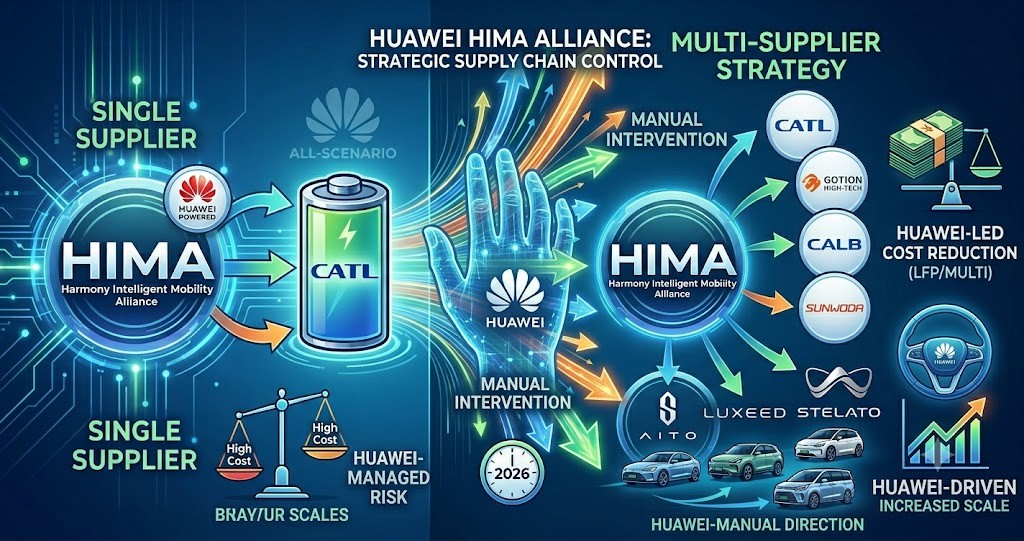
HIMAは、急騰するサプライチェーンコストに対応するため、これまでCATLに依存してきた車載電池の供給体制をマルチサプライヤー(複数買い付け)へと切り替えています。
- 「脱・独占」へ動く各ブランド 超高級ブランド「尊界(MAEXTRO)」を除く複数ブランドで、第2・第3の電池メーカー採用が加速しています。特にCATLと5年間の戦略的提携を結んでいた「問界(AITO)」は、すでに国軒高科(Gotion High-Tech)や中創新航科技(CALB)をサプライチェーンに導入。「智界(LUXEED)」でも国軒高科や欣旺達電子(Sunwoda、サンオーダ)の採用が見込まれています。
- 高いハードル「巨鯨」プラットフォーム 新規参入する電池メーカーは、ファーウェイ独自の厳しい電池規格・安全審査「巨鯨」をクリアしなければなりません。満充電かつ高温環境下での熱暴走試験でも爆発しないといった、極めて高い安全性能が要求されます。ファーウェイはすでに国軒高科の工場へ担当チームを派遣し、量産に向けた生産ラインの審査を開始しています。
2. コスト削減のリアル:電池は車両コストの3割
完成車メーカーにとって、主要原材料(半導体メモリーや炭酸リチウムなど)の価格高騰は利益を圧迫する最大の要因です。
- 1台あたり最大50万円のコスト増 AITOを共同運営する賽力斯集団(Seres Group)のトップは、サプライチェーンの値上げにより、車両1台あたり1万5000から2万元(約36万から50万円)もコストが増加したと明かしています。
- CATL製と中堅メーカー製の価格差 車両コスト全体の約30%を占めるバッテリーのコストカットは最優先事項です。業界関係者によると、サンオーダ製の電池パックは同規格のCATL製より約10%安価。50kWhクラスの電池で試算すると、1台あたり2000元(約5万円)近くのコストを削減できます。価格競争が激しい20万から30万元(約480万から720万円)クラスのEVにおいて、この差は極めて決定的なアドバンテージとなります。
3. 「2026年・年間100万台」の野心的な販売目標と市場の現実
HIMAがリスクを取ってまで電池サプライヤーの分散を急ぐ背景には、2026年に掲げる「年間納車台数100万台以上」という高いハードルがあります。
- 直近の苦戦とライバルの値下げ 2026年1-5月期の累計納車台数は20万台に届いておらず、その6割をAITOブランドに依存しているのが現状です。さらに、小鵬汽車(Xpeng)や小米汽車(Xiaomi Auto)といった競合が中・低価格帯市場で次々と値下げを敢行したため、HIMAも早急にコスパを高める必要に迫られました。
- 低価格化への成果 国軒高科の81kWhリン酸鉄リチウムイオン電池を採用した新型「AITO M6」の純電動モデルでは、エントリー価格を22万9800元(約550万円)に引き下げることに成功しています。
4. 【関連・補足情報】中国EV市場における「LFP電池」の台頭とCATLの反撃
ここで重要な関連情報として、中国市場における「LFP(リン酸鉄リチウムイオン)電池」の普及と電池メーカーの勢力図が挙げられます。
- なぜ中堅メーカーが有利なのか 今回HIMAが採用を広げている国軒高科やサンオーダは、比較的安価で安全性が高いLFP電池の技術に強みを持っています。トップのCATLに比べてシェアを拡大したいため、HIMAが求める厳しい「巨鯨」規格の認証費用や開発コストを自ら引き受けるなど、非常に協力的な姿勢を見せています。
- 揺らぐCATLの独占と、王者の反撃 これまで中国の高級EV市場は「CATL製バッテリー搭載」が一種のステータス(安心の証)でした。しかし、自動車メーカー各社が利益確保のために「脱・CATL(サプライヤー分散)」を進めた結果、CATLの独占体制に綻びが生じています。もちろんCATL側も手をこまねいているわけではなく、受注を維持・拡大するために、積極的な価格戦略(値下げや新プランの提示)の見直しに動いており、電池業界の価格破壊がさらに進む可能性があります。
まとめ:高級路線から「規模の拡大」へ
これまでファーウェイ陣営は、最先端のスマート化(自動運転技術や車載OS)と高級感を武器にシェアを拡大してきました。しかし、展開する5つのブランドがカバーする価格帯が15万から150万元(約360万から3600万円)へと広がるにつれ、経営戦略は「ブランド価値の追求」から「量産による規模の拡大」へとシフトしています。
今回の電池サプライヤー多角化は、HIMAにとって本格的なコスト競争を勝ち抜くための第一歩に過ぎません。新モデルの政府認可といった不確定要素は残るものの、自動車とサプライチェーンの主導権を巡るファーウェイとCATLの駆け引きは、今後のグローバルEV市場のコスト基準を大きく左右することになりそうです。
出典:https://news.yahoo.co.jp/articles/3cbfb57ee58d0f1ec718634fea1c9bffdd897ea4
The Shock of “Batteries Equal 30% of Total Cost”: The Reality of the Huawei EV Alliance’s Shift Away from CATL
The Chinese electric vehicle (EV) market has completely transitioned from a race for cutting-edge technology into a phase of fierce cost competition. At the center of this shift is the Harmony Intelligent Mobility Alliance (HIMA), an EV brand alliance led by telecommunications giant Huawei.
HIMA has previously pursued a premium strategy through a powerful partnership with Contemporary Amperex Technology Co., Limited (CATL), the world’s largest automotive battery maker. However, faced with soaring raw material prices and aggressive price cuts from competitors, the alliance is being forced to make a major strategic pivot. Based on recent news, this article summarizes the reality of the Huawei camp’s move away from a CATL monopoly and its push for cost reduction, supplemented by the latest background information on the Chinese EV market.
1. HIMA’s Supply Chain Overhaul
To cope with skyrocketing supply chain costs, HIMA is shifting its automotive battery sourcing strategy away from an exclusive reliance on CATL toward a multi-supplier approach.
- Brands Moving to Break the Monopoly The adoption of second and third-tier battery manufacturers is accelerating across multiple HIMA brands, with the sole exception of the ultra-luxury brand MAEXTRO. In particular, AITO, which had signed a five-year strategic partnership with CATL, has already integrated Gotion High-Tech and China Aviation Lithium Battery (CALB) into its supply chain. Gotion High-Tech and Sunwoda are also expected to be brought on board for the LUXEED brand.
- The High Hurdle of the “Ju Whale” Platform New battery suppliers must pass Huawei’s strict proprietary battery standards and safety audit, known as the “Ju Whale” platform. This framework demands exceptional safety performance, requiring that battery packs do not explode during thermal runaway tests even under fully charged, high-temperature conditions. Huawei has already dispatched a dedicated team to Gotion High-Tech’s factories to begin auditing production lines for mass production.
2. The Reality of Cost Cutting: Batteries Account for 30% of Vehicle Cost
For automakers, the rising prices of key raw materials, such as semiconductor memory and lithium carbonate, represent the single greatest squeeze on profit margins.
- Cost Increases of Up to 500,000 Yen per Vehicle The head of Seres Group, which co-operates the AITO brand, previously revealed that supply chain price hikes increased the cost of each vehicle by approximately 15,000 to 20,000 yuan (about 360,000 to 500,000 yen).
- The Price Gap Between CATL and Mid-Tier Manufacturers Because batteries account for roughly 30% of total vehicle costs, cutting battery expenditures is a top priority. Industry sources indicate that Sunwoda’s battery packs are roughly 10% less expensive than CATL packs with identical specifications. For a 50 kWh battery pack, this saves nearly 2,000 yuan (around 50,000 yen) per vehicle. In the highly competitive 200,000 to 300,000 yuan (approx. 4.8 million to 7.2 million yen) EV segment, this price difference offers a critical competitive advantage.
3. Ambitious 2026 Sales Target of 1 Million Units and Market Realities
HIMA’s urgency in diversifying its battery suppliers, despite the associated risks, is driven by its high hurdle of achieving over 1 million annual vehicle deliveries by 2026.
- Recent Struggles and Competitor Price Cuts Cumulative deliveries for the January-to-May period of 2026 have fallen short of 200,000 units, with 60% of those volumes relying heavily on the AITO brand. Furthermore, as rivals like Xpeng and Xiaomi Auto aggressively cut prices in the mid-to-low-end market segments, HIMA has faced an urgent need to improve its cost-to-performance ratio.
- Results of the Low-Cost Push By adopting Gotion High-Tech’s 81 kWh lithium iron phosphate (LFP) battery, the new all-electric model of the AITO M6 successfully lowered its entry price to 229,800 yuan (around 5.5 million yen).
4. Contextual Information: The Rise of LFP Batteries and CATL’s Counterattack
Crucial context to consider includes the widespread adoption of LFP (lithium iron phosphate) batteries in the Chinese market and the changing dynamics among battery manufacturers.
- Why Mid-Tier Manufacturers Hold an Advantage The mid-tier manufacturers HIMA is increasingly turning to, such as Gotion High-Tech and Sunwoda, possess strong expertise in LFP battery technology, which is inherently cheaper and safer. Eager to expand their market share relative to the industry leader, these mid-tier players are proving highly cooperative—even absorbing the certification fees and development costs required to meet Huawei’s stringent “Ju Whale” standards.
- The Erosion of CATL’s Monopoly and the King’s Response Previously, a “CATL Inside” battery served as a premium status symbol and a stamp of reassurance in the Chinese luxury EV market. However, as automakers diversify their suppliers to secure profit margins, cracks are appearing in CATL’s monopoly. CATL is not standing idly by; to protect and expand its order volume, the company is actively revising its pricing strategies with discounts and new financial structures, which could further accelerate price deflation across the battery industry.
Conclusion: From Premium Focus to Achieving Economies of Scale
Until now, the Huawei camp has expanded its market share by leveraging cutting-edge smart features, such as autonomous driving tech and proprietary in-car operating systems, alongside a premium brand image. However, as the price range covered by its five distinct brands expands to encompass 150,000 to 1.5 million yuan (about 3.6 million to 36 million yen), its management strategy is shifting away from purely chasing brand equity toward achieving economies of scale through mass production.
This battery supplier diversification represents only the first step for HIMA in navigating a full-scale price war. While uncertainties remain regarding government regulatory approval for new models, the ongoing maneuvering between Huawei and CATL over control of the automotive supply chain will heavily dictate the cost benchmarks of the global EV market going forward.
コメント