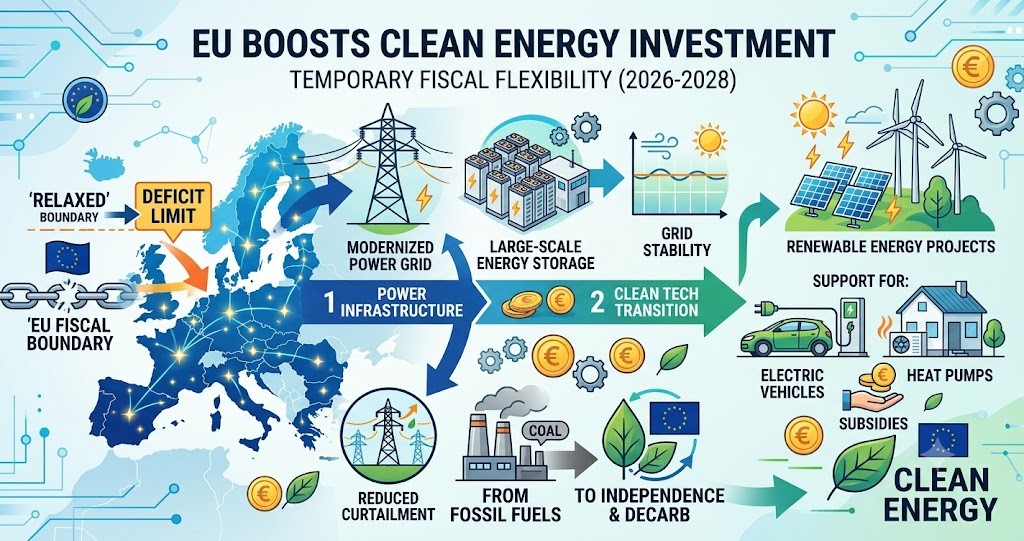
欧州委員会は、エネルギー価格の高騰と安全保障上の懸念に対応するため、EUの厳格な財政規律(加盟国が守るべき財政赤字の基準など)を一時的に緩和する提案を行いました。これにより加盟国は、送電網、蓄電システム、再生可能エネルギーなどのインフラや、クリーンテクノロジーへの投資を、財政制限を気にすることなく拡大できるようになります。
財政緩和の具体的な仕組み
- 適用される特例: これまで主に「国防費の増額」を認めるために使われてきた国家免責条項を、エネルギー関連の投資にも拡大適用します。
- 財政余地の規模: 2026年から2028年までの期間、年間で国内総生産(GDP)の最大0.3%、全期間を通してはGDPの0.6%を上限とする追加支出が認められます。
- 主な対象分野:
- 送電網の拡張・近代化
- エネルギー貯蔵(大型蓄電池など)
- 太陽光発電システムの設置
- ヒートポンプや電気自動車(EV)の購入補助金
関連情報(背景と影響)
1. 今回の措置が必要となった背景
今回の決定の引き金となったのは、中東地域での紛争激化と、それに伴うホルムズ海峡(世界の原油・ガス輸送の要衝)での航行障害です。これによりエネルギー価格が急騰し、欧州経済への悪影響が懸念されたため、加盟国から財政ルールの柔軟化を求める声が強まっていました。
2. 過去の「危機対策」との決定的な違い
かつてのエネルギー危機(ロシアによるウクライナ侵攻直後など)では、各国政府は市民や企業を守るために「化石燃料の消費に対する直接的な補助金」を支給していました。しかし、これは結果として化石燃料への依存を長引かせる弊害がありました。 今回の提案は、目先の燃料費を穴埋めするのではなく、「エネルギーシステムの構造そのものを変革し、化石燃料から完全に脱却するための投資」に資金を集中させる点が大きく異なります。
3. 送電網と蓄電(エネルギー貯蔵)が最優先される理由
欧州委員会が送電網と蓄電を最優先課題に挙げた背景には、再生可能エネルギー特有の課題があります。
- 送電線の不足: 太陽光や風力で発電した電気を、需要のある都市部や工業地帯へ運ぶための送電インフラが欧州全域で著しく不足しています。
- 出力制御の回避: 太陽光などは天候によって発電量が大きく左右されるため、電気が余ったときに貯めておける大型蓄電池(エネルギー貯蔵)がなければ、せっかくのクリーン電力を捨てることになってしまいます。 これら「ボトルネック」となっている基盤インフラを国費で迅速に整備することが、欧州全体のエネルギー自給率向上に直結します。
4. クリーンエネルギー市場への長期的影響
この財政的柔軟性の開放により、2026年以降、欧州市場では太陽光パネル、産業用蓄電池、家庭用ヒートポンプ、そしてEV関連産業への公共投資や民間補助金が一気に加速すると予想されます。EU全体の脱炭素化プロジェクトが再び強い推進力を得ることになるでしょう。
出典:https://www.ess-news.com/2026/06/08/eu-opens-fiscal-flexibility-for-grids-storage-renewables/
EU Unlocks Fiscal Flexibility for Power Grids, Energy Storage, and Renewable Energy Sectors
The European Commission has proposed a temporary relaxation of the EU’s strict fiscal rules (such as budget deficit limits for member states) in response to soaring energy prices and security concerns. This move will allow member states to expand investments in infrastructure—such as power grids, energy storage systems, and renewable energy—as well as clean technologies, without being constrained by fiscal limitations.
Specific Mechanism of Fiscal Relaxation
- Applicable Exemption: The national exemption clause, which has previously been used primarily to allow for increases in defense spending, will be expanded to cover energy-related investments.
- Scale of Fiscal Space: For the period from 2026 to 2028, additional spending will be permitted up to a maximum of 0.3% of Gross Domestic Product (GDP) annually, capped at 0.6% of GDP over the entire period.
- Main Target Areas:
- Expansion and modernization of power grids
- Energy storage (such as large-scale batteries)
- Installation of solar power systems
- Purchase subsidies for heat pumps and electric vehicles (EVs)
Related Information (Background and Impact)
1. Background Behind the Measures
The catalyst for this decision was the escalating conflict in the Middle East and the resulting navigation disruptions in the Strait of Hormuz, a critical bottleneck for global oil and gas transit. This situation caused energy prices to spike and sparked fears of a negative economic impact across Europe, prompting member states to call for greater flexibility in EU fiscal rules.
2. A Crucial Difference from Past “Crisis Responses”
During previous energy crises (such as the immediate aftermath of Russia’s invasion of Ukraine), governments provided direct subsidies for fossil fuel consumption to protect citizens and businesses. However, this ultimately carried the downside of prolonging dependency on fossil fuels. The current proposal is vastly different: instead of covering short-term fuel costs, it focuses funding entirely on investments that transform the structural core of the energy system to achieve a complete departure from fossil fuels.
3. Why Power Grids and Energy Storage are Prioritized
The European Commission’s decision to prioritize grids and storage stems from challenges unique to renewable energy.
- Shortage of Power Lines: Transmission infrastructure required to move electricity generated by solar and wind to high-demand urban and industrial areas is severely lacking across Europe.
- Avoiding Curtailment: Because solar and wind power output depends heavily on the weather, without large-scale energy storage to hold surplus electricity, valuable clean energy would go to waste. Using public funds to rapidly upgrade these bottlenecked foundational infrastructures directly links to improving the energy self-sufficiency of the entire EU.
4. Long-Term Impact on the Clean Energy Market
By unlocking this fiscal flexibility, public investment and private subsidies for solar panels, industrial batteries, residential heat pumps, and EV-related industries are expected to accelerate rapidly across the European market starting in 2026. This is set to breathe powerful new momentum into decarbonization projects across the EU.

コメント