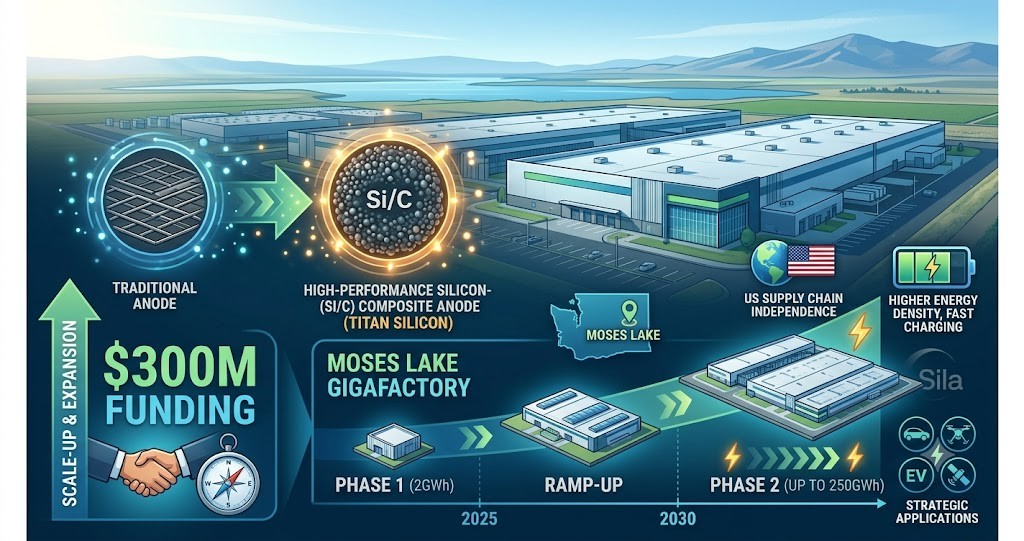
先進バッテリー材料企業のSila社は、Atreides ManagementおよびSutter Hill Venturesが主導するプライベートエクイティラウンドにて3億ドル(約450億円規模)の資金調達を完了したことを発表しました。本資金は、同社の代表的なシリコンカーボン(Si/C)負極材「Titan Silicon」の生産加速と、ワシントン州モーゼスレイク工場の第2期拡張計画に充てられます。
1. 資金調達の目的と主な背景
- サプライチェーンの脱中国化と米国技術主権の確立: 現在、世界のバッテリー負極材加工の90%以上、セル生産の80%以上を中国が握っています。EVだけでなくドローン、衛星、防衛、AI、ロボット工学、エレクトロニクスなどの重要産業における単一障害点リスク(供給途絶や輸出規制リスク)を回避するため、米国国内での大規模生産体制を整備します。
- エネルギー密度の劇的な向上: SilaのTitan Siliconは、従来のグラファイト(黒鉛)と比較して20〜40%高いエネルギー密度を実現し、バッテリーの小型軽量化および超高速充電を可能にします。
2. モーゼスレイク工場の規模と拡張ロードマップ
- 世界初のシリコン負極ギガファクトリー: 160エーカーの敷地を持つワシントン州モーゼスレイク工場は、2025年秋に建設を終えて稼働を開始しており、現在ランプアップ(生産拡大)過程にあります。
- 最大250GWhへの拡張計画: 第1期段階の2GWhから、今後5年間で最大250GWhまで生産能力を拡張する予定です。完成すれば世界最大の負極材製造施設となり、地元ワシントン州で数百人の高賃金雇用を創出します。
【関連情報・背景解説】
- Sila Nanotechnologies社とは: 2011年に設立されたカリフォルニア州アラメダ拠点のクリーンテック企業です。最高経営責任者(CEO)のジーン・ベルディチェフスキー氏は、Tesla(テスラ)の初期エンジニアとしてRoadster(ロードスター)の開発に携わった経歴を持ちます。2021年にはウェアラブルデバイス向けに Titan Silicon を出荷開始し、実用化で業界をリードしています。
- 大手自動車メーカーとの提携関係: Sila社のシリコン負極材は、独Mercedes-Benz(メルセデス・ベンツ)の電動オフローダー「Gクラス(EQG)」の長航続距離オプションバッテリーとして採用が決定しています。また、Porsche(ポルシェ)など他大手メーカーとも戦略的パートナーシップを結んでおり、EV市場におけるゲームチェンジャーとして期待されています。
- シリコンアノード(負極)市場の加速: シリコンはグラファイトに比べ約10倍の理論容量を持つ反面、充放電時の膨張・劣化が課題でした。Sila社をはじめとする新興各社がナノ構造化やシリコン・カーボン複合化技術を確立したことで、100%グラファイトからの置き換えが世界規模で急速に進んでいます。
US-Based Sila Raises 300 Million USD to Scale Up Silicon Anode Production
Advanced battery materials company Sila announced the completion of a 300 million USD private equity round led by Atreides Management and Sutter Hill Ventures. The funds will be used to accelerate production of its flagship silicon-carbon (Si/C) anode material, Titan Silicon, and support Phase 2 expansion plans for its Moses Lake facility in Washington State.
1. Purpose and Background of the Funding
- Decoupling Supply Chains from China and Establishing US Technological Sovereignty: China currently controls over 90% of global battery anode processing and more than 80% of cell production. To avoid single-point-of-failure risks (such as supply disruptions and export controls) across critical industries—including EVs, drones, satellites, defense, AI, robotics, and electronics—Sila is establishing large-scale domestic manufacturing within the US.
- Dramatic Improvement in Energy Density: Sila’s Titan Silicon achieves a 20 to 40% higher energy density compared to conventional graphite, enabling smaller, lighter batteries with ultra-fast charging capabilities.
2. Moses Lake Facility Scale and Expansion Roadmap
- World’s First Silicon Anode Gigafactory: Spanning 160 acres, the Moses Lake plant in Washington State completed construction and began operations in the fall of 2025, and is currently in the ramp-up phase.
- Expansion Plan Up to 250GWh: Production capacity is planned to expand from an initial Phase 1 capacity of 2GWh up to 250GWh over the next five years. Once complete, it will become the world’s largest anode manufacturing facility, creating hundreds of high-paying local jobs in Washington State.
[Related Information and Background]
- About Sila Nanotechnologies: Founded in 2011, Sila is a cleantech company based in Alameda, California. CEO Gene Berdichevsky previously worked as an early engineer at Tesla, contributing to the development of the Roadster. Sila began shipping Titan Silicon for wearable devices in 2021, leading the industry in commercial deployment.
- Partnerships with Major Automakers: Sila’s silicon anode material has been selected for the long-range option battery in the electric Mercedes-Benz G-Class (EQG). The company has also formed strategic partnerships with other major automakers, including Porsche, and is expected to be a game-changer in the EV market.
- Acceleration of the Silicon Anode Market: While silicon offers approximately 10 times the theoretical capacity of graphite, its significant expansion and degradation during charging cycles presented major technical challenges. Breakthroughs by emerging companies like Sila in nanostructuring and silicon-carbon composite technologies are rapidly driving the global transition away from 100% graphite anodes.

コメント