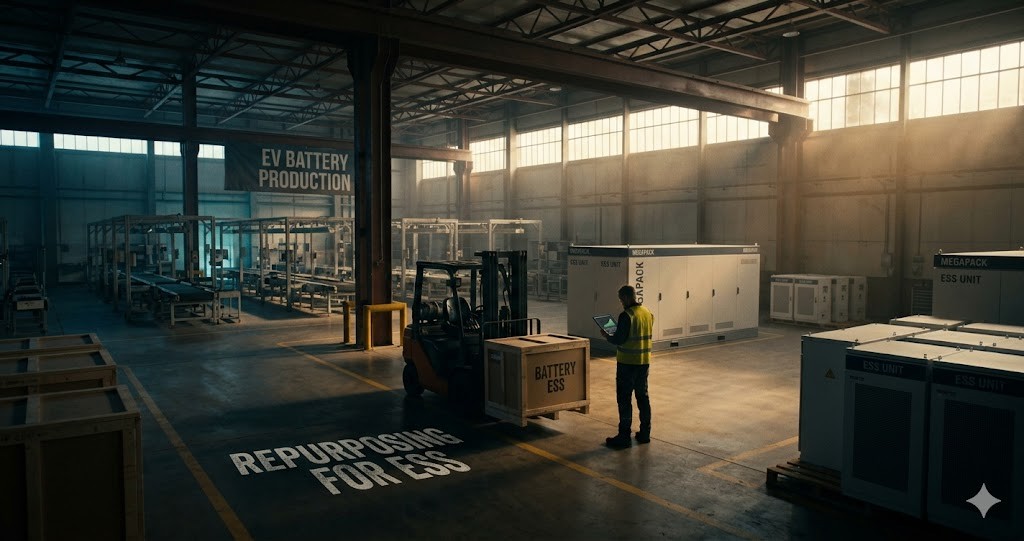
2026年現在、世界の自動車メーカーは大きな転換点に立っています。当初の予測を下回るEV需要の伸び悩みと、税制優遇措置の終了が重なり、膨大な投資を投じたバッテリー工場には「余剰容量」という課題が浮上しています。一方で、生成AIの爆発的普及に伴うデータセンターの電力需要急増は、新たなビジネスチャンスとして定置型蓄電システム(ESS)への注目を高めています。
1. 供給過剰と需要のギャップ
北米におけるバッテリー生産能力と定置型蓄電需要の間には、大きな隔たりがあります。
- 生産能力の過剰: 北米の工場スペースは約 275 GWh に達していますが、今年の定置型バッテリー需要の予測は 76 GWh にとどまります。
- 需要の伸び: 今後5年間で需要は 125 GWh まで倍増すると予測されていますが、それでもEV向けに整備された余剰設備をすべて吸収するには不十分です。
2. 工場転換における技術的・経済的障壁
EV用バッテリー工場を蓄電用へ転換するには、単純な設備の書き換え以上の困難が伴います。
- 化学組成の違い: EVではエネルギー密度を重視したニッケル系が主流ですが、蓄電用では安価で長寿命なリン酸鉄リチウム(LFP)が好まれます。
- コストと期間: 工場をLFP生産に切り替えるには、数億ドルの費用と最長 18 か月の期間が必要です。
- サプライチェーンの制約: LFP技術は中国企業が圧倒的なシェアを持っており、米国企業は中国製材料への依存を減らしつつ、連邦税額控除の要件を満たすという難しい舵取りを迫られています。
3. 先行するテスラと追う既存メーカー
蓄電事業において、テスラは他の自動車メーカーに対して大きなアドバンテージを持っています。
- 収益性の逆転: テスラのエネルギー部門の粗利益率は約 30% に達し、自動車部門の約 15%(規制クレジット除く)を大きく上回っています。
- AI需要の取り込み: テスラの「メガパック」は、自社のxAIをはじめとするデータセンター需要を直接的な収益に変えています。
- 後発組の動き: GMとLGESの合弁会社(Ultium Cells)やフォードは、未活用の工場スペースを蓄電用に転用し、再訓練プログラムに数千万ドルを投じてテスラの背中を追っています。
4. 展望とリスク
自動車メーカーにとって、蓄電事業は単なる「余剰対策」ではなく、AI時代のインフラを支える重要な収益源となる可能性があります。しかし、中国製部品に対する 35% の関税や、地政学的な貿易障壁が、コスト競争力の維持を難しくしています。
Strategic Shift: Automakers Pivot to Battery Storage Amid EV Slowdown
As of April 2026, the automotive industry is navigating a complex transition. Faced with cooling electric vehicle (EV) demand and the expiration of consumer tax credits, manufacturers are rushing to repurpose underutilized battery factories for Stationary Energy Storage Systems (ESS) to meet the massive power demands of AI data centers.
1. Oversupply and Demand Disconnect
There is a significant gap between North American battery production capacity and the actual demand for stationary storage.
- Excess Capacity: While factory space has reached approximately 275 GWh, the demand for stationary batteries this year is expected to be only 76 GWh.
- Slow Absorption: Demand is projected to nearly double to 125 GWh over the next five years, but this remains insufficient to absorb the surplus capacity built for the EV boom.
2. Technical and Economic Barriers to Conversion
Repurposing an EV battery plant for storage systems is far from a simple task.
- Chemistry Shift: Most storage systems utilize Lithium Iron Phosphate (LFP) due to its lower cost and longevity, whereas North American EV plants were primarily built for high-nickel chemistries.
- High Costs: Switching a factory to LFP production can take up to 18 months and cost hundreds of millions of dollars.
- Supply Chain Hurdles: China dominates LFP technology. US manufacturers face the challenge of reducing reliance on Chinese materials to qualify for federal tax credits while managing a 35% tariff on Chinese-made electrodes.
3. Tesla’s Dominance vs. Traditional Automakers
Tesla has spent nearly a decade developing its energy business, which has now become its most rapidly growing and profitable division.
- Profitability: Excluding regulatory credits, Tesla’s energy storage business boasts a gross margin of about 30%, doubling that of its automotive division (approx. 15%).
- AI Synergy: Tesla’s Megapack units are directly tied to AI growth, exemplified by a 430 million USD sale to xAI.
- Legacy Pivot: Ford and GM (via Ultium Cells) are now aggressively retraining staff and converting underutilized space, such as the Tennessee plant, to catch up with Tesla’s diversified revenue model.
4. Outlook
While the pivot to ESS offers a lifeline for unused factory capacity, the road is paved with geopolitical risks and high capital expenditures. Automakers must master LFP technology and domestic supply chains to compete in an energy market currently led by Tesla and Chinese manufacturers.


コメント