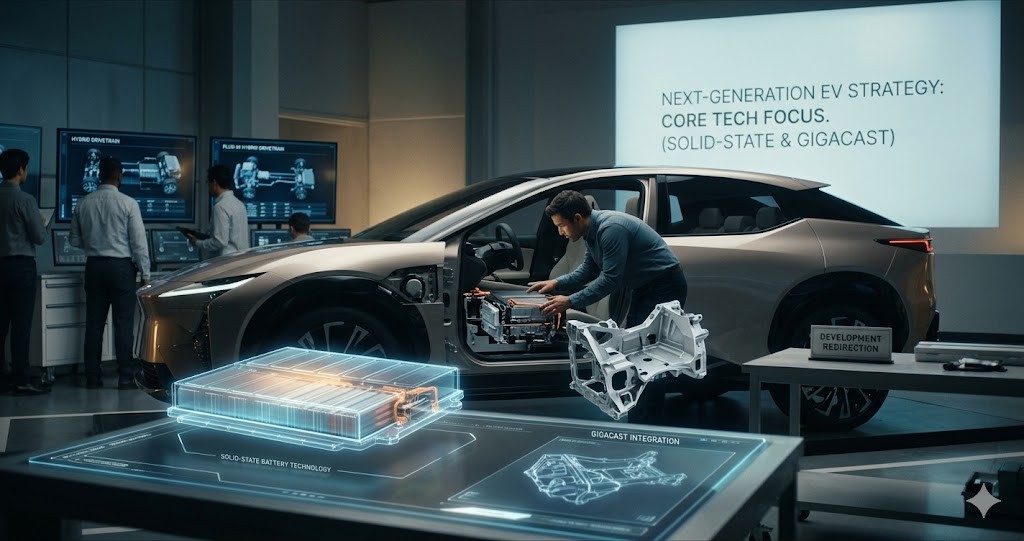
自動車業界をリードするトヨタ自動車が、次世代電気自動車(EV)の開発計画を一部見直すという、市場に大きな一石を投じるニュースが入ってきました。世界的なEV需要の減速(踊り場)を背景に、車両そのものの発売は見送る一方で、全固体電池をはじめとする革新的な先端技術の開発は継続するという、選択と集中を明確にしたトヨタの次なる戦略をまとめます。
1. ニュースの概要
- 開発中止の決定: トヨタ自動車は、高級車ブランド「レクサス」から2027年半ばに発売を予定していた次世代EV「LF-ZC」の開発を中止することを決定しました。
- 背景: 世界的なEV需要の伸び悩みが主な要因とみられます。当初は2026年の発売予定でしたが、すでに2027年半ばへの延期が発表されており、最終的にプロジェクト自体の断念に至りました。
2. 継続される先端技術開発
車両としての発売は中止されますが、LF-ZCのために開発されていた以下の革新的なコア技術の開発は今後も継続されます。
- 全固体電池: 従来の液系リチウムイオン電池に比べ、航続距離の飛躍的な向上(目標1000 km程度)や急速充電時間の短縮が期待される次世代バッテリー。
- ギガキャスト: 車体の大型アルミ部品を一体成形する技術。部品点数と製造工程を大幅に削減し、車両の軽量化とコストダウンを両立します。
- 技術の展開: これらの最先端技術は、今後のEV開発だけでなく、市場のニーズに合わせたハイブリッド車(HEV)やプラグインハイブリッド車(PHEV)など、様々な車種へ柔軟に展開・応用される方針です。
【関連情報の追加】業界の背景と今後の見通し
EV市場の「踊り場」とハイブリッド車の躍進
現在、世界のEV市場は急激な拡大期を経て、充電インフラの不足や価格の高さ、補助金の減額などを理由に需要が鈍化する「踊り場」を迎えています。 一方で、トヨタが得意とするハイブリッド車(HEV)の需要は世界的に再評価され、足元の業績を強力に支えています。今回の開発中止は、目先の需要が強い分野へ投資を最適化するための現実的な経営判断と言えます。
技術開発を続ける意義
開発が継続される「全固体電池」や「ギガキャスト」は、将来的にEVシフトが再び加速した際、他社に対する強力な競争優位性(アドバンテージ)となります。特に全固体電池は、材料開発や量産プロセスの確立において高い技術障壁があり、トヨタが世界をリードする分野の一つです。車両の発売自体は中止となったものの、これらのコア技術を磨き続けることで、次なる市場の変化へ備える狙いがあります。
出典:https://news.yahoo.co.jp/articles/29bd9d9fb83441a5a27ee0e3b6b690c5ba82e848
Toyota Cancels Development of Next-Generation EV LF-ZC: Advancement of Cutting-Edge Technologies Like All-Solid-State Batteries to Continue
Introduction
News has emerged that Toyota Motor, a leader in the automotive industry, is revising part of its next-generation electric vehicle (EV) development plans, a move that is sending shockwaves through the market. Against the backdrop of a global slowdown (plateau) in EV demand, Toyota is shelving the launch of the vehicle itself while continuing to develop revolutionary, cutting-edge technologies, including all-solid-state batteries. This summary outlines Toyota’s next strategy, which clearly reflects a policy of selection and concentration.
1. News Overview
- Decision to Cancel Development: Toyota Motor has decided to cancel the development of its next-generation EV, the LF-ZC, which was scheduled to be launched under its luxury brand Lexus in mid-2027.
- Background: The primary factor appears to be the sluggish growth in global EV demand. Although originally scheduled for a 2026 release, a delay to mid-2027 had already been announced, ultimately leading to the cancellation of the project itself.
2. Continuation of Advanced Technology Development
While the launch of the vehicle as a commercial product has been canceled, development will continue for the following innovative core technologies that were being engineered for the LF-ZC:
- All-Solid-State Batteries: A next-generation battery expected to deliver a dramatic increase in cruising range (with a target of around 1000 km) and shorter charging times compared to conventional liquid-electrolyte lithium-ion batteries.
- Gigacasting: A technology that casts large aluminum vehicle body components into a single piece. This significantly reduces the number of parts and manufacturing processes, achieving both vehicle weight reduction and cost savings.
- Application of Technology: These ultra-advanced technologies are planned to be flexibly deployed and applied not only to future EV development but also to various vehicle types that meet market needs, such as hybrid electric vehicles (HEV) and plug-in hybrid electric vehicles (PHEV).
Additional Information: Industry Background and Future Outlook
The EV Market Plateau and the Surge of Hybrid Vehicles
Following a period of rapid expansion, the global EV market is currently facing a plateau, with demand slowing down due to factors such as insufficient charging infrastructure, high vehicle prices, and reductions in government subsidies. On the other hand, demand for hybrid electric vehicles (HEV), an area where Toyota excels, is being re-evaluated globally and is strongly supporting the company’s current financial performance. The decision to cancel this development project can be seen as a realistic management judgment to optimize investment into areas with strong immediate demand.
The Significance of Continuing Technical Development
The continued development of gigacasting and all-solid-state batteries will provide a powerful competitive advantage over rivals when the shift toward EVs accelerates again in the future. In particular, all-solid-state batteries present high technical barriers in terms of material development and the establishment of mass-production processes, making it a field where Toyota is a global leader. Although the vehicle launch itself was canceled, Toyota aims to prepare for the next market shift by continuing to refine these core technologies.
コメント