電気自動車(EV)やスマートフォンなどの普及に伴い、世界中で「車載用バッテリー材料」の争奪戦が激化しています。その中でも、リチウムイオン電池の負極材(マイナス極)に不可欠な「黒鉛(グラファイト)」は、極めて重要な鉱物資源として注目を集めています。こうした中、オーストラリアの鉱物探査会社リチウム・エナジー社が、クィーンズランド州にある3つの主要な黒鉛プロジェクトの売却を発表しました。この資産売却の狙いや、統合によって誕生する新たな電池材料企業への期待について詳しく解説します。
1. 取引の概要と契約内容
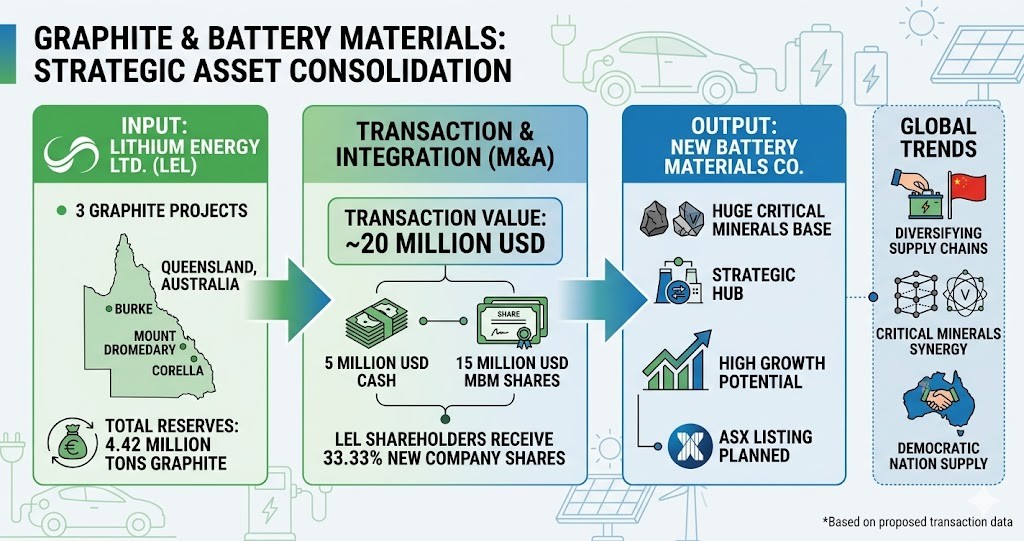
オーストラリアの鉱業会社であるリチウム・エナジー・リミテッド(Lithium Energy Limited)は、クイーンズランド州に保有する3つの黒鉛プロジェクトを、同国の非上場電池製造会社であるMバッテリー・マテリアルズ社(MBM)へ売却する契約を結びました。
取引の条件と規模
- 取引総額: 2000万ドル(約20 million USD)
- 支払いの内訳: 現金500万ドル + 1500万ドル相当のMBM社株式
- 株主へのメリット: 別の合意に基づき、リチウム・エナジー社の株主は、合併後に誕生する新会社の株式の33.33パーセントを取得します。
- 今後の展開: この新会社は、重要鉱物をベースとした電池材料企業として、オーストラリア証券取引所(ASX)へ上場する予定です。
2. 売却される3つの黒鉛プロジェクトとその価値
売却対象となったのは、クイーンズランド州にある以下の3つの黒鉛鉱床プロジェクトです。
- バーク(Burke)
- マウント・ドロメダリー(Mount Dromedary)
- コレラ(Corella)
埋蔵量と売却の狙い
これらのプロジェクトには、合計で442万トン(4.42 million tons)もの黒鉛が埋蔵されています。 リチウム・エナジー社の経営陣は、これら3つの鉱床を、買い手であるMBM社が近隣に所有している「黒鉛およびバナジウム鉱床」と組み合わせる(統合する)ことで、電池生産に向けた巨大かつ強力な「重要鉱物資源基盤」を構築できると説明しています。
3. 【関連情報】なぜ今、黒鉛の鉱山統合が進むのか?
今回のニュースの背景には、世界のバッテリー市場における「サプライチェーンの再構築」という大きな流れがあります。
- 黒鉛(グラファイト)の重要性: 黒鉛はリチウムイオン電池の負極材の主原料であり、EV1台あたりおよそ50キログラムから100キログラムもの黒鉛が必要とされています。代替が難しく、バッテリーの性能や寿命を左右する重要鉱物です。
- 中国依存からの脱却: 現在、世界の天然黒鉛の採掘および精入(加工)は中国が大きなシェアを握っています。地政学的リスクや、米国・欧州による脱・中国依存の動きから、オーストラリアなどの安定した民主主義国での供給網(サプライチェーン)の確立が急務となっています。
- バナジウムとの相乗効果: MBM社が持つ「バナジウム」もまた、次世代の大容量蓄電池(レドックスフロー電池など)の主原料として注目されている重要鉱物です。黒鉛とバナジウムを一括して管理・生産できる基盤ができることは、電池材料企業としての競争力を飛躍的に高めます。
4. 両企業のプロフィール
- リチウム・エナジー・リミテッド(売却側): 本社は西オーストラリア州の西パース。電池材料の製造を目的として、リチウムおよびグラファイト鉱床の探査・開発を行うオーストラリアの企業です。今回の売却により、もう一つの柱であるリチウム事業などへ資源を集中させる狙いもあるとみられます。
- Mバッテリー・マテリアルズ社(買収側): 本社はクイーンズランド州のブリスベン。オーストラリアの非上場電池製造会社であり、今回の統合・上場を機に、市場での存在感を一気に高める構えです。
出典:https://batteryindustry.net/australian-lithium-energy-sells-three-graphite-projects-in-queensland/
Major Consolidation of Battery Materials in Australia! Lithium Energy Sells Graphite Assets to MBM
With the widespread use of electric vehicles (EVs) and smartphones, the global race for automotive battery materials is intensifying. Among these, graphite, which is indispensable for the anode (negative electrode) of lithium-ion batteries, is drawing significant attention as a critical mineral resource. Under these circumstances, Australian mineral exploration company Lithium Energy Limited has announced the sale of three major graphite projects in Queensland. This article details the objectives behind this asset sale and the expectations for the new battery materials company that will be born from this consolidation.
1. Transaction Overview and Agreement Details
Australian mining company Lithium Energy Limited has entered into an agreement to sell three graphite projects it holds in Queensland to M Battery Materials Pty Ltd (MBM), an unlisted Australian battery manufacturing company.
Terms and Scale of the Transaction
- Total Transaction Value: 20 million dollars (approximately 20 million USD)
- Payment Breakdown: 5 million dollars in cash plus 15 million dollars worth of MBM shares
- Benefit to Shareholders: Under a separate agreement, shareholders of Lithium Energy will receive 33.33 percent of the shares in the new company formed after the merger.
- Future Outlook: This new company is scheduled to list on the Australian Securities Exchange (ASX) as a critical minerals-based battery materials company.
2. The Three Graphite Projects to Be Sold and Their Value
The targets of the sale are the following three graphite deposit projects located in Queensland:
- Burke
- Mount Dromedary
- Corella
Reserves and Strategic Objectives A total of 4.42 million tons of graphite is reserved across these projects. The management of Lithium Energy explains that by combining (consolidating) these three deposits with the neighboring graphite and vanadium deposits owned by the buyer, MBM, they can establish a massive and powerful “critical mineral resource base” for battery production.
3. Related Information: Why Is Graphite Mine Consolidation Happening Now?
The background of this news is driven by a major global trend: the restructuring of the supply chain in the global battery market.
- The Importance of Graphite: Graphite is the primary raw material for the anode of lithium-ion batteries, with approximately 50 kilograms to 100 kilograms of graphite required per EV. It is a critical mineral that is difficult to substitute and directly affects battery performance and lifespan.
- Moving Away from Dependence on China: Currently, China holds a massive share of the world’s natural graphite mining and processing. Due to geopolitical risks and movements by the United States and Europe to decouple from China, establishing supply chains in stable democratic nations like Australia has become an urgent priority.
- Synergy with Vanadium: “Vanadium,” which MBM holds, is also a critical mineral drawing attention as a primary raw material for next-generation large-scale energy storage systems (such as redox flow batteries). Creating a base that can manage and produce both graphite and vanadium together will drastically enhance the company’s competitiveness as a battery materials provider.
4. Profiles of Both Companies
- Lithium Energy Limited (Seller): Headquartered in West Perth, Western Australia. An Australian company engaged in the exploration and development of lithium and graphite deposits for the purpose of manufacturing battery materials. This sale is also seen as a move to concentrate its resources on its other core pillar, the lithium business.
- M Battery Materials Pty Ltd (Buyer): Headquartered in Brisbane, Queensland. An unlisted Australian battery manufacturing company. The company is poised to sharply boost its market presence through this consolidation and upcoming stock market listing.
コメント