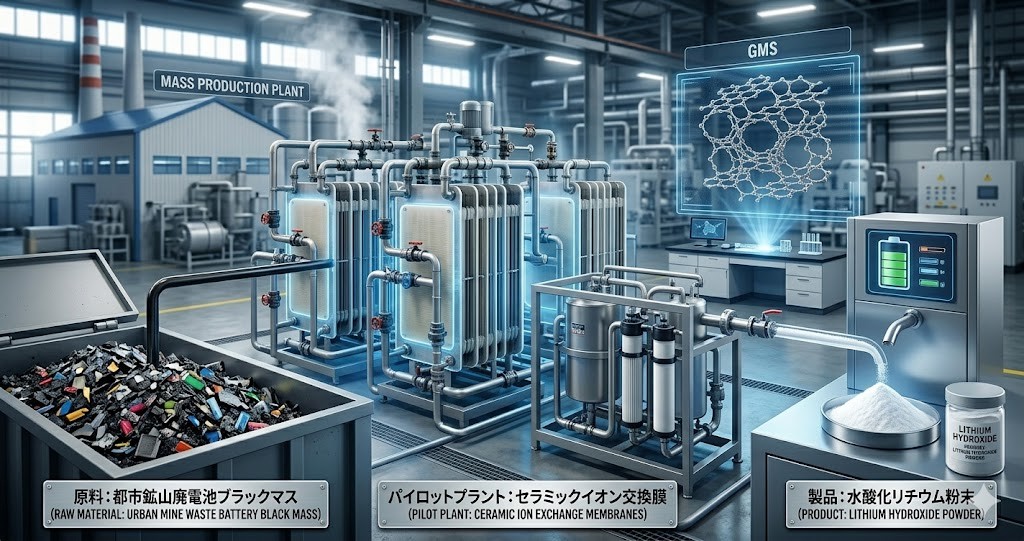
現代社会のインフラ(EV、スマホ、データセンター、再生可能エネルギー)に不可欠なリチウムイオン電池を巡り、使用済み電池から資源を「回収」する技術開発が激化しています。現在、精製工程の多くを中国に依存している日本にとって、この技術は経済安全保障上の切り札となります。
1. 注目スタートアップ:LiSTie(リスティ)の革新技術
量子科学技術研究開発機構(QST)発のスタートアップ「LiSTie」が、高純度リチウム回収の実証設備(ベンチプラント)を完成させました。
- 技術の核「LiSMIC」: セラミックス製の「イオン伝導膜」に電圧をかけ、特定の不純物を排除してリチウムイオンだけを透過させる独自の分離システム。
- 圧倒的な純度: 回収される水酸化リチウムの純度は99.99%。電池材料として即利用可能な水準です。
- コスト競争力: 現在の製造原価(1kgあたり約2500円)に対し、将来の大型装置では1kgあたり500円程度まで低減できる試算です。
- 今後の計画: 2026年5月から実証運転を開始し、2027年度には大型装置による本格販売を目指しています。
2. 国内外の競合とプレイヤーの動向
LiSTie以外にも、大手企業や他のスタートアップが独自の強みを持って参入しています。
- 住友金属鉱山: 2026年6月に愛媛県で大型リサイクルプラントが完成予定。年間1万トン(電池セル換算)の処理能力を持ち、銅・ニッケル・コバルト・リチウムを一括回収します。
- JX金属: 2025年にリチウム回収率90%以上の新プロセスを発表。2027年1月に実証設備の完成を予定しています。
- リキューブ(スタートアップ): 弘前大学発。従来困難だった「油田排水」からのリチウム回収に特化。米国テキサス州にプラントを建設中で、2026年6月に出荷開始を見込んでいます。
【関連情報】リチウムリサイクルを取り巻く背景知識
1. 「ブラックマス」とは何か 使用済み電池を解体・破砕して得られる黒い粉末状の濃縮物のことです。リチウム、ニッケル、コバルトなどの希少金属(レアメタル)が混ざり合った状態であり、ここからいかに効率よく、安く、高純度な特定金属を取り出すかが技術の肝となります。
2. 経済安全保障と「改正資源有効利用促進法」 2026年4月に施行されるこの法律により、モバイルバッテリーなどの回収体制が強化されます。これまでは国内で発生したブラックマスが海外(中韓など)へ流出するケースが目立ちましたが、国内での資源循環(サーキュラーエコノミー)を完結させることが国家戦略となっています。
3. 市場予測 リチウム市場は2030年に約11兆円規模(2021年比で約11倍)に達すると予測されています。採掘による供給には限界があるため、「都市鉱山」と呼ばれる使用済み製品からの回収技術が、今後の産業競争力を左右すると見られています。
出典:https://www.businessinsider.jp/article/2603-lithium-recycling-listie-news/?page=2
“Magic Ceramic Membrane LiSMIC: Japan’s Unique Separation Technology Extracting Only Lithium from Black Mass”
Technological development for “recovering” resources from used batteries is intensifying around lithium-ion batteries, which are essential to modern infrastructure (EVs, smartphones, data centers, and renewable energy). For Japan, which currently relies heavily on China for the refining process, this technology serves as a strategic trump card for economic security.
1. Featured Startup: Innovative Technology of LiSTie
LiSTie, a startup originating from the National Institutes for Quantum Science and Technology (QST), has completed a bench plant (demonstration facility) for high-purity lithium recovery.
- Core Technology “LiSMIC”: A unique separation system that applies voltage to a ceramic “ionic conducting membrane.” It excludes specific impurities and allows only lithium ions to pass through.
- Overwhelming Purity: The purity of the recovered lithium hydroxide is 99.99%. This level is high enough for immediate use as battery material.
- Cost Competitiveness: Compared to the current production cost of approximately 2500 yen per kg, LiSTie estimates that large-scale equipment can reduce the cost to about 500 yen per kg in the future.
- Future Plans: Demonstration operations will begin in May 2026, with the goal of starting full-scale sales using large-scale equipment in fiscal year 2027.
2. Trends of Domestic and International Competitors
In addition to LiSTie, major companies and other startups are entering the market with their own unique strengths.
- Sumitomo Metal Mining: A large-scale recycling plant is scheduled for completion in Ehime Prefecture in June 2026. It has a processing capacity of 10000 tons per year (battery cell equivalent) and recovers copper, nickel, cobalt, and lithium all at once.
- JX Nippon Mining and Metals: Announced a new process in 2025 capable of achieving a lithium recovery rate of over 90%. Completion of a demonstration facility is planned for January 2027.
- Re-Generate (Startup): Originating from Hirosaki University, this company specializes in recovering lithium from “oil field brine,” which was previously considered difficult. They are building a plant in Texas, USA, with shipments expected to begin in June 2026.
Related Information: Background on Lithium Recycling
1. What is “Black Mass”? It is a black, powdery concentrate obtained by dismantling and crushing used batteries. It is a mixture of rare metals such as lithium, nickel, and cobalt. The key to the technology is how to extract specific metals from this mixture efficiently, cheaply, and with high purity.
2. Economic Security and the “Amended Act on the Promotion of Effective Utilization of Resources” This law, taking effect in April 2026, will strengthen the collection system for products like mobile batteries. While black mass generated in Japan has often flowed to overseas processors (such as China and South Korea), completing the “circular economy” within Japan has become a national strategy.
3. Market Forecast The lithium market is predicted to reach a scale of approximately 11 trillion yen by 2030 (about 11 times the 2021 level). Since there are limits to the supply from mining, recovery technology from used products—known as “urban mining”—is expected to determine future industrial competitiveness.

コメント