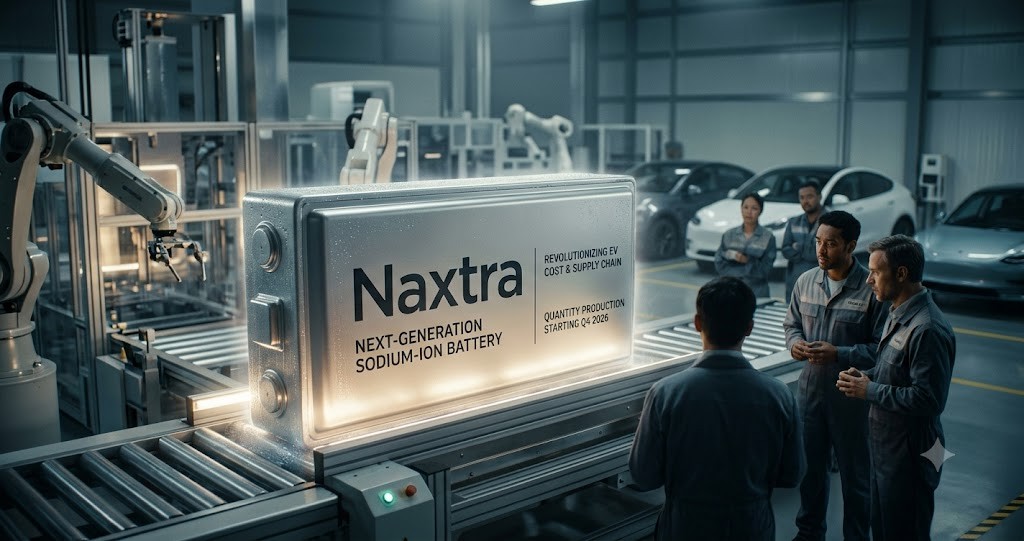
中国の車載電池最大手であるCATL(寧徳時代)が発表した、第2世代ナトリウムイオン電池「Naxtra」の量産化計画は、世界の電気自動車(EV)市場およびサプライチェーンに大きな激震を走らせています。リチウム依存からの脱却と圧倒的なコスト優位性を武器に、CATLが再び市場の主導権を握る可能性が浮上しています。
1. CATLの第2世代ナトリウムイオン電池「Naxtra」の衝撃
CATLは2026年4月の「スーパーテクノロジーデー」にて、新型ナトリウムイオン電池「Naxtra」を2026年10~12月期に量産開始すると発表しました。水分管理やハードカーボン材料といった技術的難題をクリアし、実用化に目処を立てています。
主な性能と特徴
- 高いエネルギー密度: 175 Wh/kgに達し、普及型リチウムイオン電池(LFP電池)に迫る水準。
- 圧倒的な耐寒・耐熱性: マイナス40度でも容量保持率90%以上を維持し、マイナス50度でも放電可能。
- 航続距離: 現状で400~600 kmをカバー。将来的には市場の半数以上のニーズを満たす見込み。
2. 【関連情報】なぜ今、ナトリウムイオン電池なのか?
既存のリチウムイオン電池と比較した際、ナトリウムイオン電池には産業構造を引っくり返すほどのメリットと、これまで普及を阻んでいた課題があります。
メリット(リチウムとの比較)
- 資源の豊富さと安定供給: ナトリウムの地殻中埋蔵量はリチウムの400倍以上。特定の国に依存せず、安価な炭酸ナトリウムを主原料とできるため地政学リスクが低い。
- 圧倒的なコスト優位性: セルコストが下がることで、リチウムイオン電池に比べ30~40%のコスト削減が可能。
- 高い安全性: 熱暴走のリスクがリチウムイオン電池よりも低く、輸送や保管時の安全性が高い。
課題
- エネルギー密度の限界: 体積あたりの容量がリチウムに劣るため、長距離高級EVや大型トラックへの単独搭載にはまだ課題が残る。そのため、当面は10万元(約230万円)以下のコンパクトEVや、リチウム電池と組み合わせたハイブリッド電池パックとしての利用が現実的とされている。
3. 自動車メーカーとの新たなパワーゲーム(CATL一強の再来)
近年、自動車メーカー各社は「CATL依存」を脱却するため、中堅電池メーカーへの出資や仕入れ先の分散(マルチサプライヤー化)を進めてきました。しかし、このナトリウム電池の量産化によって構図が再び変わろうとしています。
【これまでの流れ】
CATL一強 ➔ メーカーが反発(仕入れ先を分散・中堅を育成) ➔ メーカーの主導権拡大

【今後の予測】
CATLがナトリウム電池を独占量産 ➔ 圧倒的低価格 ➔ メーカーが価格競争に勝つため再びCATLへ依存
現在、このレベルのナトリウムイオン電池を大量生産できるのは、事実上CATLのみです。価格破壊並みのコストメリットを前に、自動車メーカーは背に腹は代えられず、再びCATLへの依存を強めざるを得ない状況に追い込まれつつあります。
まとめ
CATLの「Naxtra」量産化は、単なる新型電池の登場にとどまらず、EVの低価格化を加速させる決定打となります。それと同時に、電池の主導権を自社に取り戻そうとしていた自動車メーカー各社にとっては、再び「CATL一強」の軍門に下るかどうかのタフな選択を迫られる、新たなパワーゲームの幕開けを意味しています。
30-40% Cost Reduction! The Price Disruption Brought by CATL’s Second-Generation Sodium-Ion Battery
The mass-production plan for the second-generation sodium-ion battery, “Naxtra,” announced by CATL, China’s largest automotive battery manufacturer, is sending shockwaves through the global electric vehicle (EV) market and supply chain. Armed with a departure from lithium dependency and an overwhelming cost advantage, the possibility of CATL regaining its dominance in the market is emerging.
1. The Impact of CATL’s Second-Generation Sodium-Ion Battery “Naxtra”
At its “Super Technology Day” in April 2026, CATL announced that it will begin mass production of its new sodium-ion battery, “Naxtra,” in the fourth quarter (October–December) of 2026. The company has overcome major technical challenges, such as moisture management and hard carbon materials, clearing the path for commercialization.
Key Performance and Features:
- High Energy Density: Reaching 175 Wh/kg, a level approaching that of standard lithium-iron phosphate (LFP) batteries.
- Overwhelming Temperature Resistance: Maintains a capacity retention rate of over 90% even at minus 40 degrees Celsius, and is capable of discharging at minus 50 degrees Celsius.
- Driving Range: Currently covers 400 to 600 km. In the future, it is expected to meet the driving range needs of more than half of the vehicles on the market.
2. [Related Information] Why Sodium-Ion Batteries Now?
Compared to existing lithium-ion batteries, sodium-ion batteries offer advantages powerful enough to overturn the industry structure, as well as challenges that have previously hindered their widespread adoption.
Advantages (Compared to Lithium):
- Abundant Resources and Stable Supply: The reserves of sodium in the Earth’s crust are more than 400 times those of lithium. It reduces geopolitical risks because it does not rely on specific countries and can use inexpensive sodium carbonate as its primary raw material.
- Overwhelming Cost Advantage: As cell costs decrease, a 30-40% cost reduction is possible compared to lithium-ion batteries.
- High Safety: The risk of thermal runaway is lower than that of lithium-ion batteries, ensuring higher safety during transport and storage.
Challenges:
- Limits of Energy Density: Because its volumetric capacity is inferior to lithium, using it as a standalone power source for long-range premium EVs or heavy-duty trucks remains a challenge. Therefore, for the time being, practical applications are expected to focus on compact EVs priced under 100,000 yuan (approximately 2.3 million yen) or as hybrid battery packs combined with lithium batteries.
3. A New Power Game with Automakers (The Return of CATL’s Monopoly)
In recent years, automakers have been shifting toward multi-supplier strategies, investing in mid-tier battery manufacturers to break away from their “dependence on CATL.” However, this mass production of sodium batteries is about to shift the landscape once again.
[Previous Trend] CATL Monopoly -> Automakers push back (diversifying suppliers / nurturing mid-tier firms) -> Automakers gain more leverage
[Future Prediction] CATL exclusively mass-produces sodium batteries -> Overwhelmingly low prices -> Automakers rely on CATL again to win the price competition
Currently, CATL is virtually the only company capable of mass-producing sodium-ion batteries at this level. Faced with a cost advantage that amounts to price disruption, automakers have no choice but to compromise, and they are being forced into a position where they must deepen their dependence on CATL once again.
Summary
The mass production of CATL’s “Naxtra” is more than just the arrival of a new battery; it will be the decisive factor that accelerates the price reduction of EVs. At the same time, for automakers that had been trying to reclaim control over the battery supply chain…

コメント