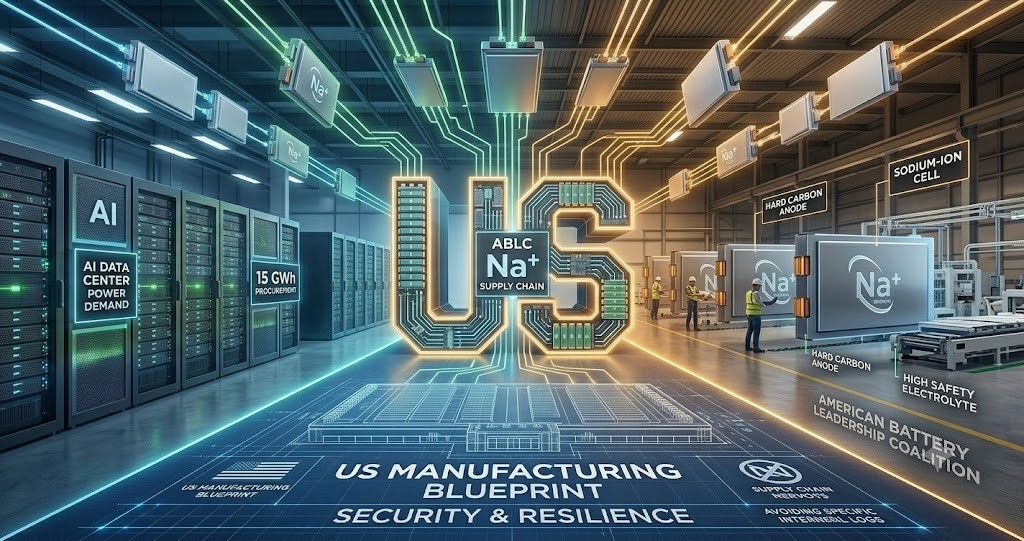
世界のエネルギー需要、特にAIデータセンターの急増に伴う電力需要への対応が急務となる中、次世代の蓄電技術として「ナトリウムイオン電池」が大きな注目を集めています。現在主流のリチウムイオン電池は中国を中心とした海外サプライチェーンへの依存度が極めて高いことが課題です。こうした中、米国では国内での製造競争力と国家安全保障を強化するため、ナトリウムイオン電池産業の確立と政策提言を目指す新たな業界団体「アメリカ電池リーダーシップ連合(ABLC)」が発足しました。
ニュースの要約と関連情報
ABLC(アメリカ電池リーダーシップ連合)の発足目的
- 背景: データセンターなどの急速な電力需要増加(米国のデータセンターの消費電力は2024年の183テラワット時から、2030年までに133%増加すると予測)。既存の発電・蓄電システムでは対応しきれない懸念があります。
- 目的: リチウムに依存しない、拡張性の高い代替手段として「ナトリウムイオン技術」の導入を支援する連邦政策を推進すること。
- 体制: 議長はAlsym Energyのグレアム グラント氏、副議長はPeak Energyのエドワード マクグローン氏。米国の電池開発、材料供給、製造企業などが結集しています。
- 現状の市場動向: すでに開発業者や電力会社、データセンター運営会社などによって、15ギガワット時(GWh)を超えるナトリウムイオン蓄電容量の調達計画が発表されています。
なぜ「ナトリウムイオン電池」なのか?(リチウムイオンとの比較)
| 項目 | ナトリウムイオン電池(Naイオン) | リチウムイオン電池(Liイオン) |
| 主な材料 | 地球上に豊富に存在するナトリウム(塩など)を使用。コバルトやニッケルは不使用。 | 埋蔵地域が偏っているリチウムを使用。コバルトやニッケルなどのレアメタルが必要。 |
| コスト | 原材料が安価なため、大規模生産時のコストを大幅に抑えられる。 | 原材料価格の高騰やサプライチェーンのリスクによりコストが変動しやすい。 |
| 安全性 | 熱暴走(火災)のリスクが非常に低く、安全性が極めて高い。 | 液体電解質の揮発性により、熱暴走や火災のリスクが存在する。 |
| 主な用途 | 電力網(グリッド)規模の大型蓄電システム、データセンターのバックアップ電源など。 | スマートフォン、EV(電気自動車)など小型・高エネルギー密度が求められる用途。 |
主な創設メンバー企業とその役割
連合はナトリウムイオン電池のバリューチェーン(材料から製造、システム提供まで)を網羅する企業で構成されています。
- Alsym Energy: AIデータセンターや電力会社向けの大規模蓄電用電池を開発。
- Peak Energy: 電力網(グリッド)規模の蓄電システムを開発・製造。
- Batri: ナトリウムイオン電池の負極材料(ハードカーボン)および電池の開発。
- ESS Tech: 長時間エネルギー貯蔵システムの開発・製造。
- Ingevity: バッテリー用特殊化学品・炭素材料の製造。
- Mana: 消火性(高安全性)電解質と電池セルの製造。
- Microporous: バッテリーセパレーター(絶縁材)などの部品製造。
- NAION: 電池セルの開発と、北米での専用ギガファクトリー建設を推進。
- Re:Build Manufacturing: 米国国内での工業生産および規模拡大(スケールアップ)の支援。
【関連情報】ナトリウムイオン電池の今後の展望と課題
ABLCの発足を巡る背景をより深く理解するための、技術的・市場的な補足情報です。
- エネルギー密度の課題と適材適所ナトリウムイオンはリチウムイオンに比べて重量あたりのエネルギー密度が低い(=同じ重さなら蓄えられる電気が少ない)という弱点があります。そのため、軽さが求められるEVやスマートフォンよりも、設置スペースに比較的余裕があり、コストと安全性が最優先される「データセンター」や「再生可能エネルギーの固定型蓄電システム」において最大の強みを発揮します。
- 脱・中国依存(経済安全保障)現在、リチウムイオン電池の材料精製や製造の大部分は中国が握っています。米国が国策としてナトリウムイオン電池の国内サプライチェーンを構築することは、安価なエネルギー手段の確保だけでなく、地政学的リスクを回避するための国家安全保障戦略としての側面を強く持っています。
A New Trend Replacing Lithium: US Coalition Aims to Build Domestic Supply Chain for Sodium-Ion Batteries
As meeting global energy needs—especially the surging power demand driven by AI data centers—becomes an urgent priority, sodium-ion batteries are drawing significant attention as a next-generation energy storage technology. A major challenge of current mainstream lithium-ion batteries is their extreme dependence on overseas supply chains, particularly China. Against this backdrop, a new industry group called the American Battery Leadership Coalition (ABLC) has been launched in the United States to establish a domestic sodium-ion battery industry and advocate for supportive policies, aiming to strengthen domestic manufacturing competitiveness and national security.
News Summary and Related Information
Launch Objectives of the ABLC (American Battery Leadership Coalition)
- Background: Rapidly increasing power demand from data centers and other infrastructure. (Electricity consumption by US data centers is projected to grow by 133% by 2030 from 183 terawatt-hours in 2024). There are growing concerns that existing power generation and storage systems will not be able to keep up.
- Objective: To promote federal policies that support the adoption of sodium-ion technology as a scalable, non-lithium alternative to meet the nation’s rising energy storage needs.
- Leadership and Structure: Chaired by Graham Grant, COO of Alsym Energy, with Edward McGlone, VP of Peak Energy, serving as Vice Chair. The coalition brings together US-based battery developers, material suppliers, and manufacturing companies.
- Current Market Trends: Developers, utilities, and data center operators have already announced plans to procure over 15 gigawatt-hours (GWh) of sodium-ion storage capacity.
Why Sodium-Ion Batteries? (Comparison with Lithium-Ion)
| Item | Sodium-Ion Batteries (Na-ion) | Lithium-Ion Batteries (Li-ion) |
| Main Materials | Uses sodium (such as from salt), which is abundant on Earth. Contains no cobalt or nickel. | Uses lithium, which is concentrated in specific geographic regions. Requires rare metals like cobalt and nickel. |
| Cost | Significantly lower costs at scale due to inexpensive raw materials. | Costs fluctuate easily due to surging raw material prices and supply chain risks. |
| Safety | Extremely safe with a very low risk of thermal runaway (fires). | Carries risks of thermal runaway and fires due to the volatility of liquid electrolytes. |
| Main Applications | Large-scale grid energy storage systems, backup power for data centers, etc. | Applications requiring small size and high energy density, such as smartphones and electric vehicles (EVs). |
Key Founding Member Companies and Their Roles
The coalition consists of companies spanning the entire sodium-ion battery value chain, from materials to manufacturing and system integration.
- Alsym Energy: Develops sodium-ion batteries for large-scale energy storage applications, including AI data centers and utilities.
- Peak Energy: Develops and manufactures sodium-ion battery energy storage systems for grid-scale applications.
- Batri: Develops sodium-ion battery anode materials (hard carbon) and batteries for various applications.
- ESS Tech: Focuses on the development and manufacturing of long-duration energy storage systems.
- Ingevity: Manufactures specialty chemicals and carbon materials used in battery applications.
- Mana: Produces fire-extinguishing (highly safe) sodium-ion electrolytes and battery cells.
- Microporous: Manufactures battery separators and related components across multiple US locations.
- NAION: Focuses on cell development and commercialization, currently building a dedicated gigafactory in North America.
- Re:Build Manufacturing: Supports domestic industrial production and scaling up.
[Related Information] Future Outlook and Challenges of Sodium-Ion Batteries
This supplementary technical and market information provides a deeper context behind the formation of the ABLC.
- Energy Density Challenges and Finding the Right FitSodium-ion batteries have a lower energy density by weight compared to lithium-ion batteries, meaning they store less energy for the same weight. Therefore, rather than in EVs or smartphones where lightweight components are crucial, they show their greatest strength in data centers and stationary energy storage systems for renewable energy, where installation space is relatively flexible, and cost and safety are top priorities.
- Reducing Dependence on China (Economic Security)Currently, China controls the vast majority of lithium-ion battery material refining and manufacturing. For the United States, building a domestic supply chain for sodium-ion batteries as a national policy is not only about securing affordable energy alternatives, but it also serves as a critical national security strategy to mitigate geopolitical risks.

コメント