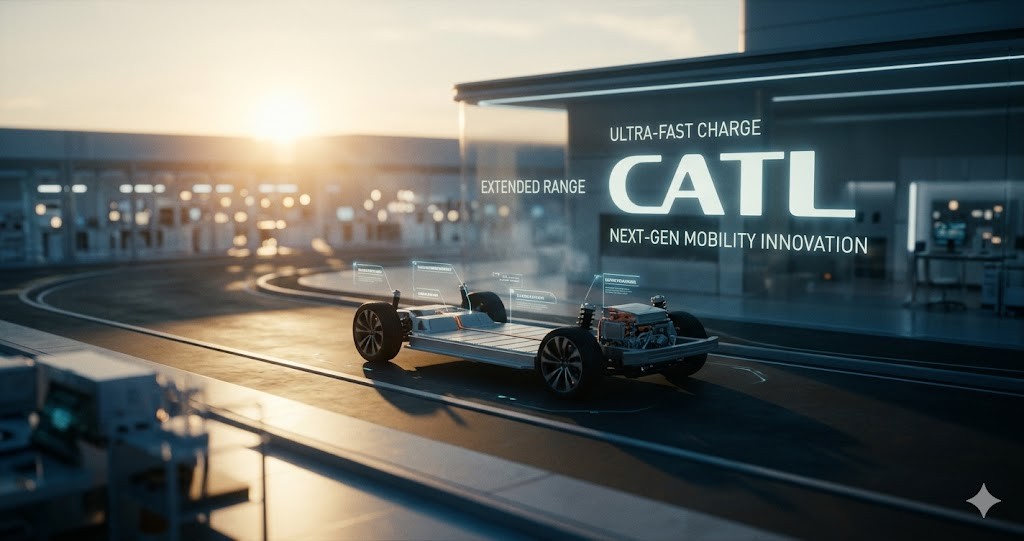
電気自動車(EV)市場が成熟期に向かう中、ユーザーのニーズは単なる航続距離の延長から「超高速充電」「長寿命」「軽量化」といった多角的な利便性へとシフトしています。CATLが今回発表した6つの主要イノベーションは、リチウムイオン電池(LFP/NCM)の限界を押し広げるだけでなく、ナトリウムイオン電池や航空機グレードの技術を投入することで、空・陸すべてのモビリティにおけるエネルギー体験を再定義しようとしています。
CATLが発表した6つの主要イノベーション
CATLは「マルチケミストリー(複数の化学系)」戦略を掲げ、以下の製品・ソリューションを公開しました。
1. 第3世代 Shenxing(神星)超高速充電バッテリー
超高速充電と長寿命を両立させたLFP(リン酸鉄リチウム)ベースの最新モデルです。
- 驚異の充電速度: 10Cから最大15Cの充電レートを実現。10%から80%までの充電をわずか3分44秒で完了します。
- 耐環境性: 氷点下30℃の極寒環境でも、20%から98%まで約9分で充電可能です。
- 長寿命化: 発熱制御と放熱技術により、1,000サイクル後も容量維持率90%以上をキープします。
2. 第3世代 Qilin(麒麟)バッテリー
プレミアムEV向けのハイエンドNCM(三元系)バッテリーです。
- 高エネルギー密度: セル単体で280Wh/kgを達成し、航続距離1,000kmを可能にします。
- 圧倒的な軽量化: パック重量を625kgに抑え、従来のLFPシステム比で255kgの軽量化に成功。電費を約6%改善します。
- ハイパフォーマンス: 最大出力3MWを誇り、加速性能や車両のハンドリング安定性にも寄与します。
3. Qilin Condensed(麒麟凝縮型)バッテリー
航空機向けの技術を初めて乗用車に転用した次世代バッテリーです。
- 最高水準の密度: セルエネルギー密度350Wh/kg、体積密度760Wh/Lを実現。セダンで1,500km以上の航続を視野に入れます。
- 安全性と強度: チタン合金ケースを採用し、厚みを60%削減しながら強度は3倍に向上。液体漏れや発火リスクを極限まで排除した「凝縮系」電解質を採用しています。
4. 第2世代 Freevoy(フリーボイ)スーパーハイブリッドバッテリー
プラグインハイブリッド(PHEV)やレンジエクステンダー(EREV)に特化した製品です。
- EV走行距離の延長: LFPとNCMを混合した「スーパーハイブリッド技術」により、純電気(EV)走行のみで最大600kmの走行を可能にします。
- 安定した出力: 低充電状態(SOC 20%)でも1.2MWの出力を維持し、オフロードなど負荷の高い状況でも性能が低下しません。
5. Naxtra(ナクストラ)ナトリウムイオン電池
リチウムに依存しない次世代電池のギガワット時(GWh)規模での量産化に成功しました。
- 量産の壁を突破: 水分制御やガス発生といった技術課題を克服し、2026年末までに本格的な量産体制に入ります。
- 戦略的意義: 低温特性に優れ、エネルギー貯蔵や低価格モビリティにおいて、リチウムイオン電池を補完する重要な役割を担います。
6. 完全統合型「充電・交換」ネットワーク
ハードウェア(電池)だけでなく、補充インフラの統一アーキテクチャを提示しました。
- Choco-Swap #26: 800V高電圧に対応した交換式バッテリー。幅広い車種に対応します。
- ステーションの進化: 交換ステーションに超高速充電機能を併設。緊急時にはステーション側の電池から充電ポールへ直接放電することで、設備稼働率を85%以上に高めます。
- インフラ目標: 2026年末までに4,000基、2028年末までにパートナー企業と協力し10万基以上の補充施設の建設を目指します。
関連情報:CATLの戦略的展望
1. 垂直統合とエコシステムの構築
CATLは単なる「電池メーカー」から、材料開発、製品製造、そして「充電・バッテリー交換ネットワーク」というインフラまでを網羅する「包括的エネルギーソリューション・プロバイダー」への変貌を遂げようとしています。
2. 厳密な科学的精神と信頼性
会長のロビン・ゼン氏は「スピードや規模だけでなく、イノベーションの質とブランドの信頼性」を強調しています。アレニウスの式(化学反応速度の温度依存性)に基づいた熱管理など、電気化学の基礎に忠実なアプローチが、製品の圧倒的なスペックを支えています。
3. 日本市場への影響
これら超高速充電(15C等)や1,000km超の航続距離を実現する技術は、今後数年以内に搭載車両として日本市場にも流入する可能性が高いです。特に「週に一度の充電で済むハイブリッド車」などは、日本のユーザーにとっても非常に魅力的な選択肢となるでしょう。
まとめ
CATLの発表は、電池の化学組成(LFP、NCM、ナトリウム、凝縮系)を適材適所で使い分ける「マルチケミストリー」時代の到来を告げるものでした。2026年から2028年にかけて、これらの技術が社会実装されることで、EVの利便性はガソリン車と同等、あるいはそれ以上のレベルへと進化することが期待されます。
CATL’s “Multi-Chemistry” Strategy: From LFP and Sodium-Ion to Aerospace-Grade Batteries
As the Electric Vehicle (EV) market enters a mature phase, user needs are shifting from simply extending driving range to multifaceted convenience, such as “ultra-fast charging,” “long cycle life,” and “lightweight design.” The six major innovations announced by CATL not only push the boundaries of lithium-ion batteries (LFP/NCM) but also aim to redefine the energy experience for all mobility—across land and air—by introducing sodium-ion and aerospace-grade technologies.
Six Major Innovations Announced by CATL
Under its “Multi-Chemistry” strategy, CATL unveiled the following products and solutions:
1. 3rd Gen Shenxing Ultra-Fast Charging Battery
A cutting-edge LFP (lithium iron phosphate) model that balances ultra-fast charging with a long lifespan.
- Stunning Charging Speed: Achieves charging rates from 10C up to 15C. A charge from 10% to 80% takes just 3 minutes and 44 seconds.
- Environmental Resilience: In extreme cold at -30°C, it can charge from 20% to 98% in approximately 9 minutes.
- Long Life: Advanced heat control and dissipation technology keep the capacity retention rate above 90% even after 1,000 cycles.
2. 3rd Gen Qilin Battery
A high-end NCM (nickel cobalt manganese) battery designed for premium EVs.
- High Energy Density: Reaches 280 Wh/kg at the cell level, enabling a driving range of 1,000 km.
- Significant Weight Reduction: The pack weight is kept at 625 kg, achieving a 255 kg reduction compared to conventional LFP systems and improving electricity consumption by approximately 6%.
- High Performance: Boasts a maximum output of 3 MW, enhancing acceleration and handling stability.
3. Qilin Condensed Battery
Next-generation technology that marks the first transfer of aerospace-grade tech to passenger vehicles.
- Industry-Leading Density: Achieves a cell energy density of 350 Wh/kg and a volumetric density of 760 Wh/L. It targets ranges of over 1,500 km for sedans.
- Safety and Strength: Utilizing a titanium alloy case, it reduces thickness by 60% while tripling strength. The “condensed” electrolyte eliminates risks of leakage or fire.
4. 2nd Gen Freevoy Super Hybrid Battery
Specifically designed for Plug-in Hybrids (PHEV) and Extended-Range Electric Vehicles (EREV).
- Extended EV Range: Uses “Super Hybrid Technology” (mixing LFP and NCM) to allow up to 600 km of pure electric driving.
- Stable Output: Maintains a 1.2 MW output even at a low State of Charge (SOC 20%), ensuring performance in high-load scenarios like off-roading.
5. Naxtra Sodium-Ion Battery
Successful gigawatt-hour (GWh) scale mass production of next-gen batteries that do not rely on lithium.
- Overcoming Production Hurdles: Solved technical issues like moisture control and gas generation; full-scale mass production will begin by the end of 2026.
- Strategic Significance: Excellent low-temperature performance makes it an ideal supplement to lithium-ion batteries for energy storage and affordable mobility.
6. Fully Integrated “Charging and Swapping” Network
A unified architecture for replenishment infrastructure, moving beyond just hardware.
- Choco-Swap #26: A swappable battery compatible with 800V high-voltage architectures for a wide range of vehicle segments.
- Station Evolution: Swapping stations now include ultra-fast charging hubs. During emergencies, the station can discharge power directly from stored batteries to charging poles, achieving an equipment utilization rate of over 85%.
- Infrastructure Goals: Plans to build 4,000 stations by late 2026 and over 100,000 facilities by 2028 in collaboration with partners.
Strategic Background: CATL’s Vision
1. Vertical Integration and Ecosystem Building
CATL is transforming from a mere “battery manufacturer” into a “comprehensive energy solution provider,” covering everything from material R&D and manufacturing to “charging and battery swapping” infrastructure.
2. Scientific Rigor and Reliability
Chairman Robin Zeng emphasizes that innovation must be driven by a “rigorous scientific spirit,” prioritizing quality and brand trust over mere speed or scale. Their approach, rooted in fundamental electrochemistry (such as using the Arrhenius equation for thermal management), supports their superior product specifications.
3. Impact on Global Markets
Technologies enabling 15C ultra-fast charging and 1,000 km ranges are likely to flow into global markets, including Japan, within the next few years. In particular, hybrid vehicles that require “charging only once a week” will be a highly attractive option for users worldwide.
Summary
CATL’s announcement heralds the era of “Multi-Chemistry,” where battery compositions (LFP, NCM, Sodium-ion, Condensed) are used selectively for the right applications. As these technologies are implemented between 2026 and 2028, the convenience of EVs is expected to evolve to a level equal to, or even surpassing, that of gasoline-powered vehicles.


コメント
Thank you for sharing your info. I really appreciate your efforts and I am waiting for your next post thank you once again.