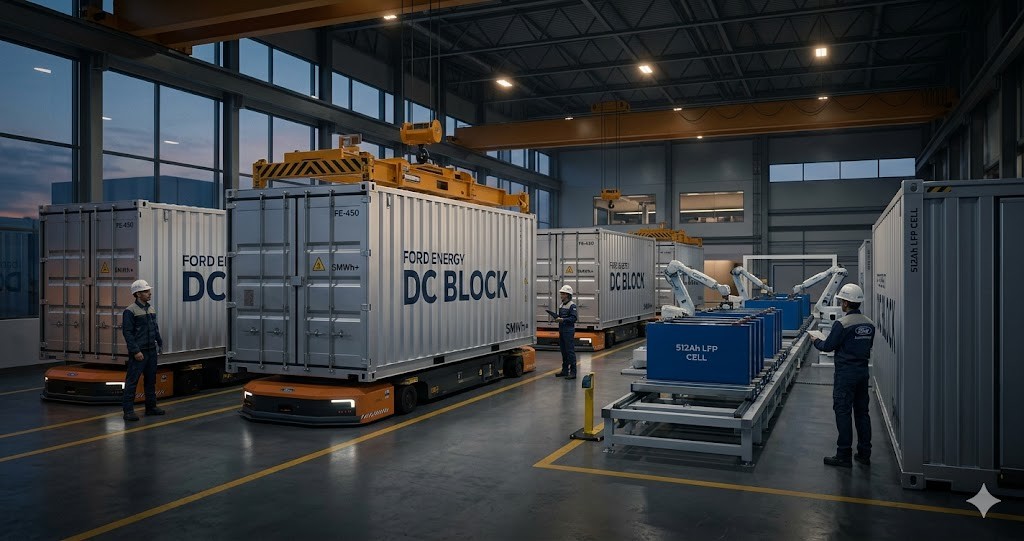
自動車大手のフォードは、電気自動車(EV)用バッテリーの製造能力を有効活用し、急成長するエネルギー貯蔵市場へ進出するため、完全子会社「フォード・エナジー(Ford Energy)」を正式に設立しました。同社は今後2年間で約20億ドルを投資し、年間 20GWh 以上の導入規模を目指します。
1. 主力製品「Ford Energy DC Block」の仕様
米国全土の電力会社やデータセンター向けに、標準化された20フィートコンテナ型の蓄電システムを提供します。
- 採用セル: 512Ah(アンペア時)のリン酸鉄リチウム(LFP)角型セル。
- システム構成:
- FE-250: 2時間稼働モデル。
- FE-450: 4時間稼働モデル。
- 技術特徴: 5MWh 以上の容量を備え、液冷式熱管理システムと高度なBMS(バッテリー管理システム)を統合。20年の稼働寿命を設計寿命としています。
2. 製造戦略と拠点の再編
EV需要の変動に伴い、既存の製造リソースをエネルギー貯蔵用へ転用します。
- ケンタッキー州グレンデール工場: 当初EV用として計画されていた拠点をフォード単独の所有・運営に切り替え、大規模BESSの製造に充てます。
- ミシガン州マーシャル工場: 「ブルーオーバル・バッテリーパーク・ミシガン」にて、住宅用蓄電システム向けの小型セルを製造予定です。
3. 参入の背景と戦略的意義
- 収益の多角化: EV市場の成長鈍化を受け、より収益機会が高いとされるグリッド(系統)規模のエネルギー貯蔵分野に資本を再配分します。
- 国内サプライチェーンの活用: 米国国内での組み立てを強調することで、米国の投資税額控除(ITC)などの規制要件や国内調達基準に対応します。
- 競合他社への追随: テスラ(Megapack)やゼネラルモーターズ(GM Envolve)と同様に、自動車メーカーが持つバッテリー量産技術を定置型蓄電池に転用し、エネルギー企業としての側面を強めます。
【関連情報の補足:LFPセルの大型化とトレンド】
512Ahセルのインパクト
現在、世界のBESS市場では 280Ah や 300Ah超(314Ahなど)のLFPセルが主流ですが、フォードが採用する 512Ah という超大容量セルは、エネルギー密度の向上とシステム全体の部品点数削減(低コスト化)を狙った次世代の仕様と言えます。
垂直統合による信頼性
フォードは電極の製造からコンテナへの組み立て、さらにはアフターサービスまでを自社で一貫して行う「バリューチェーンの垂直統合」を掲げています。これにより、データセンターなどの高い信頼性が求められる顧客に対し、自動車製造で培った品質管理基準を適用できることが強みとなります。
ご依頼いただいた内容を、指定のルール(プレーンテキスト、上付き下付き文字なし)に従って英語に翻訳しました。
Ford Launches New Energy Storage Subsidiary! Entering Utility-Scale Market with Ultra-High Capacity 512Ah LFP Cells
Automotive giant Ford has officially established its wholly-owned subsidiary, “Ford Energy,” to leverage its electric vehicle (EV) battery manufacturing capacity and expand into the rapidly growing energy storage market. The company plans to invest approximately 2 billion dollars over the next two years, aiming for an annual deployment scale of over 20GWh.
1. Specifications of Flagship Product: “Ford Energy DC Block”
Ford will provide standardized 20-foot containerized energy storage systems for utilities and data centers across the United States.
- Base Cells: 512Ah (ampere-hour) Lithium Iron Phosphate (LFP) prismatic cells.
- System Configurations:
- FE-250: 2-hour duration model.
- FE-450: 4-hour duration model.
- Technical Features: Offers a capacity of over 5MWh per unit, integrating a liquid-cooled thermal management system and an advanced Battery Management System (BMS). It is designed for a 20-year operational life.
2. Manufacturing Strategy and Facility Restructuring
In response to fluctuations in EV demand, Ford is repurposing existing manufacturing resources for energy storage.
- Glendale, Kentucky Plant: Originally planned for EV batteries, this site has been transitioned to Ford’s sole ownership and operation to focus on large-scale BESS manufacturing.
- Marshall, Michigan Plant: The “BlueOval Battery Park Michigan” facility will be used to manufacture smaller cells for residential energy storage systems.
3. Strategic Background and Significance
- Revenue Diversification: Following the slowdown in EV market growth, Ford is reallocating capital to the grid-scale energy storage sector, which offers higher profit opportunities.
- Utilization of Domestic Supply Chain: By emphasizing U.S.-based assembly, Ford ensures compliance with regulatory requirements such as Investment Tax Credits (ITC) and domestic procurement standards.
- Following Competitors: Similar to Tesla (Megapack) and General Motors (GM Envolve), Ford aims to strengthen its position as an energy company by repurposing automotive mass-production technology for stationary storage.
[Supplementary Information: Trends and Impact of Large-Scale LFP Cells]
The Impact of 512Ah Cells
Currently, 280Ah and 300Ah-plus (such as 314Ah) LFP cells are mainstream in the global BESS market. Ford’s adoption of the ultra-high capacity 512Ah cell represents a next-generation specification aimed at increasing energy density and reducing the total number of components (cost reduction) in the system.
Reliability through Vertical Integration
Ford is pursuing “vertical integration of the value chain,” managing everything from electrode manufacturing and container assembly to after-sales service in-house. This allows Ford to apply the high-quality management standards developed in automotive manufacturing to customers requiring high reliability, such as data centers.

コメント