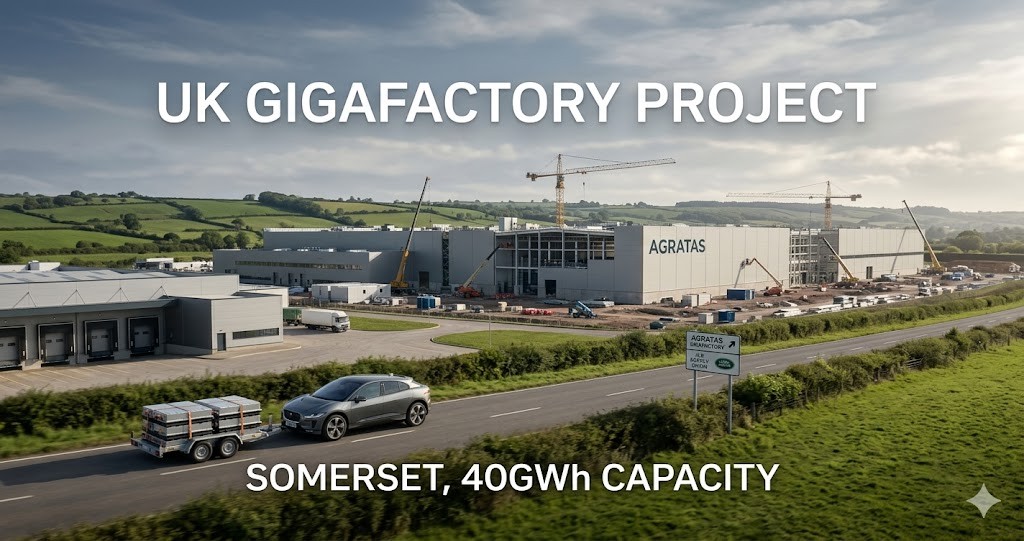
英国政府は、タタ・グループ傘下のバッテリー企業アグラタス(Agratas)に対し、サマセット州でのギガファクトリー建設を支援するため、約3億8000万ポンド(5億954万ドル)の資金提供を実施しました。
この資金は、英国先進推進センター(APC)が管理する総額4億7000万ポンドの助成金パッケージの大部分を占めており、英国の脱炭素化と製造業の競争力強化を目的としています。
プロジェクトの主なポイント
- 建設場所: 英国南西部サマセット州
- 生産能力: 約40ギガワット時(40GWh)。これは英国最大規模のバッテリー工場となります。
- 主な供給先: タタ・グループ傘下のジャガー・ランドローバー(JLR)。将来的には他社への供給も視野に入れています。
- 期待される効果: 数千人規模の雇用創出と、国内EVサプライチェーンの確立。
【関連情報】背景と業界への影響
このニュースをより深く理解するための関連情報を補足します。
1. なぜ「ギガファクトリー」が必要なのか
自動車産業がエンジン車からEVへ移行する中で、バッテリーは車両コストの約4割を占める最重要部品です。英国は2035年までにガソリン車・ディーゼル車の新車販売禁止を掲げており(政策による微調整の可能性あり)、国内に大規模な電池工場を持つことは、物流コストの削減と関税リスクの回避(原産地規則への対応)において死活問題となっています。
2. タタ・グループと英国の関係
インドの多国籍企業であるタタ・グループは、英国最大の高級車メーカーであるジャガー・ランドローバーを所有しています。今回の工場建設は、JLRが推進する全モデルの電動化戦略「Reimagine」を支える重要な柱となります。
3. 英国政府の戦略的意図
英国政府は「先進推進センター(APC)」を通じて、次世代のクリーン技術に投資しています。
- 経済活性化: かつての製造業の拠点に最先端工場を誘致することで、地方経済を活性化させる狙いがあります。
- エネルギー安全保障: バッテリーの海外(特に中国など)依存度を下げ、国内で自給自足できる体制を整える経済安全保障の側面もあります。
4. 競合他社の動向
英国では、日産自動車がサンダーランドに中国のエンビジョンAESCと提携してギガファクトリーを展開していますが、かつて期待されていたスタートアップのブリティッシュボルト(Britishvolt)が破綻するなど、これまで紆余曲折がありました。今回のタタによる巨大投資は、英国の自動車産業の未来に対する信頼を回復させる象徴的な出来事といえます。
UK Government Contributes Over 500 Million Dollars to Tata-Owned Agratas: Giant Battery Factory to be Built in Somerset
The UK government has provided approximately 380 million pounds (509.54 million dollars) in funding to Agratas, a battery company under the Tata Group, to support the construction of a gigafactory in Somerset.
This funding accounts for the majority of a 470 million pound grant package managed by the Advanced Propulsion Centre (APC) UK. It aims to accelerate decarbonization in the UK and strengthen the competitiveness of its manufacturing sector.
Key Project Highlights
- Location: Somerset, South West England.
- Production Capacity: Approximately 40 gigawatt-hours (40GWh). This will be the largest battery factory in the UK.
- Primary Customer: Jaguar Land Rover (JLR), owned by the Tata Group. Supply to other automakers is also planned for the future.
- Expected Impact: Creation of thousands of jobs and the establishment of a domestic EV supply chain.
[Related Information] Background and Industry Impact
The following additional information provides a deeper context for this development.
1. Why a “Gigafactory” is Necessary
As the automotive industry shifts from internal combustion engines to electric vehicles (EVs), batteries have become the most critical component, accounting for about 40 percent of a vehicle’s cost. With the UK aiming to ban the sale of new petrol and diesel cars by 2035 (subject to potential policy adjustments), having large-scale domestic battery plants is vital for reducing logistics costs and avoiding tariff risks related to “rules of origin.”
2. Relationship Between Tata Group and the UK
Tata Group, an Indian multinational conglomerate, owns Jaguar Land Rover, the UK’s largest luxury automaker. This new factory will serve as a crucial pillar supporting JLR’s “Reimagine” strategy, which focuses on the electrification of its entire model lineup.
3. Strategic Intent of the UK Government
Through the Advanced Propulsion Centre (APC), the UK government is investing in next-generation clean technologies:
- Economic Revitalization: By attracting a cutting-edge factory to a former manufacturing hub, the government aims to boost the local economy.
- Energy Security: There is also an economic security aspect: reducing dependence on overseas battery supplies (particularly from China) and establishing a self-sufficient domestic system.
4. Competitor Trends
In the UK, Nissan is already operating a gigafactory in Sunderland in partnership with China’s Envision AESC. However, the UK’s path has been rocky, evidenced by the collapse of the once-promising startup Britishvolt. This massive investment by Tata is seen as a landmark event that restores confidence in the future of the British automotive industry.


コメント