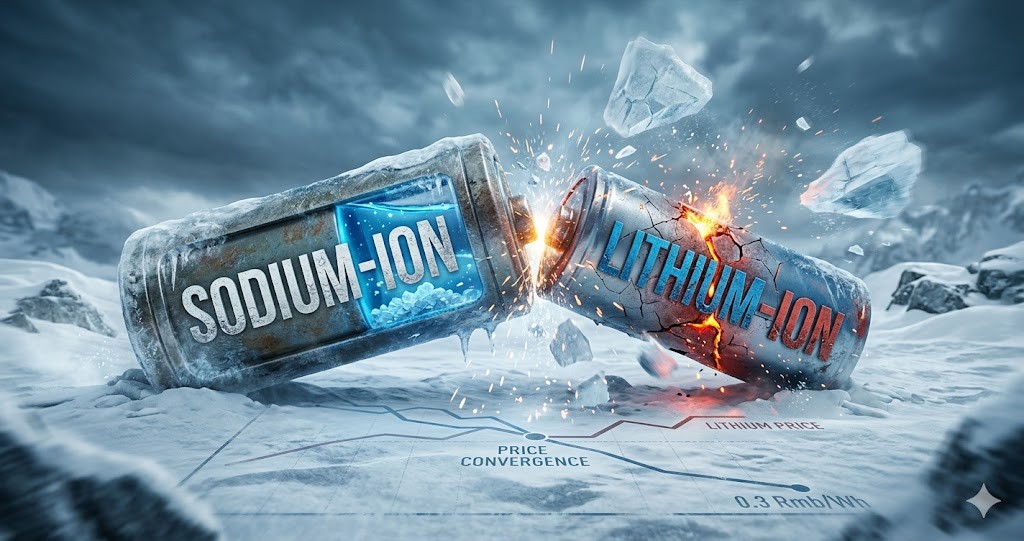
現在、電気自動車(EV)や再生可能エネルギーの貯蔵にはリチウムイオン電池が主流ですが、リチウム資源の偏在や価格変動が常にリスクとなっています。その代替候補として最も注目されているのが、海塩の主成分でもあるナトリウムを用いた「ナトリウムイオン電池」です。
これまで「コストが高い」「エネルギー密度が低い」とされてきたナトリウム電池ですが、中国の電池メーカー各社が技術革新と量産体制を加速させたことで、いよいよリチウム電池を脅かす「価格逆転」のカウントダウンが始まりました。
- ナトリウムイオン電池の価格展望と業界動向
- 関連情報:ナトリウムイオン電池とは
- The Sodium-Ion Battery Price Revolution: Price Convergence with Lithium Batteries Expected by 2027
- Introduction: The Shift to Sodium as the Next-Generation Battery Leader
- Price Outlook and Industry Trends for Sodium-Ion Batteries
- Related Information: What are Sodium-Ion Batteries?
ナトリウムイオン電池の価格展望と業界動向
1. 価格収束の予測
日奈電池(Hina Battery)の李樹軍総経理によると、ナトリウムイオン電池とリチウムイオン電池の価格は、今後1から2年以内に歴史的な収束を迎えると予測されています。
- 現在の価格(1ワット時あたり)
- リチウムイオン電池: 0.3元(0.044ドル)から0.5元
- ナトリウムイオン電池: 0.5元から0.7元
- 今後の予測
- 2027年: 両者の価格帯が収束する。
- 2028年以降: ナトリウム電池のコストが1Whあたり0.3元まで低下し、市場規模が数百GWh(ギガワット時)に達する見込み。
2. 主要メーカーの動向
中国の主要企業が商業化を加速させており、大規模普及に向けた基盤が整いつつあります。
- CATL: 2025年4月に「Naxtra」を発売。長安汽車と提携し、2026年半ばにエネルギー密度175Wh/kg、航続距離約400kmの量産型乗用車を投入予定。
- BYD: 1万サイクルの長寿命を持つナトリウム電池を開発。
- BAICグループ: 航続距離450kmを可能にする「オーロラ」ナトリウムイオン電池を発表。
- 日奈電池: 2028年までにエネルギー密度180Wh/kg以上の製品投入を目指す。
関連情報:ナトリウムイオン電池とは
まとめをより深く理解するための補足情報です。
ナトリウムイオン電池のメリット
- 資源の豊富さ: リチウムに比べ、ナトリウムは地球上に広く存在するため、低コストで安定した供給が可能です。
- 低温特性: リチウムイオン電池に比べ、極寒の環境下でも放電容量が維持されやすく、冬場の性能低下が抑えられます。
- 安全性: 熱安定性が高く、発火や爆発のリスクが比較的低いとされています。
- 急速充電: 高い入出力特性を持ち、短時間での充電に適しています。
現在の課題と展望
- エネルギー密度: リチウムイオン電池(特に三元系)に比べると重量あたりの蓄電量が少ないため、小型車や定置用蓄電池(ESS)での活用が先行しています。
- 今後の展望: 価格がリチウム電池と同等になれば、リチウム価格の変動に左右されない「第2の主役」として、安価な小型EVや再生可能エネルギー貯蔵の分野で爆発的な普及が期待されています。
出典:https://cnevpost.com/2026/04/01/hina-battery-exec-sodium-battery-costs-fall-to-match-lithium/
The Sodium-Ion Battery Price Revolution: Price Convergence with Lithium Batteries Expected by 2027
Introduction: The Shift to Sodium as the Next-Generation Battery Leader
While lithium-ion batteries are currently the mainstream for electric vehicles (EVs) and renewable energy storage, they face constant risks from uneven resource distribution and price volatility. Sodium-ion batteries, which utilize sodium—the primary component of sea salt—are attracting the most attention as a viable alternative.
Although sodium batteries have historically been criticized for high costs and low energy density, Chinese battery manufacturers are accelerating technological innovation and mass production. This has triggered the countdown to a “price inversion” that could finally challenge the dominance of lithium batteries.
Price Outlook and Industry Trends for Sodium-Ion Batteries
1. Predicted Price Convergence
According to Li Shujun, General Manager of Hina Battery, the prices of sodium-ion and lithium-ion batteries are expected to reach a historic convergence within the next one to two years.
- Current Prices (per watt-hour)
- Lithium-ion batteries: 0.3 yuan (0.044 dollars) to 0.5 yuan
- Sodium-ion batteries: 0.5 yuan to 0.7 yuan
- Future Forecasts
- 2027: The price ranges of both battery types are expected to converge.
- 2028 and beyond: The cost of sodium batteries is projected to drop to 0.3 yuan per 1Wh, with the market scale reaching hundreds of GWh (gigawatt-hours).
2. Trends Among Major Manufacturers
Major Chinese companies are accelerating commercialization, building the foundation for large-scale adoption.
- CATL: Launched “Naxtra” in April 2025. In partnership with Changan Automobile, they plan to release a mass-produced passenger car by mid-2026 featuring an energy density of 175Wh/kg and a range of approximately 400km.
- BYD: Developed a sodium battery with a long lifespan of 10,000 cycles.
- BAIC Group: Announced the “Aurora” sodium-ion battery, capable of providing a vehicle range of 450km.
- Hina Battery: Aims to introduce products with an energy density of 180Wh/kg or higher by 2028.
Related Information: What are Sodium-Ion Batteries?
Supplementary information to provide a deeper understanding of the summary.
Advantages of Sodium-Ion Batteries
- Abundant Resources: Unlike lithium, sodium is widely available globally, allowing for low-cost and stable supply.
- Low-Temperature Performance: Compared to lithium-ion batteries, they maintain discharge capacity better in extremely cold environments, reducing performance degradation in winter.
- Safety: They possess high thermal stability, meaning the risk of fire or explosion is relatively low.
- Fast Charging: They have high power input/output characteristics, making them suitable for rapid charging.
Current Challenges and Outlook
- Energy Density: Since they store less energy per unit of weight compared to lithium-ion batteries (especially ternary types), their use is currently prioritized for small vehicles and stationary energy storage systems (ESS).
- Future Outlook: Once prices become equivalent to lithium batteries, sodium-ion batteries are expected to see explosive growth in affordable small EVs and renewable energy storage as a “second protagonist” that is unaffected by lithium price fluctuations.


コメント