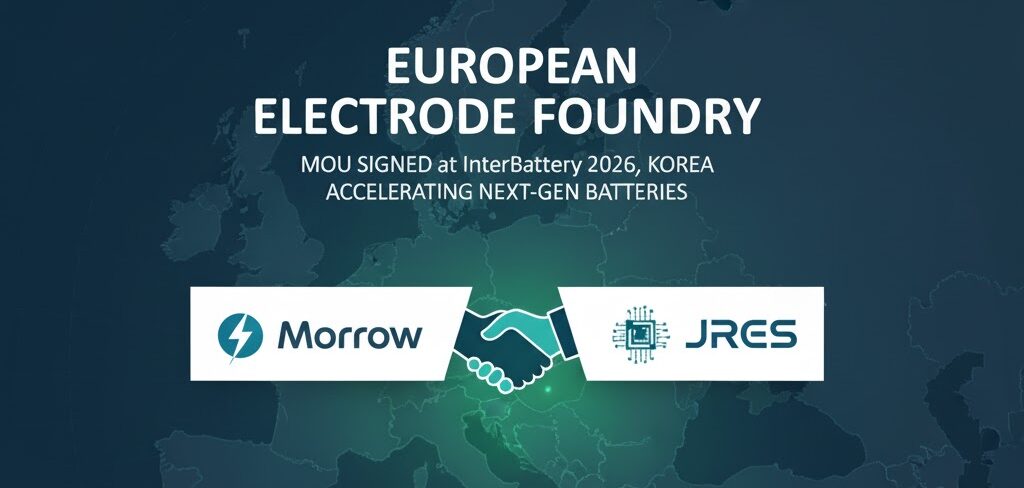
2026年3月、韓国で開催された「InterBattery 2026」にて、MorrowとJRESは欧州での高性能電極製造サービスの確立に向けた覚書(MOU)を締結しました。
- 提携内容: Morrowのノルウェー・アレンダル工場(1GWh規模)のインフラと、JRESの電極受託製造(ファウンドリ)モデルを融合。
- 主な目標: 欧州の電池メーカー向けに、高品質な電極(正極・負極)を迅速に供給する拠点をつくり、次世代電池の商用化を加速させる。
技術背景:注目の「LFP」と「LNMO」
今回の提携では、Morrowが強みを持つ2つの化学組成が鍵となります。
- LFP(リン酸鉄リチウム): コバルトやニッケルを使用しないため安価で安全性が高く、現在のEVや蓄電システム(ESS)の主流となっています。
- LNMO(リチウム・ニッケル・マンガン酸化物): 「高電圧スピネル」とも呼ばれる次世代材料です。コバルトフリーでコストを抑えつつ、LFPよりも高い電圧(約4.7V)を実現できるため、高エネルギー密度と低コストの両立が期待されています。
関連情報:両社の強みと提携の意義
1. JRエナジー・ソリューション(JRES)の「電池版TSMC」戦略
JRESは、半導体業界のTSMCのように、自社ブランドを持たずに製造に特化する「電極ファウンドリ」という新しいビジネスモデルを掲げています。電池製造において最も設備投資がかかり、歩留まり管理が難しい「電極工程(混錬・塗工・プレス)」を代行することで、顧客企業の市場参入コストを大幅に下げることができます。
2. Morrow Batteriesの欧州拠点としての優位性
Morrowは、再生可能エネルギーが豊富なノルウェーに拠点を置いています。同社のアレンダル工場は、多種多様な顧客の要望(中規模生産や特殊な化学組成)に柔軟に対応できるよう設計されており、JRESのファウンドリモデルと非常に相性が良いインフラを持っています。
3. 欧州サプライチェーンの「地産地消」加速
欧州では現在、中国への電池依存を減らすため、域内での製造能力確保が急務となっています。JRESの製造ノウハウを欧州に持ち込むことで、物流コストの削減だけでなく、環境規制(カーボンフットプリント)への対応や、サプライチェーンの短縮が可能になります。
今後の展望
両社は、単なる製造協力にとどまらず、LMR(リチウム過剰層状酸化物)などのさらに先の次世代材料の工業化も視野に入れています。Morrowの技術をJRESのネットワークを通じてグローバルに展開することで、今後10年間の欧州における電池イノベーションの基盤を築くことを目指しています。
“The TSMC of Batteries” Enters Europe: JRES and Morrow Form Strategic Alliance for Electrode Casting
In March 2026, at InterBattery 2026 in Korea, Morrow and JRES signed a Memorandum of Understanding (MOU) to establish high-performance electrode manufacturing services in Europe.
- Partnership Scope: Merging Morrow’s 1GWh production infrastructure in Arendal, Norway, with JRES’s specialized electrode foundry (contract manufacturing) model.
- Primary Goals: Establishing a hub to rapidly supply high-quality electrodes (cathodes and anodes) to European battery manufacturers and accelerating the commercialization of next-generation batteries.
Technical Background: Focus on “LFP” and “LNMO”
Two key chemical compositions where Morrow holds expertise are central to this partnership:
- LFP (Lithium Iron Phosphate): Free of cobalt and nickel, making it cost-effective and safe. It is currently the mainstream choice for EVs and Energy Storage Systems (ESS).
- LNMO (Lithium Nickel Manganese Oxide): A next-generation material also known as “High-Voltage Spinel.” It is cobalt-free and can achieve higher voltages (approximately 4.7V) than LFP, promising a balance of high energy density and low cost.
Related Information: Strengths and Strategic Significance
1. JRES’s “TSMC of Batteries” Strategy
Similar to TSMC in the semiconductor industry, JRES promotes an “electrode foundry” business model that specializes in manufacturing without having its own consumer brand. By handling the electrode processes (mixing, coating, and pressing)—which require the highest capital investment and are the most difficult to manage in terms of yield—JRES significantly lowers the market entry barriers for its customers.
2. Morrow Batteries’ Advantage as a European Hub
Morrow is based in Norway, a country rich in renewable energy. Its Arendal factory is specifically designed to flexibly handle diverse customer requirements, such as medium-scale production and specialized chemical compositions, making its infrastructure highly compatible with JRES’s foundry model.
3. Accelerating “Local Production for Local Consumption” in Europe
To reduce dependence on Chinese battery supplies, Europe urgently needs to secure regional manufacturing capacity. Bringing JRES’s manufacturing expertise to Europe not only reduces logistics costs but also helps meet environmental regulations (carbon footprint requirements) and shortens the supply chain.
Future Outlook
The two companies look beyond simple manufacturing cooperation, aiming for the industrialization of even more advanced materials, such as LMR (Lithium-Manganese-Rich layered oxides).

コメント