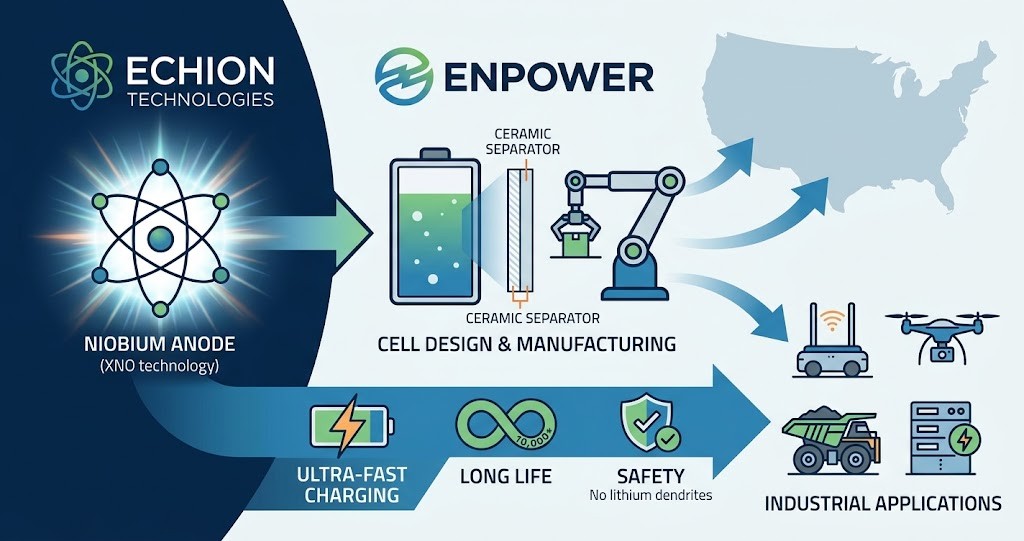
次世代リチウムイオン電池の開発において、エネルギー密度の向上だけでなく「超急速充電」「長寿命」「高安全性」を重視した負極(アノード)材料の開発が急ピッチで進んでいます。従来の一般的なリチウムイオン電池では黒鉛(グラファイト)が負極材として広く使われていますが、グラファイト系負極は急速充電時にリチウム金属が表面に析出しやすく(デンドライト形成)、ショートや発火リスクを引き起こす要因となっていました。
これに対し、ニオブ(Niobium)をベースとしたニオブ系酸化物負極(XNOなど)は、従来のグラファイトやLTO(チタン酸リチウム)に比べ、以下のような優れた特性を持っています。
- 超急速充電:数分レベルでのフル充電が可能。
- 長寿命・高耐久:数万回に及ぶサイクル寿命を実現。
- 高安全性:リチウムの析出を防止し、熱暴走リスクを低減。
現在、北米では産業用ロボット(AGV、AMR、ヒューマノイドロボットなど)やAIデータセンターの急増に伴い、ダウンタイム(充電待ちによる稼働停止時間)を極限まで減らせる高性能電池への需要が急増しています。さらに、米国政府による経済安全保障や供給網(サプライチェーン)見直しの動きを受け、中国製技術への依存を減らし、電池の「北米地産地消」を推進する重要性が一層高まっています。
以下に、米EnPowerと英Echion Technologiesによる北米ロボット市場向けニオブ負極電池の開発・製造提携の要点をまとめます。
EnPowerとEchionによるニオブ負極電池の共同開発・製造(要約)
1. 提携の概要と製造拠点
- 提携内容:米国の電池メーカーEnPowerと、英国の先端材料企業Echion Technologiesは、北米の産業用ロボットおよび重要インフラ向けリチウムイオン電池の開発・製造に関する覚書(MOU)を締結しました。
- 技術の融合:Echionが保有するニオブ系負極材料「XNO」と、EnPowerのセル設計・製造技術を組み合わせます。
- 製造拠点:EnPowerが所有するインディアナ州インディアナポリスの工場でセルを生産し、EnPowerは北米におけるXNOセルの製造パートナーとなります。
2. ニオブ負極(XNO)と統合セラミック技術の強み
- 超急速充電と長寿命:XNO材料により、充電時間をわずか数分に短縮できるほか、数万回の充放電サイクルに耐え、幅広い温度範囲で安定した性能を発揮します。
- リチウム析出の防止:グラファイト負極で課題となる急速充電時のリチウム析出(デンドライト形成)を防ぎ、安全性を劇的に向上させます。
- 統合セラミックセパレーター:EnPowerは自社の統合型セラミックセパレーター技術とXNOを組み合わせることで、放熱性、熱安定性、セルレベルの安全性をさらに高めます。
3. ターゲット市場と応用分野
充電による稼働停止時間(ダウンタイム)や容量低下が直接生産性に影響する分野をターゲットとしています。
- 主な応用分野:
- 無人搬送車(AGV)、自律移動ロボット(AMR)、ヒューマノイドロボット
- AIデータセンター向け電力システムなどの重要インフラ
- 大型産業車両、産業用ハイブリッドシステム、高出力エネルギー貯蔵システム(ESS)
4. サプライチェーンの内製化(脱中国依存)の意義
- 米国のサプライチェーン強化:機密性の高い産業・防衛・ロボット分野において、中国技術への依存度を下げる米国の政策動向に対応します。
- 両社トップのコメント:
- EnPower CEO エイドリアン・ヤオ氏:「ドローンのサプライチェーン再構築と同様の動きがロボット工学でも起きています。Echionの材料は汎用セルでは得られない圧倒的な差別化を実現します。」
- Echion CEO ジャン・ド・ラ・ヴェルピリエール氏:「ダウンタイムが許されない産業機械向けに作られたXNOを、北米でEnPowerと共に生産できることは米国市場における強力な優位性となります。」
まとめと今後の展望
EnPowerとEchionの提携は、急速充電と超長寿命を要求される産業用ロボットやAIデータセンター市場において、ニオブ負極電池が既存のグラファイト系電池を代替する重要な一歩となります。
生産スケジュールや投資規模などの詳細は今後個別の契約で定められますが、米国におけるバッテリーサプライチェーンの地産地消(オンショアリング)と相まって、北米の産業ロボットおよび自動化インフラの成長を裏付けるキーテクノロジーとして注目されます。
出典:https://www.bestmag.co.uk/enpower-echion-robotics-niobium/
US Battery Maker EnPower Partners with UK’s Echion to Produce Niobium-Based Lithium-Ion Batteries in North America for Local Consumption
In the development of next-generation lithium-ion batteries, progress is accelerating rapidly for anode materials that prioritize ultra-fast charging, long cycle life, and high safety alongside increased energy density. While graphite has been widely used as an anode material in conventional lithium-ion batteries, graphite-based anodes are prone to lithium plating (dendrite formation) during fast charging, raising the risk of short circuits and fires.
In contrast, niobium-based oxide anodes (such as XNO) offer superior characteristics compared to traditional graphite or LTO (lithium titanate):
- Ultra-Fast Charging: Full charges achieved in just minutes.
- Long Life and Durability: Cycle life capable of withstanding tens of thousands of charge-discharge cycles.
- High Safety: Prevents lithium plating, drastically reducing thermal runaway risks.
In North America, the surge in industrial robotics (such as AGVs, AMRs, and humanoid robots) and AI data centers has driven a sharp increase in demand for high-performance batteries that minimize operational downtime caused by charging. Furthermore, initiatives by the US government regarding economic security and supply chain realignment have heightened the importance of reducing reliance on Chinese technology and promoting the local production and consumption of batteries in North America.
Below is a summary of the development and manufacturing partnership between US-based EnPower and UK-based Echion Technologies targeting the North American robotics market.
Joint Development and Manufacturing of Niobium Anode Batteries by EnPower and Echion (Summary)
1. Partnership Overview and Manufacturing Hub
- Partnership Details: US battery manufacturer EnPower and UK advanced materials company Echion Technologies signed a Memorandum of Understanding (MOU) for the development and manufacturing of lithium-ion batteries targeting North American industrial robotics and critical infrastructure.
- Technology Synergy: The partnership combines Echion’s proprietary niobium-based anode material, XNO, with EnPower’s cell design and manufacturing capabilities.
- Manufacturing Location: Cells will be produced at EnPower’s facility in Indianapolis, Indiana, designating EnPower as the North American manufacturing partner for XNO cells.
2. Advantages of Niobium Anodes (XNO) and Integrated Ceramic Technology
- Ultra-Fast Charging and Long Life: XNO material reduces charging times to just a few minutes, withstands tens of thousands of cycles, and maintains stable performance across a wide temperature range.
- Prevention of Lithium Plating: By preventing the lithium plating (dendrite formation) that plagues graphite anodes during fast charging, safety is dramatically improved.
- Integrated Ceramic Separator: EnPower plans to combine XNO with its integrated ceramic separator technology to further enhance heat dissipation, thermal stability, and safety at the cell level.
3. Target Markets and Applications
The partnership targets sectors where charging downtime and rapid capacity degradation directly impair productivity.
- Key Application Areas:
- Automated Guided Vehicles (AGVs), Autonomous Mobile Robots (AMRs), and humanoid robots.
- Critical infrastructure, including power systems for AI data centers.
- Heavy industrial vehicles, industrial hybrid systems, and high-power Energy Storage Systems (ESS).
4. Significance of Supply Chain Onshoring (Reducing Reliance on China)
- Strengthening the US Supply Chain: Aligns with US policy trends aiming to reduce dependence on Chinese technology in sensitive industrial, defense, and robotics sectors.
- Executive Statements:
- Adrian Yao, Founder and CEO of EnPower: “The same forces that reshaped the drone supply chain are now transforming robotics. Echion’s anode material enables truly differentiated capabilities that off-the-shelf cells simply cannot deliver.”
- Jean de La Verpilliere, Co-founder and CEO of Echion: “XNO was developed to power industrial machines where downtime is not an option. Partnering with EnPower to produce XNO-enabled cells in North America gives us a decisive advantage in the US market.”
Conclusion and Future Outlook
The partnership between EnPower and Echion represents a significant step forward in replacing conventional graphite-based batteries with niobium anode technology in industrial robotics and AI data center markets that demand fast charging and ultra-long cycle lives.
While details regarding production schedules and investment scale will be defined in separate program agreements, this technology is drawing attention as a key enabler supporting the growth of North American industrial robotics and automation infrastructure, alongside the push for battery supply chain onshoring in the United States.


コメント