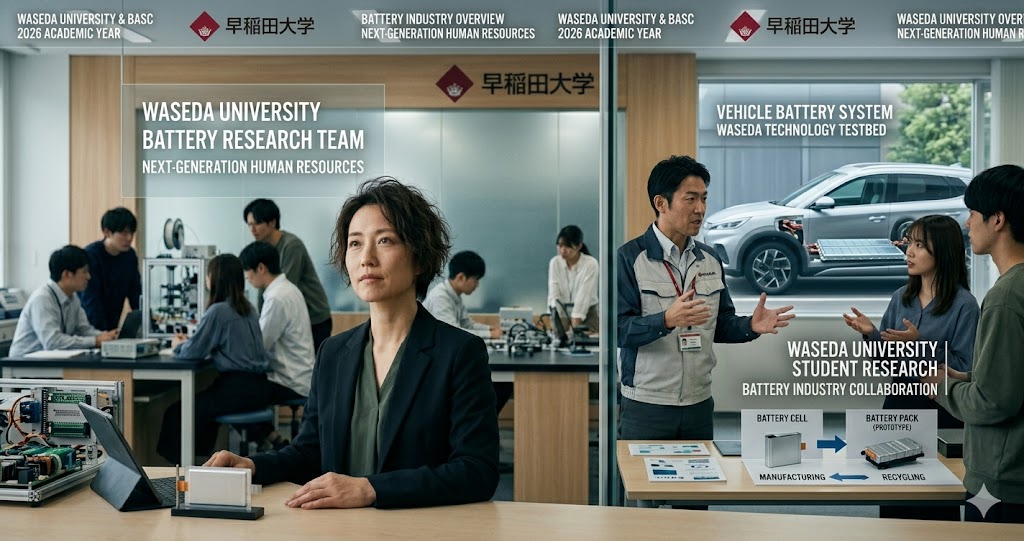
脱炭素社会(カーボンニュートラル)の実現に向けた世界的な潮流の中で、蓄電池は自動車の電動化や再生可能エネルギーの有効活用を支える「最重要デバイス」となっています。日本がこの戦略的分野で国際競争力を維持・強化するためには、高度な専門知識とビジネス視点を兼ね備えた人材の育成が急務です。
このような背景から、次世代のバッテリー人材を輩出すべく、産官学が強固なタッグを組んだ革新的な教育プログラムが始動します。本記事では、早稲田大学と電池サプライチェーン協議会(BASC)が提供する、2026年度協力講座『電池産業概論』の開講について詳しくお伝えします。
講座『電池産業概論』の概要と背景
本講座は、早稲田大学、経済産業省、およびBASC(産官学)が連携し、日本の電池産業の未来を担う人材を育成するための先進的な教育モデルです。
1. 講座の目的と特徴
- 背景: 2050年のカーボンニュートラル実現に向け、電気自動車(EV)や再生可能エネルギーの貯蔵に不可欠な蓄電池は「戦略物資」と位置づけられています。
- 目的: 急成長する電池市場を支えるため、技術開発から製造、ビジネス、リサイクルに至るサプライチェーン全体を俯瞰できる人材を育成します。
- 継続性: 2025年度の好評を受け、2年目の継続開講となります。
- 展開: 2025年10月に設立された「バッテリー先進人材普及ネットワーク(BATON)」を通じて、この教育モデルを全国の大学へ広めることを目指しています。
2. 2026年度 講義スケジュール
開講期間:2026年4月16日~5月28日(全7回)
場所:早稲田大学 西早稲田キャンパス
| 回 | 日付 | テーマ | 講師・登壇機関 |
| 1 | 4/16 | 電池産業の国家戦略・ビジネス概論 | 経済産業省、BASC |
| 2 | 4/23 | 電池ものづくりを支えるデジタル技術 | PPES、iCAD |
| 3 | 4/30 | 高品質・高安全な電池・生産技術 | トヨタバッテリー、パナソニックエナジー |
| 4 | 5/7 | 電池設計と評価解析 | GSユアサ、コベルコ科研 |
| 5 | 5/14 | 電池材料 | 住友金属鉱山、セントラル硝子 |
| 6 | 5/21 | 電池リサイクル・次世代電池研究 | 早稲田大学 |
| 7 | 5/28 | 日本電池リーダーが語る・総括 | パナソニックエナジー |
【関連情報】日本の電池産業を取り巻く状況
本講座の背景を理解するために重要な、現在の業界動向を補足します。
国家戦略と蓄電池産業戦略
日本政府(経済産業省)は、2030年までに国内の蓄電池製造能力を150GWh、グローバルで600GWhまで引き上げる目標を掲げています。これには、リチウムイオン電池(LiB)だけでなく、次世代の全固体電池や、定置用として期待されるナトリウムイオン電池(SIB)などの開発も含まれます。
サプライチェーンの強化
現在、電池材料の多くを特定の国(中国など)に依存している現状から、経済安全保障の観点での「脱・中国」やサプライチェーンの多様化が急務となっています。米国でのIRA(インフレ抑制法)への対応や、欧州の電池規制(カーボンフットプリントの開示義務など)への適応が、日本の素材メーカー(正極材、負極材、電解液、セパレーター)にとって大きな課題です。
循環型経済(サーキュラーエコノミー)
電池の寿命が尽きた後のリサイクルも重要なテーマです。Li(リチウム)、Ni(ニッケル)、Co(コバルト)などの希少金属を回収し、再び電池材料として利用する技術開発が進んでいます。本講座でも、早稲田大学の所千晴教授らが取り組むリサイクル技術が取り上げられます。
出典:https://prtimes.jp/main/html/rd/p/000000015.000130635.html
[BASC x Waseda University] Launch of “Introduction to the Battery Industry” Covering the Entire Storage Battery Supply Chain
Introduction
Amidst the global trend toward achieving a decarbonized society (carbon neutrality), storage batteries have become the “most critical device” supporting the electrification of vehicles and the effective use of renewable energy. For Japan to maintain and strengthen its international competitiveness in this strategic field, there is an urgent need to develop human resources who possess both advanced technical expertise and a business perspective.
Against this background, an innovative educational program has been launched through a strong partnership between academia, government, and industry to produce the next generation of battery professionals. This article provides details on the 2026 academic year cooperative course, “Introduction to the Battery Industry,” offered by Waseda University and the Battery Association for Supply Chain (BASC).
Overview and Background of the Course
This course is an advanced educational model developed through the collaboration of Waseda University, the Ministry of Economy, Trade and Industry (METI), and BASC (Academia-Government-Industry) to cultivate the future leaders of Japan’s battery industry.
1. Objectives and Features
- Background: To achieve carbon neutrality by 2050, storage batteries—essential for electric vehicles (EV) and renewable energy storage—are positioned as “strategic goods.”
- Purpose: To support the rapidly growing battery market, the course aims to develop individuals who can oversee the entire supply chain, from technology development to manufacturing, business, and recycling.
- Continuity: Following the high praise received in the 2025 academic year, the course will continue for its second year.
- Expansion: Through the “Battery Advanced Talent Outreach Network (BATON),” established in October 2025, there are plans to expand this educational model to universities and educational institutions across Japan.
2. 2026 Lecture Schedule
Period: April 16, 2026 – May 28, 2026 (7 sessions total)
Location: Waseda University, Nishi-Waseda Campus
| No. | Date | Theme | Lecturers / Participating Organizations |
| 1 | 4/16 | National Strategy and Business Overview | METI, BASC |
| 2 | 4/23 | Digital Tech Supporting Battery Manufacturing | PPES, iCAD |
| 3 | 4/30 | High-Quality/Safe Batteries & Production Tech | Toyota Battery, Panasonic Energy |
| 4 | 5/7 | Battery Design and Evaluation/Analysis | GS Yuasa, Kobelco Research |
| 5 | 5/14 | Battery Materials | Sumitomo Metal Mining, Central Glass |
| 6 | 5/21 | Battery Recycling & Next-Gen Research | Waseda University |
| 7 | 5/28 | Insights from Japanese Battery Leaders / Summary | Panasonic Energy |
[Related Information] Current Status of the Japanese Battery Industry
To better understand the background of this course, here is supplementary information on current industry trends.
National Strategy and Storage Battery Industry Strategy
The Japanese government (METI) aims to increase domestic storage battery manufacturing capacity to 150 GWh and global capacity to 600 GWh by 2030. This includes not only Lithium-ion Batteries (LiB) but also the development of next-generation All-Solid-State Batteries and Sodium-Ion Batteries (SIB) for stationary use.
Strengthening the Supply Chain
Due to the current heavy reliance on specific countries (such as China) for battery materials, diversifying the supply chain and “de-China” strategies are urgent from an economic security perspective. Compliance with the US Inflation Reduction Act (IRA) and adaptation to European battery regulations (such as mandatory carbon footprint disclosure) are major challenges for Japanese material manufacturers (cathodes, anodes, electrolytes, separators).
Circular Economy
Recycling batteries at the end of their life is another critical theme. Technology development is underway to recover rare metals such as Li (lithium), Ni (nickel), and Co (cobalt) for reuse as battery materials. This course will also cover the recycling technologies being researched by Professor Chiharu Tokoro and others at Waseda University.

コメント