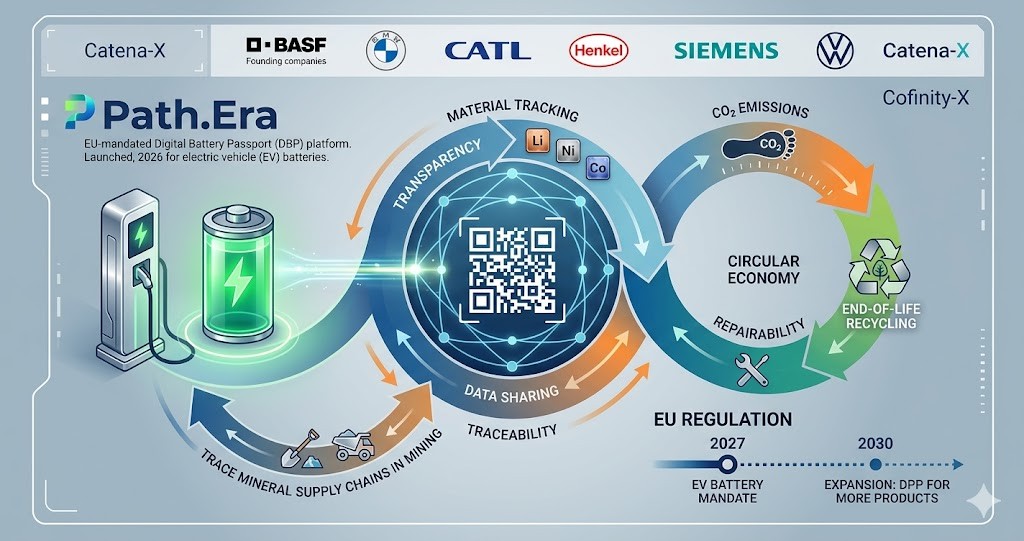
2026年3月、BASF、BMW、CATL、ヘンケル、シーメンス、フォルクスワーゲン(VW)などの大手メーカー連合は、電気自動車(EV)用電池のライフサイクルを追跡する共通プラットフォーム「Path.Era」を発表しました。これは、2027年から施行される欧州連合(EU)の厳格な規制に対応するための画期的な取り組みです。
1. デジタルバッテリーパスポート(DBP)「Path.Era」とは
- 目的: バッテリーの製造から利用、再利用、リサイクルに至る全工程のデータを透明化し、循環型経済(サーキュラーエコノミー)を促進する。
- データ内容: 材料構成(リチウム、ニッケル、コバルト等)、二酸化炭素(CO2)排出量、修理可能性、製品寿命末期のリサイクル方法などを記録。
- 技術基盤: 自動車業界のデータ共有基盤「Catena-X(カテナX)」をベースとし、Cofinity-X上で運用。QRコード等を通じて関係者が情報にアクセスできる。
2. EU規制による義務化と背景
- 2027年の義務化: EU域内で販売されるすべての新型EV用バッテリーに対し、デジタルバッテリーパスポート(DBP)の作成が法的に義務付けられる。
- 対象の拡大: 2030年までに、電池だけでなく繊維、タイヤ、鉄鋼、アルミニウム、電子機器など多岐にわたる製品で「デジタルプロダクトパスポート(DPP)」の導入が進められる。
- トレーサビリティの確保: 重要鉱物の採掘ルートや環境負荷を可視化し、中国など特定のサプライチェーンへの過度な依存や環境破壊を抑制する狙いがある。
3. 環境保護と経済的メリット
- 製造時の排出抑制: EVの総生産排出量の約40から60パーセントがバッテリー製造に起因するため、データ管理による脱炭素化が不可欠。
- 安全なリサイクル: 廃棄時の熱暴走火災などのリスクを低減し、効率的な資源回収を可能にする。
- 巨大なリサイクル市場: リサイクル部門は2040年までに60億米ドルの利益を生むと予測されており、メーカーは新たなビジネスチャンスとして注目している。
4. 業界リーダーのコメント
- BMW(オリバー・ガンザー氏): 「Path.EraとCatena-Xの組み合わせは、複雑なバリューチェーンのデータ収集において最適なソリューションである。」
- ヘンケル(ジョージ・カザンティス氏): 「このシステムは、他のあらゆる製造業におけるデジタルパスポートの未来の青写真となるだろう。」
【関連情報】補足と解説
デジタルプロダクトパスポート(DPP)の重要性
DPPは、製品の「履歴書」や「健康診断書」のような役割を果たします。欧州の「持続可能な製品のためのエコデザイン規則(ESPR)」の中核を成す仕組みであり、これが導入されることで、環境負荷の高い安価な製品が市場から排除されやすくなります。
欧州のデータ戦略「Catena-X(カテナX)」
ドイツの主要メーカーが主導する、企業間でデータを安全に交換するためのネットワークです。個別の企業がデータを囲い込むのではなく、業界全体で標準化されたプラットフォームを持つことで、規制対応のコストを下げ、効率的なリサイクル網を構築することを目指しています。
出典:https://sustainabilitymag.com/news/basf-bmw-siemens-digital-passports-batteries
BMW and BASF Form Alliance: European Firms Lead the Way with “Battery Passports” for 2027 Mandate
In March 2026, a consortium of major manufacturers including BASF, BMW, CATL, Henkel, Siemens, and the Volkswagen (VW) Group announced Path.Era, a common platform to track the lifecycle of electric vehicle (EV) batteries. This is a groundbreaking initiative to comply with strict European Union (EU) regulations set to take effect in 2027.
1. What is the “Path.Era” Digital Battery Passport (DBP)?
- Purpose: To make data transparent across all stages—from battery production and usage to reuse and recycling—thereby promoting a circular economy.
- Data Content: Records material composition (Lithium, Nickel, Cobalt, etc.), carbon dioxide (CO2) emissions, repairability, and end-of-life recycling methods.
- Technical Foundation: Built on the automotive industry’s data-sharing framework Catena-X and operated on Cofinity-X. Stakeholders can access information via QR codes and other digital means.
2. EU Regulatory Mandate and Background
- 2027 Mandate: It will be legally required to create a DBP for every new EV battery sold within the EU.
- Expansion of Scope: By 2030, Digital Product Passports (DPP) will be introduced for a wide range of products beyond batteries, including textiles, tires, steel, aluminum, and electronics.
- Ensuring Traceability: The goal is to visualize mining routes for critical minerals and environmental impact, thereby curbing environmental destruction and excessive dependence on specific supply chains, such as China.
3. Environmental Protection and Economic Benefits
- Emission Reduction in Manufacturing: Since approximately 40 to 60 percent of an EV’s total production emissions stem from battery manufacturing, decarbonization through data management is essential.
- Safe Recycling: Clearer data reduces risks like thermal runaway fires during disposal and enables efficient resource recovery.
- Massive Recycling Market: The recycling sector is projected to generate 6 billion US dollars in profit by 2040, and manufacturers are eyeing this as a major new business opportunity.
4. Comments from Industry Leaders
- Oliver Ganser (BMW): “The combination of Path.Era and Catena-X is the optimal solution for data collection across a complex value chain.”
- George Kazantzis (Henkel): “This system will serve as the blueprint for the future of digital passports in all other manufacturing industries.”
[Related Information] Supplemental Notes and Commentary
Importance of the Digital Product Passport (DPP)
The DPP acts like a “resume” or “medical record” for a product. It is a core mechanism of the EU’s Ecodesign for Sustainable Products Regulation (ESPR). Once implemented, it will make it easier to phase out cheap, high-environmental-impact products from the market.
Europe’s Data Strategy: “Catena-X”
This is a network led by major German manufacturers for the secure exchange of data between companies. Rather than individual companies hoarding data, the aim is to have an industry-wide standardized platform to lower the cost of regulatory compliance and build an efficient recycling network.


コメント