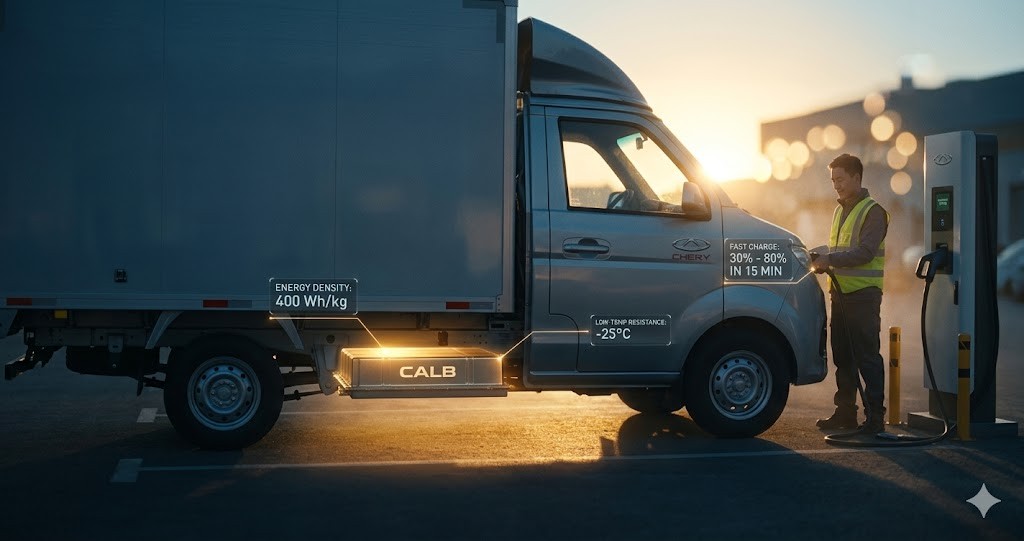
中国の電池大手CALB(中創新航)は、2026年3月、エネルギー密度を大幅に高めた半固体電池(固体・液体ハイブリッド電池)を発表し、小型トラック市場への本格参入を果たしました。この技術はすでに量産体制に入っており、奇瑞汽車(Chery Automobile)の車両に搭載されています。
1. CALB製 半固体電池の主要スペック
- エネルギー密度: 400Wh/kg。従来の液体リチウムイオン電池と比較して約122パーセント向上。
- 充電性能: 2Cの急速充電に対応。バッテリー残量30パーセントから80パーセントまでを15分で充電可能。
- 低温耐性: マイナス25℃の環境下で、従来比20パーセント以上の航続距離向上を実現。
- 安全性: 熱伝播や圧壊試験など44項目の安全試験に合格し、中国の最新国家基準を上回る信頼性を確保。
2. 商用車(小型トラック)への導入メリット
- 積載効率の向上: 高エネルギー密度化によりバッテリー重量を軽減。積載量が重要な物流業界において大きな利点となります。
- 運用効率の改善: 短時間での急速充電が可能になったことで、高頻度な配送業務におけるダウンタイムを削減します。
- 過酷な環境への対応: 低温性能の向上により、寒冷地での商用利用における実用性が高まりました。
3. CALBの市場ポジションと多角化
- 市場シェア: 2026年2月時点で中国国内第3位(シェア6.00パーセント)。CATLとBYDの2強を追う立場にあります。
- 航空分野への進出: 先週、空飛ぶ車(eVTOL)メーカーのAridge社向けに、航空機グレードのパワーバッテリーの量産出荷を開始したと発表。2026年後半の量産開始を目指しています。
【関連情報】補足と解説
半固体電池(Semi-Solid State Battery)とは
従来の液体電解質と固体の利点を組み合わせた「ハイブリッド型」の電池です。
- 位置づけ: 現在主流のリチウムイオン電池(液体)から、次世代の「全固体電池」へ移行する過程の重要技術とされています。
- 利点: 全固体電池に比べて製造コストを抑えつつ、液体電池よりも高いエネルギー密度と安全性を両立できるのが特徴です。
中国における新エネルギー商用車(NEV商用車)の動向
中国政府の強力な推進政策により、乗用車だけでなくトラックやバスの電動化が急速に進んでいます。
- ラストワンマイルの電動化: 都市部での配送を担う小型トラックは、排出ガス規制の影響を強く受けるため、高性能な電池への需要が急増しています。
- 技術の波及効果: かつては高級乗用車に限られていた半固体電池のような先端技術が、量産効果によるコスト低下によって商用車分野へも波及し始めています。
出典:https://cnevpost.com/2026/03/30/semi-solid-battery-adoption-light-trucks-calb-launch/
From Liquid to Semi-Solid: A Shift in Commercial Vehicles—CALB’s New Battery Enables 15-Minute Fast Charging and 400Wh/kg High Density
In March 2026, the Chinese battery giant CALB (China Aviation Lithium Battery) marked its full-scale entry into the light truck market by announcing a semi-solid-state battery (solid-liquid hybrid) with significantly enhanced energy density. This technology has already entered mass production and is being installed in vehicles by Chery Automobile.
1. Key Specifications of CALB’s Semi-Solid-State Battery
- Energy Density: 400Wh/kg. This is an improvement of approximately 122 percent compared to conventional liquid lithium-ion batteries.
- Charging Performance: Supports 2C fast charging. It can charge from 30 percent to 80 percent capacity in just 15 minutes.
- Low-Temperature Resistance: Achieves a range improvement of over 20 percent compared to conventional batteries in environments as cold as minus 25 degrees Celsius.
- Safety: Passed 44 safety tests, including thermal propagation and crush tests, ensuring reliability that exceeds China’s latest national standards.
2. Benefits for Commercial Vehicles (Light Trucks)
- Improved Payload Efficiency: High energy density reduces battery weight, providing a significant advantage for the logistics industry where payload capacity is critical.
- Enhanced Operational Efficiency: The ability to fast-charge in a short time reduces downtime for high-frequency delivery operations.
- Performance in Harsh Environments: Improved low-temperature performance enhances practicality for commercial use in cold regions.
3. CALB’s Market Position and Diversification
- Market Share: Ranked 3rd in China as of February 2026 with a 6.00 percent share, trailing the two giants, CATL and BYD.
- Entry into Aviation: Last week, the company announced the start of mass production shipments of aviation-grade power batteries for AeroHT (Aridge), a flying car (eVTOL) manufacturer. Mass production of these vehicles is targeted for the second half of 2026.
[Related Information] Supplemental Notes and Commentary
What is a Semi-Solid-State Battery?
This is a “hybrid” battery that combines the advantages of traditional liquid electrolytes with solid-state components.
- Positioning: It is recognized as a key transitional technology in the move from current mainstream liquid lithium-ion batteries to next-generation “all-solid-state” batteries.
- Advantages: It offers a balance of higher energy density and safety than liquid batteries while keeping manufacturing costs lower than those of all-solid-state batteries.
Trends in New Energy Commercial Vehicles (NEV Commercial Vehicles) in China
Driven by strong government promotion policies, the electrification of trucks and buses is progressing rapidly alongside passenger cars.
- Electrification of Last-Mile Delivery: Light trucks used for urban delivery are heavily impacted by emission regulations, leading to a surge in demand for high-performance batteries.
- Technology Spillover: Advanced technologies like semi-solid-state batteries, once reserved for high-end passenger cars, are now reaching the commercial vehicle sector due to cost reductions from mass production.

コメント