英国のバッテリー材料スタートアップ、インテグラルズ・パワー(Integrals Power)社は、同社が開発した次世代高マンガンリチウムマンガン鉄リン酸(LMFP)正極活物質が、独立機関による厳格な試験において卓越した耐久性と低温性能を実証したと発表しました。
電気自動車(EV)の航続距離問題を解決し、中国依存のサプライチェーンからの脱却を目指す同社の技術は、自動車業界のみならず、防衛や航空宇宙分野からも熱い視線を浴びています。以下に、その試験結果と技術的背景をまとめます。
1. 試験結果:過酷な条件下での圧倒的なパフォーマンス
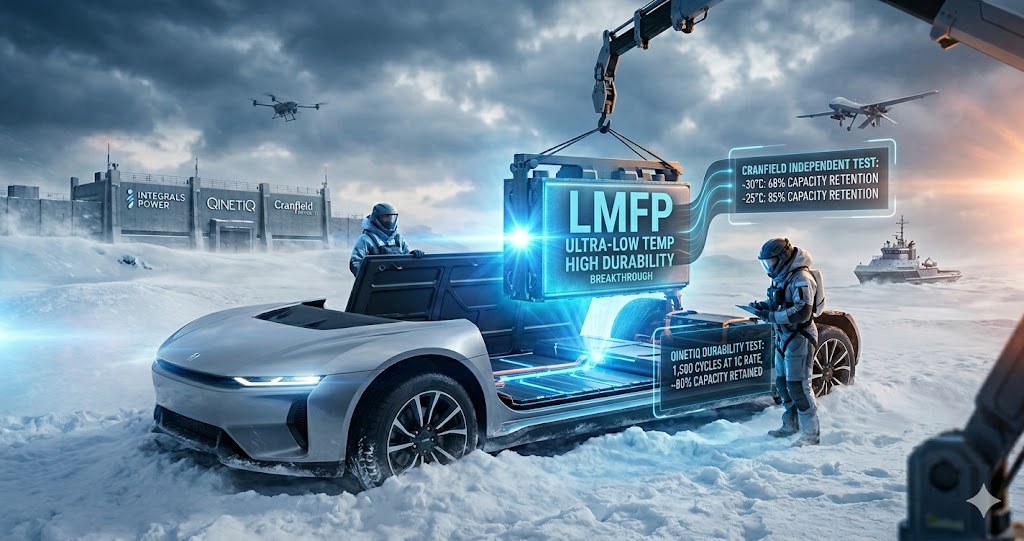
英国の著名な試験・研究機関であるQinetiQ(キネティック)社とクランフィールド大学による独立試験により、以下の驚異的なデータが示されました。
耐久性試験(QinetiQ社実施)
- 1,500サイクルの長寿命: 1Cレート(1時間で全容量を充放電する負荷)での継続的な試験において、1,500サイクルを達成。
- 高い容量維持: 1,500サイクル後も初期容量の約80%を維持しており、1,000サイクル時点での80%以上という昨年の記録をさらに更新しました。
- 市場への影響: 電池の劣化を最小限に抑えることで、EVの資産価値を高め、メーカーの保証コスト削減や消費者の信頼向上に直結します。
極低温試験(クランフィールド大学実施)
従来のLFP(リン酸鉄リチウム)電池の最大の弱点であった「寒さへの弱さ」を克服しました。
- -25度での性能: 容量維持率 85%(一般的なLFP/LMFPは約50%)
- -30度での性能: 容量維持率 68%(一般的なLFP/LMFPは約40%)
- 運用メリット: 冬季の航続距離減少を劇的に抑え、北極圏で作動する軍用車両やドローン、船舶での実用性を担保します。
2. LMFPが次世代の「本命」とされる理由
LMFPは、安価なLFPにマンガンを加えることでエネルギー密度を高めた素材です。NMC(ニッケル・マンガン・コバルト)系と比較しても多くの利点があります。
- 高エネルギー密度: 普及が進むLFPよりも大幅に高いエネルギー密度を実現。
- 低コスト・低毒性: 高価なニッケルやコバルトを使用せず、環境負荷を低減。
- 高い安全性: 結晶構造が安定しており、熱暴走のリスクが低い。
- 高マンガン配合: 同社はクラス最高レベルのマンガン含有量80%を誇る材料を、英国ミルトン・キーンズのパイロットラインで製造しています。
3. 戦略的背景:サプライチェーンの自国化と透明性
インテグラルズ・パワー社は、試験に使用したLMFPの原材料を欧州と北米から調達しています。
CEO ベナム・ホルモジ氏のコメント: 「今回の結果は、当社のLMFP材料で作られたバッテリーがより長持ちし、氷点下環境下でも優れた性能を発揮できることを証明しています。既存の電池化学がもたらす制約を克服することは、様々な分野でバッテリーの潜在能力を最大限に引き出すために不可欠です。」
この成果は、世界の自動車産業が直面している中国への過度な依存を打破し、防衛分野などで求められる「安全で透明性の高い自国サプライチェーン」の確立が可能であることを示唆しています。
Integrals Power Validates Durability and Low-Temperature Performance of High-Manganese LMFP Cells Through Independent Testing
UK-based battery material startup Integrals Power has announced that its next-generation high-manganese Lithium Manganese Iron Phosphate (LMFP) cathode active material has demonstrated exceptional durability and low-temperature performance in rigorous independent testing.
Aiming to solve electric vehicle (EV) range issues and break away from supply chains dependent on China, the company’s technology is attracting significant interest not only from the automotive industry but also from the defense and aerospace sectors. Below is a summary of the test results and technical background.
1. Test Results: Overwhelming Performance Under Harsh Conditions
Independent testing conducted by renowned UK research institutions QinetiQ and Cranfield University revealed the following breakthrough data:
Durability Testing (Conducted by QinetiQ)
- 1,500 Cycle Longevity: Achieved 1,500 charge-discharge cycles during continuous testing at a 1C rate.
- High Capacity Retention: Maintained approximately 80% of initial capacity after 1,500 cycles, surpassing last year’s milestone of 80% at 1,000 cycles.
- Market Impact: By minimizing battery degradation, this technology enhances the residual value of EVs, directly leading to reduced warranty costs for manufacturers and increased consumer confidence.
Ultra-Low Temperature Testing (Conducted by Cranfield University)
The company has overcome the “vulnerability to cold,” which was the biggest weakness of traditional Lithium Iron Phosphate (LFP) batteries.
- Performance at -25 degrees C: 85% capacity retention (compared to approximately 50% for typical LFP/LMFP).
- Performance at -30 degrees C: 68% capacity retention (compared to approximately 40% for typical LFP/LMFP).
- Operational Benefits: This dramatically reduces range loss during winter and ensures the practicality of military vehicles, drones, and maritime vessels operating in Arctic conditions.
2. Why LMFP is Considered the Next-Generation Standard
LMFP is a material that increases energy density by adding manganese to low-cost LFP. It offers numerous advantages even when compared to Nickel Manganese Cobalt (NMC) systems:
- High Energy Density: Achieves significantly higher energy density than the increasingly popular LFP.
- Low Cost and Low Toxicity: Reduces environmental impact by eliminating the use of expensive nickel and cobalt.
- High Safety: Features a stable crystal structure with a low risk of thermal runaway.
- High Manganese Formulation: The company produces material with a class-leading 80% manganese content at its pilot line in Milton Keynes, UK.
3. Strategic Background: Supply Chain Localization and Transparency
Integrals Power sources the raw materials for the LMFP used in these tests from Europe and North America.
Comment from CEO Behnam Hormozi: “These results prove that batteries made with our LMFP materials last longer and perform better even in sub-zero environments. Overcoming the constraints and trade-offs of existing battery chemistries is essential for battery power to reach its full potential across various sectors.”
This achievement suggests that it is possible to break the global automotive industry’s excessive reliance on China and establish the secure, transparent domestic supply chains required for the defense sector and beyond.
コメント