電気自動車(EV)業界がリチウム資源の価格変動と供給網の制約に揺れる中、中国の自動車大手・北京汽車集団(BAICグループ)が放った「ナトリウムイオン電池」の最新成果が、業界に大きな衝撃を与えている。これまで「エネルギー密度の低さ」が弱点とされてきたナトリウムイオン電池だが、BAICが発表した試作機は、普及型リチウムイオン電池(LFP)に匹敵する性能に到達。CATLやBYDといった巨人たちがひしめく商用化レースは、今や「理論」から「量産」のフェーズへと完全に移行した。
- ## 1. BAICが発表した画期的スペック:LFPに肩を並べる「170Wh/kg」
- ## 2. 中国勢による三つ巴の「ナトリウム」開発競争
- ## 3. なぜ今「ナトリウム」なのか?(背景と関連情報)
- ## 4. 今後の展望:2026年は「ナトリウムEV元年」へ
- 1. Groundbreaking Specs: Rivaling LFP at 170Wh/kg
- 2. A Three-Way Race: China’s Sodium-Ion Leaders
- 3. Why Sodium Now? (Background & Context)
- 4. Outlook: 2026 as “Year One” for Sodium EVs
## 1. BAICが発表した画期的スペック:LFPに肩を並べる「170Wh/kg」
BAICグループは、自社の次世代バッテリープラットフォーム「オーロラ(Aurora)」において、ナトリウムイオン電池の試作設計を完了したと発表しました。
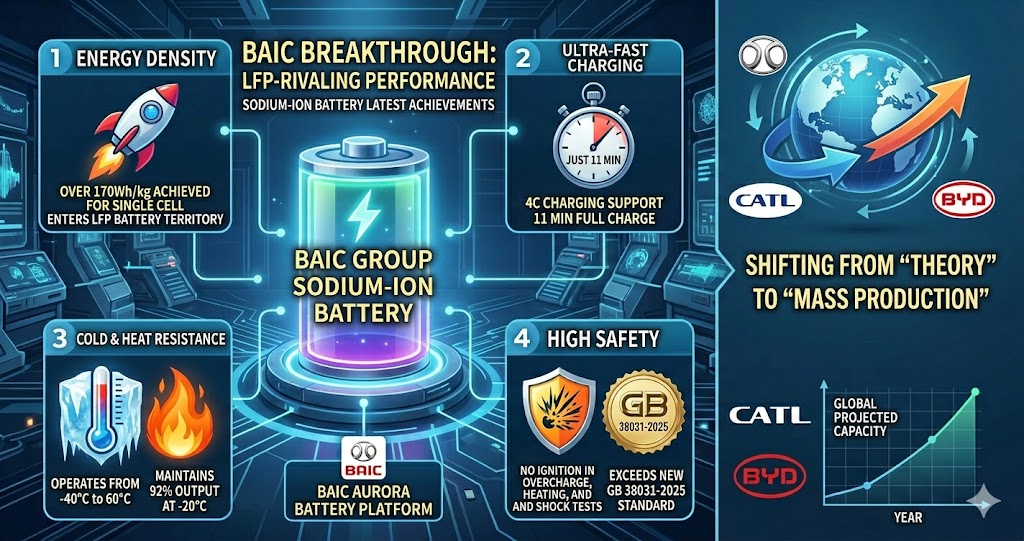
- エネルギー密度: 単セルで170Wh/kg超を達成。これは一般的なリン酸鉄リチウム(LFP)電池の領域に踏み込む数値です。
- 超急速充電: 4C充電に対応し、わずか11分でのフル充電を可能にします。
- 耐寒・耐熱性能: -40℃から60℃という極限環境での動作を確認。特に冬場に弱いリチウム電池の弱点を克服し、-20℃でも92%の出力を維持します。
- 高い安全性: 200%の過充電や加熱、衝撃試験でも発火・爆発せず、2026年7月から施行される中国の新国家基準(GB 38031-2025)を上回る安全性を実証しました。
BAICはすでに材料、電解質、システム統合など主要分野で約20件の特許を出願しており、量産プロセスの確立を急いでいます。
## 2. 中国勢による三つ巴の「ナトリウム」開発競争
BAICの参入により、中国国内でのナトリウムイオン電池開発は、CATL、BYDを含む激しい三つ巴の様相を呈しています。
| メーカー | 技術ブランド / 特徴 | 主要スペック | 商用化の状況 |
| BAIC | オーロラ (Aurora) | 170Wh/kg, 4C充電 (11分) | 試作完了・量産プロセス確立中 |
| CATL | Naxtra (ナクストラ) | 175Wh/kg, 5C充電 | 長安汽車と提携、2026年中頃に市販車投入予定 |
| BYD | 第3世代プラットフォーム | サイクル寿命 10,000回 | 定置用蓄電システム(BESS)および低価格EV向け |
## 3. なぜ今「ナトリウム」なのか?(背景と関連情報)
ナトリウムイオン電池が急速に注目されている背景には、リチウムイオン電池にはない3つの明確なメリットがあります。
- 圧倒的な低コストと資源の豊富さ:リチウムが希少金属であるのに対し、ナトリウムは食塩の主成分として地球上に無尽蔵に存在します。大規模量産時にはリチウム電池より30〜40%のコスト削減が可能と試算されています。
- 低温下での安定性:寒冷地での航続距離低下はEVの長年の課題でしたが、ナトリウムイオンは低温環境下でもイオンの動きが鈍くなりにくく、北欧や中国北部などの市場で強力な武器になります。
- 既存設備の流用:ナトリウムイオン電池は、リチウムイオン電池(特にLFP)の生産ラインを大幅に変更することなく製造できるため、メーカーにとって投資リスクが低い点も普及を後押ししています。
## 4. 今後の展望:2026年は「ナトリウムEV元年」へ
CATLは先月、長安汽車(Changan)と共同でナトリウムイオン電池「Naxtra」を搭載した乗用車モデルを2026年半ばに市場投入すると発表しました。BAICの今回の成功により、今後はエントリーモデルのEVや、物流用の小型バンを中心に、リチウムからナトリウムへの置き換えが急速に進むと予測されます。
また、BYDが示した「1万回のサイクル寿命」という数字は、EVとしての寿命を終えた後、家庭用やグリッド用の蓄電池として再利用する「セカンドライフ」の可能性も大きく広げています。
出典:https://cnevpost.com/2026/03/20/baic-unveils-sodium-ion-battery-breakthrough/
BAIC Successfully Prototypes Sodium-Ion Battery Exceeding 170Wh/kg — Achieving Performance Rivaling LFP
As the Electric Vehicle (EV) industry grapples with lithium price volatility and supply chain constraints, BAIC Group, a major Chinese automaker, has sent shockwaves through the sector with its latest breakthrough in sodium-ion battery technology. Long hindered by low energy density, sodium-ion batteries have reached a turning point: BAIC’s new prototype matches the performance of widely used Lithium Iron Phosphate (LFP) batteries. The commercialization race—already crowded with giants like CATL and BYD—has now officially shifted from “theoretical” to the “mass production” phase.
1. Groundbreaking Specs: Rivaling LFP at 170Wh/kg
BAIC Group announced the completion of its sodium-ion battery prototype design under its next-generation “Aurora” battery platform.
- Energy Density: Achieved over 170Wh/kg at the single-cell level, a figure that steps directly into the territory of conventional LFP batteries.
- Ultra-Fast Charging: Supports 4C charging, enabling a full charge in just 11 minutes.
- Thermal Resilience: Confirmed stable operation in extreme environments ranging from -40°C to 60°C. Crucially, it maintains a 92% energy output even at -20°C, overcoming the notorious winter performance issues of lithium batteries.
- High Safety Standards: The battery demonstrated no fire or explosion during rigorous testing, including 200% overcharge, heating, and mechanical impact, exceeding China’s new national safety standards (GB 38031-2025) set for July 2026.
BAIC has already filed approximately 20 patents covering materials, electrolytes, and system integration as it accelerates the establishment of mass-production processes.
2. A Three-Way Race: China’s Sodium-Ion Leaders
With BAIC’s entry, the domestic competition in China has intensified into a fierce three-way battle between BAIC, CATL, and BYD.
| Manufacturer | Platform / Features | Key Specs | Commercialization Status |
| BAIC | Aurora | 170Wh/kg, 4C (11-min charge) | Prototyping complete; establishing mass production |
| CATL | Naxtra | 175Wh/kg, 5C charging | Partnered with Changan; Market launch mid-2026 |
| BYD | 3rd Gen Platform | 10,000 cycle life | Targeting BESS (Energy Storage) & budget EVs |
3. Why Sodium Now? (Background & Context)
The surge in interest in sodium-ion batteries is driven by three distinct advantages over lithium-ion:
- Low Cost & Resource Abundance: Unlike lithium, which is a rare metal, sodium is the primary component of common salt and is inexhaustible. Large-scale production is estimated to reduce costs by 30–40% compared to lithium batteries.
- Cold Weather Stability: Range anxiety in cold climates has been a persistent EV hurdle. Sodium ions remain highly mobile in low temperatures, making them a powerful solution for markets like Northern Europe and Northern China.
- Manufacturing Synergy: Sodium-ion batteries can be manufactured using existing lithium-ion (LFP) production lines with minimal modifications, lowering the investment risk for manufacturers.
4. Outlook: 2026 as “Year One” for Sodium EVs
Last month, CATL announced a partnership with Changan Automobile to launch a passenger model equipped with “Naxtra” sodium-ion batteries in mid-2026. Following BAIC’s success, the industry expects a rapid shift from lithium to sodium, particularly in entry-level EVs and small logistics vans.
Furthermore, the 10,000-cycle life demonstrated by BYD opens significant “second-life” possibilities, allowing these batteries to be repurposed for home or grid-scale energy storage after their automotive lifespan ends.

コメント