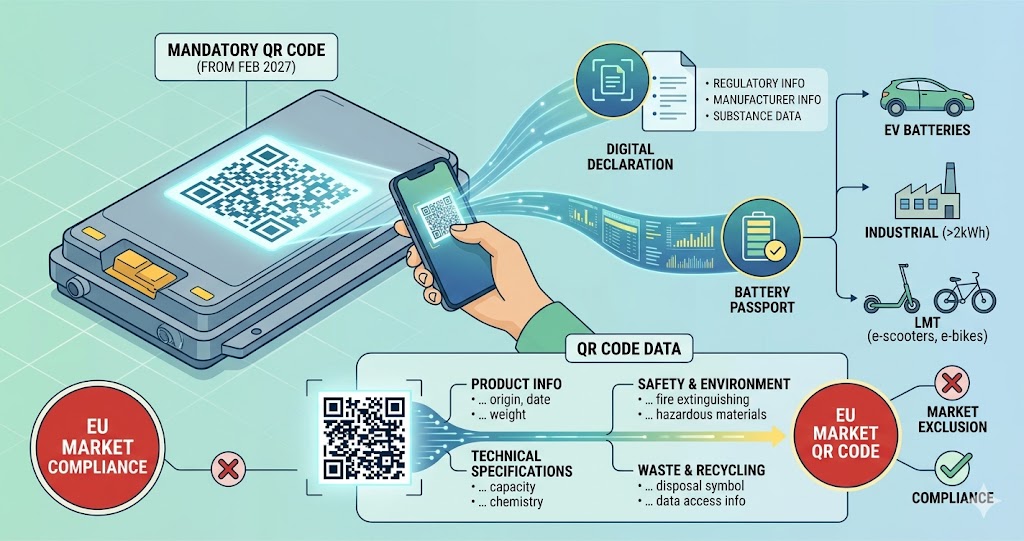
2027年2月から、EU市場に投入されるすべてのバッテリーにQRコードの表示が義務付けられます。これは規則(EU) 2023/1542に基づくもので、従来の「指令」とは異なり、EU全加盟国に一律かつ直接適用される極めて強制力の強い規制です。
米国をはじめとするEU圏外のデバイスメーカー(OEM)は、自社製品に組み込まれたバッテリーを含め、早急な対応が求められます。
1. QRコード表示の法的要件
第13条により、バッテリー本体(困難な場合はパッケージ)にQRコードを記載し、以下の情報へアクセス可能にしなければなりません。
- デジタル宣言(すべてのバッテリーが対象): 規制情報、製造者情報、有害物質の有無などにリンク。
- バッテリーパスポート(特定のカテゴリーが対象): より詳細なライフサイクル管理データにリンク。
バッテリーパスポートが必要な対象
- LMTバッテリー: 電動スクーター、電動アシスト自転車など。
- 産業用バッテリー: 容量が 2kWh を超えるもの。
- 電気自動車(EV)用バッテリー: 全般。
2. QRコードに含まれる主な情報内容
フルパスポートの対象外であっても、以下のデータセット(附属書VI)の提供が必要です。
- 製品基本情報: 製造元、カテゴリー、製造場所、製造年月日、重量。
- 技術仕様: 定格容量、化学組成(リチウムイオン、ニッケル水素など)。
- 安全性・環境情報: * 推奨される消火剤。
- 重量比 0.1% を超える重要な原材料の文書化。
- 水銀、カドミウム、鉛以外の有害物質の開示。
- 廃棄・リサイクル: * 個別の回収シンボル(ゴミ箱マーク)。
- EU適合宣言書(DoC)および適合性報告書。
- 廃棄物防止と使用済みバッテリー管理に関する情報。
3. 【関連情報】追加の背景と技術トレンド
本規則を補完する関連動向として、以下の点に注目する必要があります。
- 定義の明確化: 本規則における「製造業者」とは、物理的な製造者だけでなく、**「自社ブランドで製品をEU市場に投入する企業」**を指します。つまり、バッテリーを外部調達しているデバイスメーカーが最終的な法的責任を負います。
- データの可用性: QRコードのリンク先情報は、バッテリーの運用期間全体(廃棄されるまで)を通じてアクセス可能でなければなりません。長期的なサーバー維持やデータホスティングの計画が不可欠です。
- 熱管理技術の進化: 安全性要件の厳格化に伴い、CARRAR社が開発する「相変化冷却技術」などの熱暴走防止策や、QuantumScape社が推進する「全固体電池」の商用化など、次世代の安全技術との統合が注目されています。
4. 製造業者が取るべきアクション
| ステップ | 内容 |
| カテゴリー分類 | 自社製品のバッテリーが「パスポート対象」か「QR宣言のみ」かを確認。 |
| ギャップ分析 | 現在保有しているデータと、規則で要求されるデータの差分を特定。 |
| データホスティング | 情報の正確性と長期的なデジタル可用性を確保するインフラの構築。 |
| サプライヤー連携 | バッテリー供給元に対し、正確な化学組成や製造データの提供を要求。 |
まとめ
2027年2月のデッドラインに向け、特に医療機器や産業機器を扱うメーカーは、製品の長寿命を考慮し、今すぐ設計とラベル表示のプロセスを見直す必要があります。コンプライアンスの不備は、製品回収や市場からの排除に直結するリスクがあります。
[Effective February 2027] EU Battery QR Code Regulation: Key Points You Need to Know
Starting in February 2027, all batteries placed on the EU market must display a QR code. Based on Regulation (EU) 2023/1542, this is a highly mandatory regulation that applies uniformly and directly to all EU member states, unlike previous “Directives.”
Device manufacturers (OEMs) outside the EU, including those in the US, must take immediate action, including for batteries embedded within their own products.
1. Legal Requirements for QR Code Labeling
According to Article 13, a QR code must be printed on the battery itself (or on the packaging if marking the battery is difficult) and must provide access to the following information:
- Digital Declaration (All batteries): Links to regulatory information, manufacturer details, and the presence of hazardous substances.
- Battery Passport (Specific categories): Links to more detailed life-cycle management data.
Target Categories Requiring a Battery Passport:
- LMT Batteries: Electric scooters, electric power-assisted cycles, etc.
- Industrial Batteries: Those with a capacity greater than 2 kWh.
- Electric Vehicle (EV) Batteries: All.
2. Main Information Included in the QR Code
Even if a full passport is not required, the following data sets (Annex VI) must be provided:
- Basic Product Info: Manufacturer, category, manufacturing location, date of manufacture, and weight.
- Technical Specifications: Rated capacity and chemical composition (e.g., Lithium-ion, NiMH).
- Safety and Environmental Info: Recommended extinguishing agents. Documentation of critical raw materials present in concentrations greater than 0.1% by weight. Disclosure of hazardous substances other than mercury, cadmium, and lead.
- Disposal and Recycling: Separate collection symbol (crossed-out wheelie bin). EU Declaration of Conformity (DoC) and conformity reports. Information on waste prevention and management of end-of-life batteries.
3. Additional Context and Technical Trends
It is important to note the following trends that complement this regulation:
- Clarification of “Manufacturer”: In this regulation, a “manufacturer” refers not only to the physical producer but also to any company that “places a product on the EU market under its own brand.” This means device manufacturers sourcing batteries externally bear the ultimate legal responsibility.
- Data Availability: Information linked via the QR code must remain accessible throughout the battery’s entire operational life (until disposal). Long-term server maintenance and data hosting plans are essential.
- Evolution of Thermal Management: With stricter safety requirements, integration with next-generation safety technologies is gaining attention, such as “Phase Change Cooling” developed by CARRAR to prevent thermal runaway and the commercialization of “Solid-State Batteries” promoted by QuantumScape.
4. Actions for Manufacturers
| Step | Action |
| Category Classification | Confirm whether your product’s battery requires a “Passport” or only a “QR Declaration.” |
| Gap Analysis | Identify the difference between currently held data and the data required by the regulation. |
| Data Hosting | Build infrastructure to ensure data accuracy and long-term digital availability. |
| Supplier Collaboration | Request precise chemical compositions and manufacturing data from battery suppliers. |
Summary
With the February 2027 deadline approaching, manufacturers—especially those in the medical and industrial equipment sectors—must review their design and labeling processes now, considering the long lifespan of their products. Non-compliance risks product recalls and market exclusion.


コメント