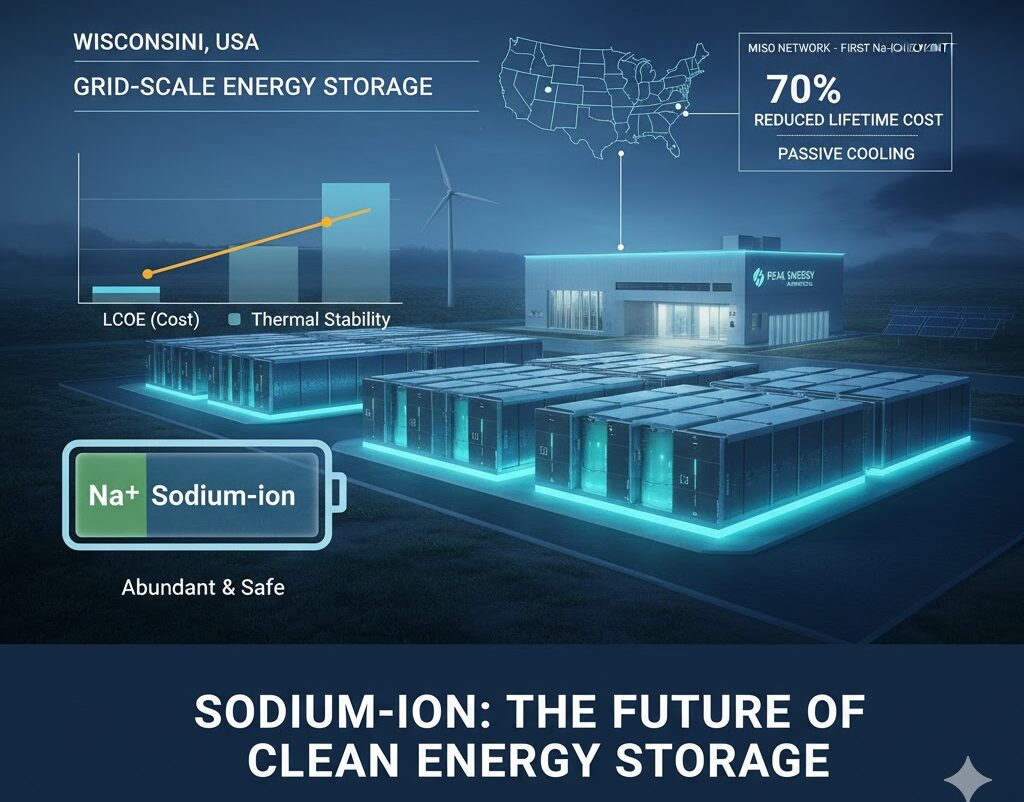
エネルギー貯蔵の常識を塗り替える一歩となるか。 カリフォルニア州のスタートアップ、ピークエナジー(Peak Energy)は2026年3月11日、大手エネルギー企業RWEアメリカスと提携し、ウィスコンシン州で同社独自のナトリウムイオン電池(SIB)によるグリッド用蓄電システムの試験運用プロジェクトを開始すると発表しました。
今回の導入は、米国中西部をカバーする巨大電力網MISO(ミッドコンチネント相互接続系統運用者)ネットワークにおいて、ナトリウムイオン技術が採用される初の事例となります。
■ ナトリウムイオン電池が変える「エネルギーの経済性」
ピークエナジーが提供する蓄電システム「GS1.1」は、現在主流のリチウムイオン電池(LiB)が抱える「コスト」と「熱管理」の課題を直接解決するものです。
- 受動冷却によるコスト削減: 独自の受動冷却技術(Passive Cooling)により、エネルギーを消費する冷却システムや、高価な定期メンテナンスが不要になります。
- 生涯コスト(LCOE)の大幅カット: 貯蔵エネルギーの生涯コストを平均70ドル/kWh削減。これは現在の標準的なシステム価格の約半分に相当します。
- 温度耐性と安定性: ナトリウムイオン(NFPP)セルは幅広い温度範囲で性能低下なく動作するため、経年劣化を見越した「過剰な設備投資(オーバービルド)」を減らすことが可能です。
■ なぜ今、ウィスコンシン州(MISO地域)なのか?
現在、米国中西部を含むMISO地域は、急速な電力需要の増加とエネルギーコストの上昇という「二重苦」に直面しています。
- 270億ドルの節約ポテンシャル: 調査レポートによると、今後10年間でMISOに10GWhの蓄電容量を導入すれば、システム全体のコストを最大270億ドル削減できると試算されています。
- 25%以上のコスト優位性: ピークエナジーのシステムを採用することで、従来のリチウムイオン電池ソリューションと比較して、総コストを25%以上削減できる見込みです。
- グリッドの信頼性向上: 需要が低い時間帯に余剰電力を蓄え、ピーク時に供給することで、高価なスポット市場への依存を抑制し、不安定な再生可能エネルギーの有効活用を最大化します。
■ 関連情報の補足:ナトリウムイオン電池の優位性
リチウムイオン電池と比較して、なぜナトリウムイオン電池が注目されているのか。その背景には以下の3つのポイントがあります。
- 資源の豊富さと安定供給: リチウムは希少で高価ですが、ナトリウム(塩の主成分)は地球上に広く存在します。サプライチェーンの地政学的リスクが低く、持続可能な材料調達が可能です。
- 火災リスクの低減: ナトリウムイオン電池は熱安定性が高く、リチウムイオン電池で懸念される発火リスクが極めて低いため、大規模なグリッド用蓄電に適しています。
- ポスト・リチウムの最有力候補: 中国企業(CATLなど)が先行していたこの分野で、米国企業のピークエナジーがRWEのような大手と提携したことは、北米における蓄電池自給率の向上という点でも重要な意味を持ちます。
■ 結論:エネルギー危機の「特効薬」となるか
ピークエナジーのランドン・モスバーグCEOは、「最も低コストの電子を供給することが我々の目標だ」と語っています。
この試験運用が成功し、全面導入へと移行すれば、高価な新発電所の建設を抑えつつ、ウィスコンシン州の住民に安価で安定した電力を届ける「次世代のエネルギーインフラ」のモデルケースとなるでしょう。
A Cure for Surging Electricity Costs? Affordable and Safe Sodium-Ion Batteries Launch in the U.S.
Could this be the step that rewrites the rules of energy storage? On March 11, 2026, California-based startup Peak Energy announced a partnership with energy giant RWE Americas to launch a pilot project in Wisconsin featuring its proprietary sodium-ion battery (SIB) grid storage system.
This deployment marks the first time sodium-ion technology has been integrated into the Midcontinent Independent System Operator (MISO) network, a massive power grid covering the American Midwest.
■ Transforming Energy Economics with Sodium-Ion Technology
Peak Energy’s “GS1.1” storage system directly addresses the cost and thermal management challenges currently facing mainstream lithium-ion batteries (LiB).
- Cost Reduction via Passive Cooling: The proprietary passive cooling technology eliminates the need for energy-consuming active cooling systems and expensive routine maintenance.
- Drastic Cuts to Levelized Cost (LCOE): The system reduces the lifetime cost of stored energy by an average of $70/kWh—approximately half the price of current standard systems.
- Temperature Resilience and Stability: Sodium-ion (NFPP) cells operate across a wide temperature range without performance degradation. This minimizes the need for “overbuilding” (installing excess capacity to compensate for aging), further optimizing capital efficiency.
■ Why Wisconsin (The MISO Region)?
The MISO region, including Wisconsin, is currently grappling with a “double whammy” of unprecedented electricity demand growth and skyrocketing energy costs.
- $27 Billion Savings Potential: According to research reports, deploying 10GWh of battery storage in MISO over the next decade could slash total system costs by up to $27 billion compared to baseline scenarios.
- 25%+ Cost Advantage: By adopting Peak Energy’s system, total storage costs are expected to be more than 25% lower than traditional lithium-ion solutions.
- Enhanced Grid Reliability: Storing surplus energy during off-peak hours and discharging it during peak demand limits reliance on expensive spot markets and maximizes the use of intermittent renewable energy.
■ Supplementary Insight: Why Sodium-Ion?
What makes sodium-ion batteries the center of attention compared to lithium-ion? There are three key drivers:
- Abundance and Supply Security: While lithium is rare and expensive, sodium (the primary component of salt) is globally abundant. This reduces geopolitical supply chain risks and enables sustainable material sourcing.
- Reduced Fire Risk: Sodium-ion batteries possess superior thermal stability, significantly lowering the fire risks associated with lithium-ion cells—making them ideal for large-scale grid storage.
- The “Post-Lithium” Frontrunner: While Chinese firms like CATL have led this field, U.S.-based Peak Energy’s partnership with a major player like RWE is a significant milestone for North American energy self-sufficiency.
■ Conclusion: A “Silver Bullet” for the Energy Crisis?
“Our goal is to deliver the lowest-cost electrons,” says Landon Mossburg, CEO of Peak Energy.
If this pilot proves successful and moves to full-scale deployment, it could serve as a blueprint for next-generation energy infrastructure—providing Wisconsin residents with affordable, stable power while curbing the need for costly new power plant construction.
コメント