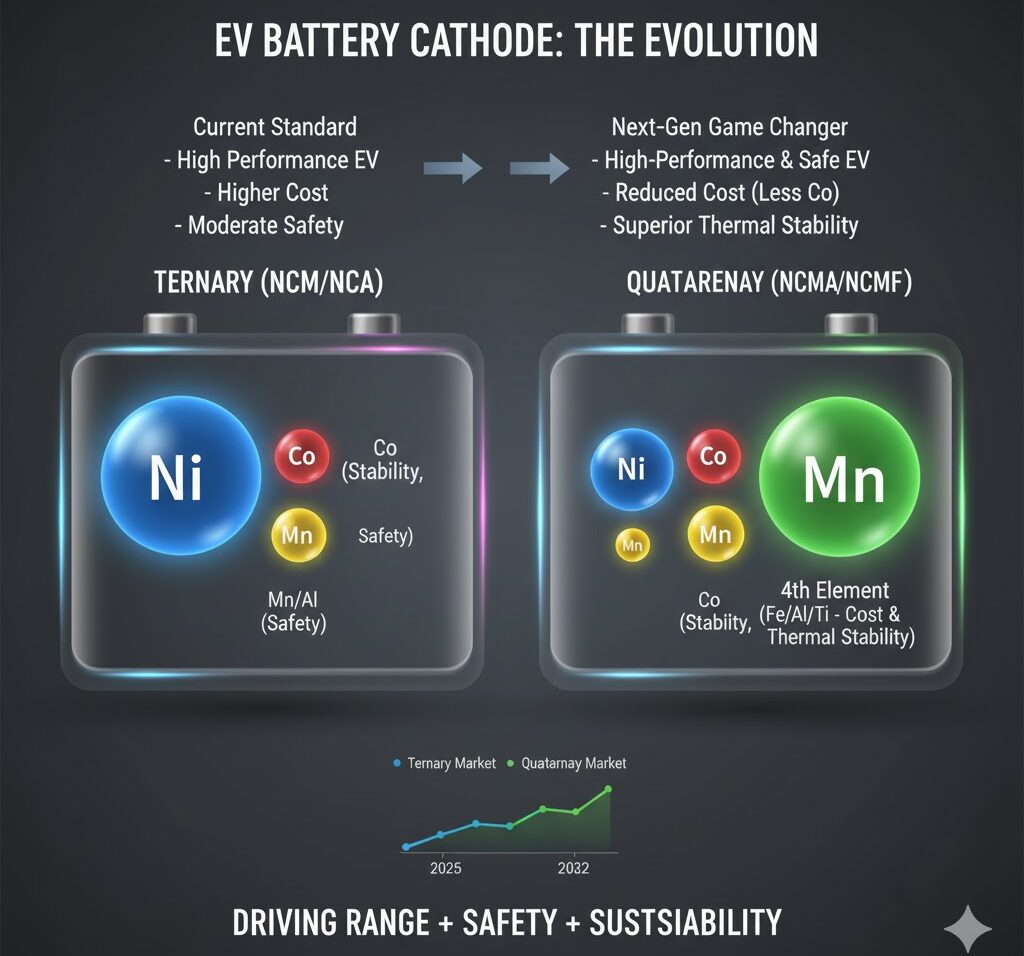
電気自動車(EV)の性能を左右する最大の要因は、バッテリーの「正極材」にあります。現在、市場の主流はニッケル・コバルト・マンガンを使用する「三元系」ですが、さらに安全性とコスト効率を高めた「四元系」への移行が始まっています。
電池の正極に含まれる金属元素の数が、なぜエネルギー密度やコスト、そして安全性に直結するのか。その主要な違いと将来展望を解説します。
1. 三元系リチウムイオン電池:現在のスタンダード
三元系電池は、正極にニッケル(Ni)、コバルト(Co)、マンガン(Mn)またはアルミニウム(Al)の3元素を使用することからその名がつきました。
- 主な構成:
- ニッケル: エネルギー密度を高め、航続距離を延ばす。
- コバルト: 構造を安定させ、充放電の寿命を延ばす。
- マンガン/アルミニウム: 熱安定性を高め、発火リスクを抑える。
- 代表的な種類:
- NCM 811: ニッケル比率を80%まで高めた高エネルギー密度型。テスラなどの長距離走行EVに採用。
- NCM 622: 性能、寿命、コストのバランスが良く、ハイブリッド車や蓄電システムに好適。
2. 四元系リチウムイオン電池:次世代のゲームチェンジャー
四元系電池は、従来の3元素に第4の元素(鉄、チタン、アルミニウムなど)を加えた最新技術です。三元系の弱点である「コスト」と「熱安定性」を克服するために開発されました。
- 主なメリット:
- コバルト依存の脱却: 高価で倫理的調達リスクのあるコバルトを減らし、安価な鉄(Fe)などを加えることでコストを削減。
- 極めて高い熱安定性: 添加元素が結晶構造を強固にし、過熱時の熱暴走を抑制。
- 代表的な種類:
- NCMA: アルミニウムを加えることで、ニッケル比率を90%近くまで上げつつ安定性を確保。GMの「Ultium」プラットフォーム(ハマーEV等)に採用されている。
- NCMF / NCMT: 鉄(F)やチタン(T)を添加し、グリッド蓄電や航空宇宙など、絶対的な信頼性が求められる分野向けに研究が進んでいる。
3. 三元系 vs 四元系:性能・市場比較
| 特性 | 三元系 (Ternary) | 四元系 (Quaternary) |
| 主な元素 | Ni, Co, Mn (または Al) | Ni, Co, Mn + Fe / Ti / Al |
| エネルギー密度 | 非常に高い (NCM811等) | 同等、あるいはそれ以上 |
| 安全性(耐熱性) | 標準的(高温時に課題) | 高い(第4元素が安定化) |
| コスト | 高い(コバルト価格に左右) | 抑制可能(コバルトを削減) |
| 主な用途 | 一般的なEV、スマホ、PC | 高性能EV、航空宇宙、軍事、大型電力網 |
4. 業界動向と将来予測
バッテリー市場は、航続距離の延長(高ニッケル化)と安全性の両立を求めて進化を続けています。
- 三元系市場の拡大: 2033年までに1,158億ドル規模に達すると予測され、依然としてEV市場の主役です。三菱ケミカルやCATLなどの巨頭が投資を加速させています。
- 四元系の台頭: 2025年には市場規模が1,811億ドルに達するとの推計もあり、特に「安くて高性能」を求める次世代EVでの採用が急増する見込みです。
■ 結論:どちらが「勝者」か?
短期的には、確立された技術である三元系(高ニッケル)が航続距離重視のプレミアムEVを支え続けます。しかし、持続可能性(脱コバルト)と安全性が重視される中で、四元系(NCMA等)がそのシェアを急速に奪っていくでしょう。
消費者は今後、「どれだけ走るか」だけでなく、「その電池がどれだけ倫理的で安全か」という基準で、これらの化学組成の違いを意識することになるはずです。
The Forefront of Battery Technology: Comparing the Strengths and Future of Ternary and Quaternary Systems
The single most critical factor determining the performance of an electric vehicle (EV) is the “cathode material” of its battery. While Ternary systems—utilizing Nickel, Cobalt, and Manganese—currently dominate the market, a shift toward Quaternary systems has begun, offering even greater safety and cost-efficiency.
Why does the number of metallic elements in the cathode directly impact energy density, cost, and safety? Below, we explore the key differences and the future outlook for these technologies.
1. Ternary Lithium-Ion Batteries: The Current Standard
Ternary batteries are named for the three primary elements used in their cathode: Nickel (Ni), Cobalt (Co), and Manganese (Mn) (or Aluminum).
- Key Components:
- Nickel: Increases energy density and extends driving range.
- Cobalt: Stabilizes the structure and ensures a long cycle life for charging/discharging.
- Manganese/Aluminum: Enhances thermal stability and reduces ignition risks.
- Representative Types:
- NCM 811: A high-energy-density type with 80% nickel. Used in long-range EVs such as Teslas.
- NCM 622: Offers a balance of performance, lifespan, and cost; ideal for hybrids and energy storage systems (ESS).
2. Quaternary Lithium-Ion Batteries: The Next-Gen Game Changer
Quaternary batteries are a cutting-edge advancement that adds a fourth element (such as Iron, Titanium, or Aluminum) to the traditional three. This technology was developed to overcome the “cost” and “thermal stability” weaknesses of ternary systems.
- Main Benefits:
- Reducing Cobalt Dependency: By decreasing the use of expensive and ethically sensitive cobalt and adding affordable elements like Iron (Fe), costs are significantly reduced.
- Superior Thermal Stability: The additional element strengthens the crystal structure, suppressing thermal runaway during overheating.
- Representative Types:
- NCMA: Incorporates Aluminum to allow nickel content to reach nearly 90% while maintaining stability. Used in GM’s “Ultium” platform (e.g., GMC Hummer EV).
- NCMF / NCMT: These add Iron (F) or Titanium (T) and are being researched for high-reliability sectors like grid storage, aerospace, and defense.
3. Ternary vs. Quaternary: Performance and Market Comparison
| Feature | Ternary | Quaternary |
| Primary Elements | Ni, Co, Mn (or Al) | Ni, Co, Mn + Fe / Ti / Al |
| Energy Density | Very High (e.g., NCM811) | Comparable or Higher |
| Safety (Heat Resistance) | Standard (Challenges at high temps) | High (Stabilized by 4th element) |
| Cost | High (Driven by Cobalt prices) | Controllable (Lower Cobalt content) |
| Primary Applications | Standard EVs, Smartphones, PCs | High-performance EVs, Aerospace, Grid |
4. Industry Trends and Future Outlook
The battery market continues to evolve, seeking a perfect balance between extended range (high-nickel content) and safety.
- Expansion of the Ternary Market: Projected to reach $115.89 billion by 2033, it remains the backbone of the EV industry. Giants like Mitsubishi Chemical and CATL are accelerating R&D investments.
- The Rise of Quaternary: Estimates suggest the market could reach $181.12 billion as early as 2025. Adoption is expected to surge in next-generation EVs that demand “low cost and high performance.”
■ Conclusion: Which is the “Winner”?
In the short term, established Ternary (high-nickel) technology will continue to power premium EVs where range is the top priority. However, as the industry shifts its focus toward sustainability (cobalt-free) and safety, Quaternary (such as NCMA) is poised to rapidly capture market share.
Moving forward, consumers will likely choose vehicles based not just on “how far they can go,” but also on “how ethical and safe the battery chemistry truly is.”


コメント