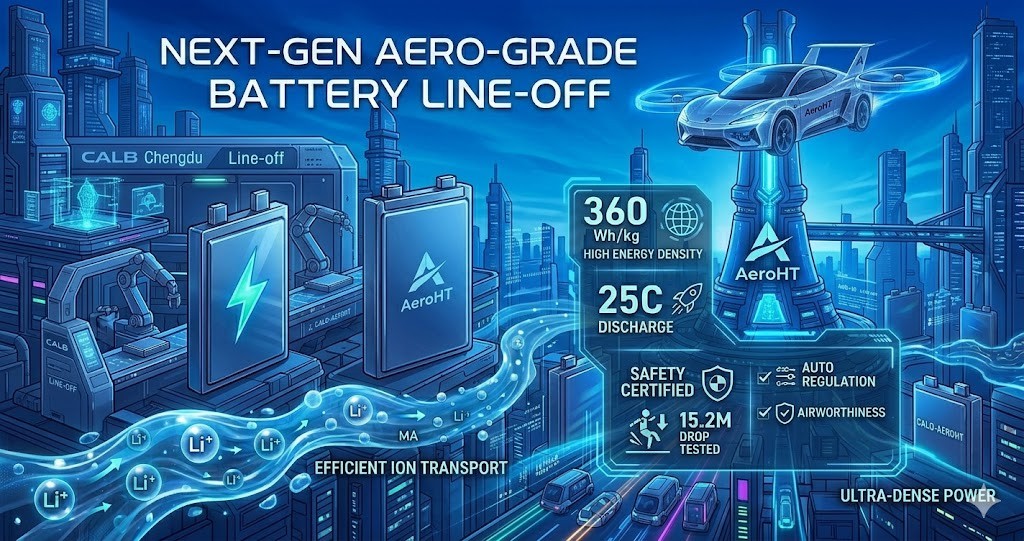
中国の電池大手CALB(中創新航)は、電気垂直離着陸機(eVTOL)メーカーであるAeroHT向けの航空機グレード・バッテリーを成都工場でラインオフ(生産開始)したと発表しました。これにより、AeroHTが掲げる「2026年までの量産・納入」という目標に向けて大きな一歩を踏み出したことになります。
バッテリーの主な仕様と特徴
この高シリコン・高ニッケルバッテリーは、高いエネルギー密度と過酷な安全基準を両立させています。
- エネルギー密度: 最大 360Wh/kg(一般的な電気自動車用よりも大幅に高い)
- 放電レート: 最大 25C(離着陸時の高出力に対応)
- 安全性能: 15.2メートルの落下試験をクリア。発火、爆発、液漏れなし。
- 認証: 自動車規制と航空機の耐空性認証(Airworthiness)の両方をクリア。
関連情報と背景解説
1. 搭載車両「ランド・キャリア(陸上航空母艦)」
今回バッテリーが搭載されるのは、コードネームX3-Fと呼ばれるモジュール式の空飛ぶ車です。
- 構造: 地上を走行する「地上モジュール(6輪車)」の中に、飛行用の「航空モジュール」を収納するユニークな設計です。
- 価格帯: 最終的な市場価格は200万人民元(約4200万円 / 29万ドル)以下を目指しています。
2. 中国バッテリー市場の勢力図(2024年初頭時点)
CALBは中国国内で高いシェアを誇りますが、上位2社との差を埋めるべく、空飛ぶ車のような先端分野に注力しています。
| 順位 | メーカー名 | 市場シェア(2月時点目安) | 特徴 |
| 1 | CATL | 約38%〜 | 世界最大手。テスラ等に供給。 |
| 2 | BYD | 約24%〜 | 自社車両への搭載がメイン。 |
| 3 | CALB | 約6.0% | 今回の主役。新興EVメーカーに強い。 |
3. なぜ「25C」の放電レートが必要か
飛行体であるeVTOLは、エネルギー消費の激しい「垂直離陸」時に瞬間的な大電流を必要とします。通常のEV用バッテリー(1C〜5C程度)では出力が足りないため、CALBは超高出力な特性を持たせています。
今後の展望
AeroHTは2024年末に予約受付を開始し、2026年には一般ユーザーへの納入を開始する計画です。中国政府が推進する「低空経済(Low-altitude Economy)」政策の後押しもあり、CALBとAeroHTの提携は、次世代モビリティの商業化を加速させる重要な鍵となります。
出典:https://cnevpost.com/2026/03/26/calb-starts-mass-production-aviation-batteries-xpeng-flying-cars/
Balancing 360Wh/kg Energy Density and 25C Power Output: The Impact of CALB’s Next-Gen eVTOL Lithium Batteries
CALB (China Innovative Aviation), a major Chinese battery manufacturer, has announced the start of mass production (line-off) of aircraft-grade batteries for AeroHT, an electric vertical takeoff and landing (eVTOL) manufacturer, at its Chengdu plant. This marks a significant step toward AeroHT’s goal of achieving mass production and delivery by 2026.
Key Battery Specifications and Features
This battery achieves both high energy density and rigorous safety standards.
- Energy Density: Up to 360Wh/kg (significantly higher than typical electric vehicle batteries).
- Discharge Rate: Maximum 25C (designed to handle high power demands during takeoff and landing).
- Safety Performance: Passed a 15.2-meter drop test with no fire, explosion, or leakage.
- Certification: Meets both automotive regulations and aircraft airworthiness certification.
Related Information and Context
1. Target Vehicle: “Land Aircraft Carrier”
The batteries will be installed in the modular flying car codenamed X3-F.
- Structure: A unique design consisting of a 6-wheeled “ground module” that houses a “flight module” inside.
- Price Range: The final market price is expected to be under 2 million RMB (approximately 290,000 USD).
2. China’s Battery Market Landscape (As of Early 2024)
While CALB holds a significant share in China, it is focusing on cutting-edge fields like flying cars to bridge the gap with the top two players.
| Rank | Manufacturer | Market Share (Approx. Feb) | Features |
| 1 | CATL | Approx. 38% or more | World leader. Supplies to Tesla, etc. |
| 2 | BYD | Approx. 24% or more | Primarily for its own vehicles. |
| 3 | CALB | Approx. 6.0% | The key player here. Strong with emerging EV brands. |
3. Why is a “25C” Discharge Rate Necessary?
eVTOL aircraft require an instantaneous burst of high current during “vertical takeoff,” which is extremely energy-intensive. Since standard EV batteries (typically 1C to 5C) lack sufficient output, CALB has developed these ultra-high-power characteristics.
Future Outlook
AeroHT plans to begin taking pre-orders in late 2024 and start deliveries to general users in 2026. Supported by the Chinese government’s “Low-altitude Economy” policy, the partnership between CALB and AeroHT is a vital key to accelerating the commercialization of next-generation mobility.


コメント