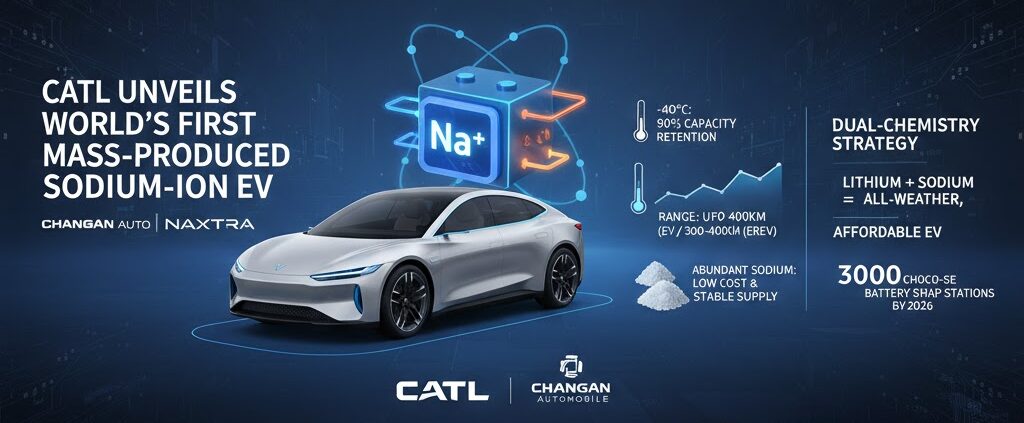
CATLは2026年2月5日、長安汽車と共同で世界初となるナトリウムイオン電池搭載の量産型乗用車を公開しました。2026年半ばの市場投入を予定しており、リチウム依存からの脱却と低温環境下での性能向上を目指しています。
主要スペックと性能(Naxtraブランド)
- エネルギー密度: 175Wh/kg(主流のリン酸鉄リチウム(LFP)電池と同等水準)。
- 航続距離:
- EV(45kWhパック): 最大400km(将来的に500-600kmを目指す)。
- EREV/PHEV: 電気のみで300-400km。
- 耐寒性能:
- -30度においてLFP電池の約3倍の放電電力を維持。
- -40度において容量維持率90%以上。
- 安全性: 破砕や切断テストでも発火・発煙せず、安定稼働を維持。
供給体制とターゲット
- 独占パートナー: 長安汽車(Avatr, Deepal, Qiyuan, UNIの各ブランドへ供給)。
- インフラ展開: CATLは2026年までに中国140都市に3,000箇所のバッテリー交換ステーション「Choco-SE」を設置予定。
関連情報:なぜ今「ナトリウムイオン電池」なのか?
今回の発表をより深く理解するための背景情報を補足します。
1. リチウム資源のリスクヘッジ
現在主流のリチウムイオン電池は、リチウムの価格変動や地政学的な供給リスクにさらされています。ナトリウムは塩(塩化ナトリウム)の主成分であり、地球上にほぼ無限に存在するため、圧倒的な低コスト化と安定供給が期待されています。
2. 「dual-chemistry時代」の戦略
CATLが提唱する「dual-chemistry」とは、リチウムイオン電池とナトリウムイオン電池を一つのパック内に混載する技術などを指します。
- リチウムのエネルギー密度 + ナトリウムの低温性能・低コスト これらを組み合わせることで、それぞれの弱点を補い、寒冷地でも航続距離が落ちにくい安価なEVの製造が可能になります。
3. 他社との競争状況
中国内では、HiNa Battery(中科海鈉)やFaradionといった企業もナトリウムイオン電池の開発を進めています。一部の小型EV(JMEVの「EV3」など)で試験的な搭載例はありましたが、CATLのような世界最大手が「量産乗用車」として大規模に展開する点は、市場の標準化に向けた大きな一歩となります。
The Ultimate Post-Lithium Solution: CATL Unveils World’s First Sodium-Ion Battery Vehicle
On February 5, 2026, CATL and Changan Automobile jointly unveiled the world’s first mass-produced passenger vehicle powered by sodium-ion batteries. Scheduled for market launch in mid-2026, this move aims to reduce reliance on lithium and significantly improve performance in low-temperature environments.
Key Specifications and Performance (Naxtra Brand)
- Energy Density: 175Wh/kg (Comparable to mainstream Lithium Iron Phosphate (LFP) batteries).
- Driving Range:
- EV (45kWh pack): Up to 400km (Targeting 500-600km in the future).
- EREV/PHEV: 300-400km in pure electric mode.
- Cold Resistance:
- Maintains approximately 3 times the discharge power of LFP batteries at -30 degrees Celsius.
- Capacity retention rate remains above 90% even at -40 degrees Celsius.
- Safety: Demonstrated high stability with no smoke or fire during rigorous testing, including crushing and cutting.
Supply Chain and Targets
- Exclusive Partner: Changan Automobile (Supplying all brands including Avatr, Deepal, Qiyuan, and UNI).
- Infrastructure Expansion: CATL plans to install over 3,000 “Choco-SE” battery swap stations across 140 cities in China by 2026.
Background: Why Sodium-Ion Batteries Now?
To better understand this announcement, here is some additional context regarding the technology.
1. Risk Hedging for Lithium Resources
Current mainstream lithium-ion batteries are vulnerable to lithium price volatility and geopolitical supply risks. In contrast, sodium—the primary component of salt (sodium chloride)—is virtually inexhaustible, promising long-term cost reductions and stable supply.
2. Strategy for the “Dual-Chemistry Era”
The “dual-chemistry” concept promoted by CATL involves integrating both lithium-ion and sodium-ion cells into a single battery pack.
- Lithium’s energy density + Sodium’s cold resistance and low cost. By combining these, manufacturers can create affordable EVs that compensate for each other’s weaknesses, ensuring that driving range does not drop sharply in cold climates.
3. Competitive Landscape
Within China, companies such as HiNa Battery and Faradion are also advancing sodium-ion technology. While there have been small-scale pilot programs in compact EVs, CATL’s mass-production launch marks a definitive step toward industry standardization.
コメント