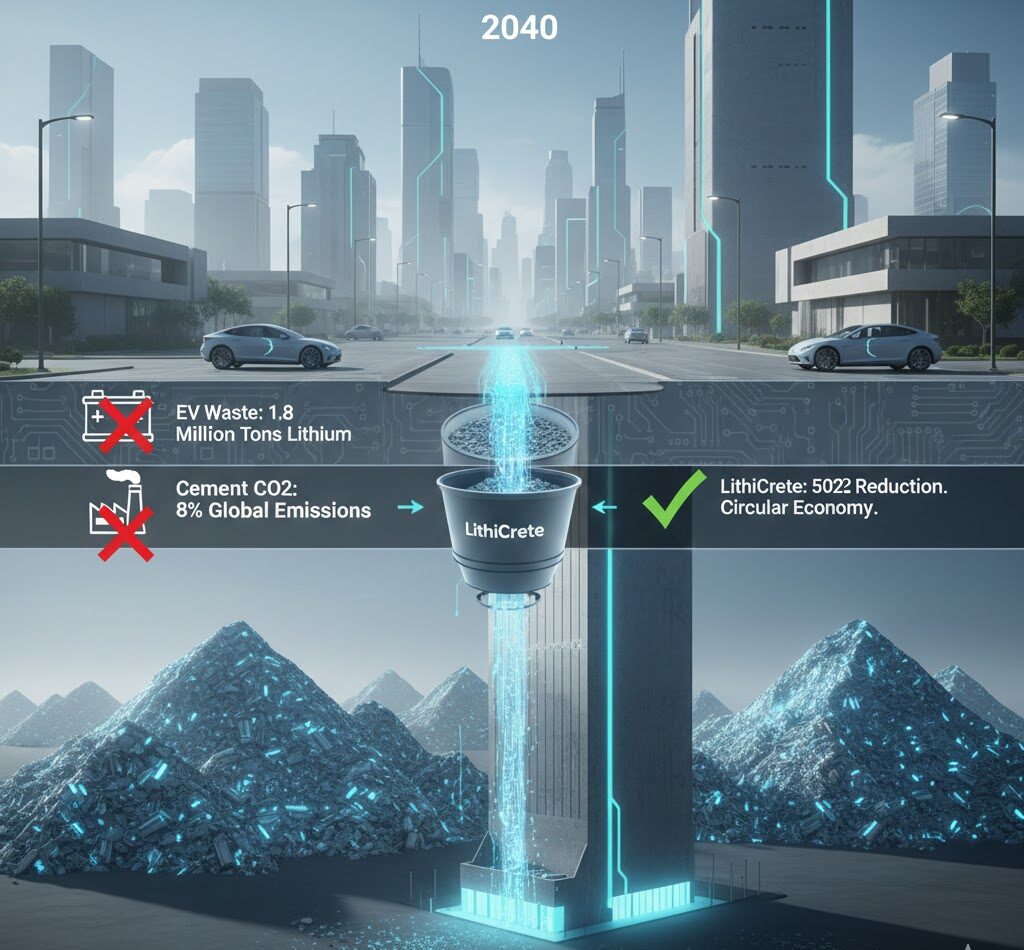
想像してみてください。2040年、街からエンジンの騒音は消え、すべての車が静かに滑るように走っています。一見、人類は理想的なクリーン・エネルギー社会を手に入れたかのように見えます。
しかし、その足元に目を向ければ、積み上がった「180万トン」ものリチウム廃棄物が影を落としています。一方で、私たちの頭上を支えるコンクリートビルは、今もなお莫大なCO2を放出し続けています。
「クリーンなはずのEV」が生むゴミと、「インフラの要」であるコンクリートが抱える脱炭素のジレンマ。一見、交わるはずのなかった2つの環境課題が、今、一つの新材料によって結びつこうとしています。
1. 矛盾する2つの環境課題:リチウムとセメント
現代社会が抱える「環境対策の裏側」にある深刻な問題です。
| 分野 | 抱える課題 | 現状の深刻さ |
| EV電池(リチウム) | 膨大な抽出廃棄物 | 1トンのリチウムを得るために約10トンのゴミが出る。2030年には需要が3倍に増える見込み。 |
| 建設(セメント) | 莫大なCO2排出量 | セメント製造は世界全体のCO2排出の約8%を占める。都市化が続く限り、需要は減らない。 |
2. 解決の鍵:新素材「リチクリート」の誕生
リチウム抽出時に出る廃棄物を、ゴミとして埋め立てるのではなく、セメントの代わりとなる「置換材」として再定義する試みです。
廃棄物が「宝の山」に変わる理由
リチウム廃棄物には、セメントを固める力を補強する成分(ケイ酸塩、酸化アルミニウム、酸化カルシウム)が豊富に含まれています。
期待される圧倒的なインパクト
- CO2排出の激減: セメント使用量を減らすことで、コンクリート製造時のCO2を最大50%削減。
- 業界目標の達成: コンクリート業界が掲げる「2050年カーボンゼロ」へのロードマップのうち、必要削減量の約2割をこの一案でカバーできる可能性があります。
3. 持続可能な未来へのロードマップ
現在、英国のコーンウォール地方などを拠点に、実用化に向けた厳密な実証研究が進められています。
- 耐久性の検証: ミクロ構造の解析により、住宅や橋として長年使用しても壊れないかを確認中。
- 循環型(サーキュラー)への転換: 資源を「採掘→使用→廃棄」という一方通行から、余すことなく使い続ける「循環」のサイクルへ。
4. 【深掘り】さらに知っておきたい関連トピック
記事の背景をより深く理解するためのポイントをまとめました。
- リチウム三角地帯の重要性: アルゼンチン・チリ・ボリビアに埋蔵量の6割が集中しており、この地域での廃棄物管理が世界の環境戦略を左右します。
- SCMs(補助セメント材料)の不足: これまでセメントの代用だった石炭灰(フライアッシュ)が脱石炭により減少しているため、リチウム廃棄物はその代替として市場からも熱望されています。
まとめ:
「リチクリート」は、エネルギー革命の副産物を、未来の都市の骨組みへと変える魔法の処方箋です。この技術が確立されれば、EVに乗ることは、単に排ガスを減らすだけでなく、間接的に「よりクリーンなビルや橋」を作ることにも繋がっていくでしょう。
出典:https://www.newsweekjapan.jp/stories/world/2026/01/585664.php
Turning “Waste” into “Framework”: 1.8 Million Tons of Lithium Waste to Save Concrete
Imagine the year 2040. The roar of combustion engines has faded from our streets, replaced by the quiet hum of electric vehicles gliding seamlessly through the city. At first glance, humanity appears to have achieved the ideal clean-energy society.
However, if you look beneath the surface, a shadow looms: a mountain of 1.8 million tons of “lithium waste.” Meanwhile, the concrete skyscrapers above us continue to emit vast amounts of CO2. The dilemma lies between the waste generated by “clean” EVs and the carbon footprint of concrete—the backbone of our infrastructure. Two environmental challenges that once seemed worlds apart are now converging through a single, innovative material.
1. Two Conflicting Environmental Challenges: Lithium and Cement
These represent the critical “unseen” side of modern environmental initiatives.
| Sector | Core Challenge | Severity of the Situation |
| EV Batteries (Lithium) | Massive Extraction Waste | Extracting 1 ton of lithium generates approx. 10 tons of waste. Demand is expected to triple by 2030. |
| Construction (Cement) | Enormous CO2 Emissions | Cement production accounts for nearly 8% of global CO2 emissions. Demand remains high due to ongoing urbanization. |
2. The Key to the Solution: The Birth of “Lithicrete”
This initiative redefines lithium extraction waste not as landfill-bound trash, but as a “supplementary cementitious material” (SCM).
Why Waste is a “Treasure Trove”
Lithium waste is rich in compounds that reinforce the structural integrity of concrete, such as silicates, aluminum oxide, and calcium oxide.
Overwhelming Potential Impact
- Drastic CO2 Reduction: By replacing a portion of traditional cement, CO2 emissions from concrete production can be slashed by up to 50%.
- Achieving Industry Goals: This single solution could cover approximately 20% of the total emissions reductions required for the concrete industry to reach “Net Zero by 2050.”
3. Roadmap to a Sustainable Future
Rigorous empirical research is currently underway, centered in regions like Cornwall, UK, to bring this technology to the commercial market.
- Durability Testing: Researchers are analyzing microstructures to ensure the material remains resilient for decades in homes and bridges.
- Transition to a Circular Economy: Moving away from the “take-make-waste” linear model toward a circular cycle where resources are utilized to their fullest potential.
4. [Deep Dive] Key Contextual Topics
Essential points for a deeper understanding of the background:
- The Importance of the “Lithium Triangle”: With 60% of the world’s reserves concentrated in Argentina, Chile, and Bolivia, waste management in this region will dictate global environmental strategies.
- The Scarcity of SCMs: Traditional cement substitutes like “fly ash” (from coal plants) are disappearing as we phase out coal. The market is now eagerly looking to lithium waste as the next viable alternative.
Summary:
“Lithicrete” is a visionary solution that transforms the byproducts of the energy revolution into the skeletal framework of future cities. Once this technology is established, driving an EV will mean more than just reducing exhaust fumes—it will be indirectly linked to building cleaner, greener infrastructure for the next generation.


コメント