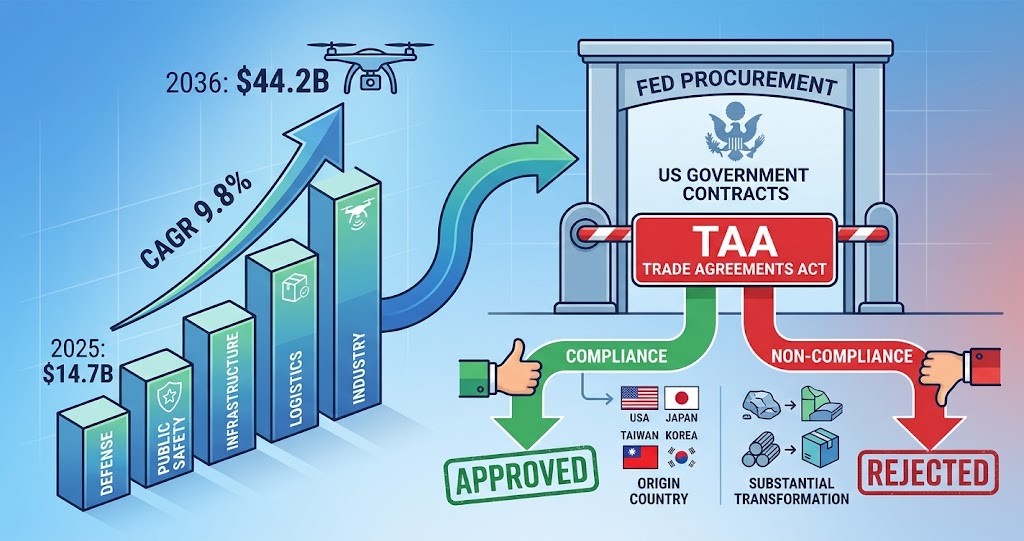
米国のドローン市場は急速な拡大傾向にあり、Research and Marketsの予測によると、市場規模は2025年の147億ドルから2036年には441億9000万ドルへ到達し、2026年から2036年までの年平均成長率(CAGR)は9.8パーセントに達すると見込まれています。成長を牽引している分野は防衛、公共安全、インフラ点検、物流、産業オペレーションなど多岐にわたります。
市場が成長・成熟するにつれ、メーカー各社は民生向け販売だけでなく、安定した大規模需要が見込める連邦政府の調達機会への参入を強く意識するようになっています。連邦政府契約を獲得する上で極めて重要な規制枠組みが「貿易協定法(TAA:Trade Agreements Act)」です。TAAは政府調達製品の原産国を定めた規則であり、製品が米国本土または指定国(日本、韓国、台湾などの同盟国・提携国)で製造されているか、あるいは実質的な形質変更(Substantial Transformation)を経て新しい製品として加工されていることを義務付けています。
防衛産業へのシフトとサプライチェーンの複雑化
バッテリーショー・ノースアメリカにおいてジョン・ワーナー氏が指摘した通り、防衛産業は現在のバッテリー業界における新たな「重心」となりつつあります。しかし、ドローン用バッテリーのTAA準拠達成には以下のような課題が存在します。
- 構成部品の多国籍化と複雑性 バッテリーは単一の部材ではなく、セル、正極材・負極材、バッテリー管理システム(BMS)、筐体、制御基板など多数の部品で構成されており、サプライチェーンが世界各国に跨っています。
- 脱中国依存とコスト・性能のトレードオフ 米国のドローンメーカーは中国製サブコンポーネントへの依存を排し、自国および同盟国からのサプライチェーン再構築を進めています。しかし、十分な供給能力の確保、製品性能の維持、コストの抑制を同時に達成することは極めて困難な戦略的課題となっています。
- 完成品と主要コンポーネントへの厳格な審査 ドローン本体が米国内で組み立てられていても、組み込まれているバッテリーがTAA要件を満たしていない場合、米国国防総省(DoD)や連邦政府機関の調達要件から外れるリスクを負うことになります。
米国主要バッテリーメーカーの対抗戦略
TAA要件をクリアし、連邦政府のビジネス機会を獲得するために、米国の主要バッテリー企業は主に2つのアプローチを推進しています。
- Enovix(エノヴィックス):同盟国を活用した迅速なTAAライン構築同社は韓国に保有する製造拠点および生産拡張計画を活用し、ドローン・防衛向けバッテリー製品群のTAA準拠を実現しています。TAA準拠を単なるコンプライアンス上の課題としてではなく、米軍や政府防衛プログラムへアクセスするための競争優位性と位置づけています。
- Rincell(リンセル):完全国内製造拠点への投資カリフォルニア州フリーモントのパイロットライン運用に加え、Re:Build Manufacturingと提携して全米規模の国内バッテリーセル工場の建設を進めています。2027年後半に商業生産が開始される見込みで、完全な米国産セルによる100パーセントTAA準拠を目指しています。さらに、First Breachとの提携により、飛行時間の延長や低温での高パフォーマンスを実現するセル(RC41、RC58など)を提供し、軍事・防衛分野での採用を加速させています。
【関連情報・補足】2026年の米国関税政策および地政学的背景
TAA準拠の重要性が急速に増している背景には、政府調達の規制だけでなく、米国の通商・安全保障政策の急速な厳格化が存在します。
- 通商拡大法232条に基づくドローン・コンポーネント関税米国政府は、安全保障上の懸念および外国依存の低減を目的とし、輸入ドローン本体およびドローン用主要コンポーネントに対して高い追加関税措置を決定・導入しています。特定の大型機やサーマルカメラ搭載モデル等には最大100パーセント、その他のモデルには25パーセントの関税率が提示される中、日本や韓国、EUなどの同盟国からの特定調達品には15パーセントの関税上限(キャップ)制度などの特例要件が設けられています。
- FEOC(懸念外国企業)排斥の動き 米国のエネルギー・防衛分野では、TAA準拠に加え、中国などのFEOC(Foreign Entity of Concern)からの部材供給を遮断する傾向が強まっています。
- 戦略的帰結 高率関税を回避し、かつ連邦政府の調達枠組みに乗せるためには、「性能」「耐久性・安全性」「TAA準拠および信頼できる国からの調達ルート」という3要素を同時に満たせるサプライチェーンを持つ企業が、今後の米国ドローン市場で優位に立つことになります。
Reducing Chinese Reliance and TAA Compliance: Battery Makers’ Strategies Targeting the Massive U.S. Federal Drone Market
The U.S. drone market is expanding rapidly. According to forecasts by Research and Markets, the market size is expected to reach 44.19 billion USD in 2036 from 14.7 billion USD in 2025, representing a compound annual growth rate (CAGR) of 9.8 percent during the 2026 to 2036 forecast period. Growth is driven by expanding demand across a wide range of sectors including defense, public safety, infrastructure inspection, logistics, and industrial operations.
As the market grows and matures, manufacturers are increasingly looking beyond commercial sales to target federal procurement opportunities that promise stable, large-scale demand. A critical regulatory framework for securing federal contracts is the Trade Agreements Act (TAA). The TAA establishes rules regarding the country of origin for products procured by the government, requiring that products be manufactured in the U.S. or designated countries (such as allied and partner nations like Japan, South Korea, and Taiwan), or undergo substantial transformation into a new and different article within those countries.
Shifting Focus to Defense and Supply Chain Complexities
As John Warner noted at The Battery Show North America, defense has become a new center of gravity shaping the current battery industry. However, achieving TAA compliance for drone batteries presents several challenges:
- Multinationally Sourced Components and Complexity Batteries are not simple single components; they consist of cells, cathode and anode materials, battery management systems (BMS), enclosures, and control boards, resulting in global supply chains spanning multiple countries.
- Trade-offs Between Ending Chinese Reliance, Cost, and Performance U.S. drone manufacturers are working to eliminate reliance on subcomponents sourced from China and rebuild supply chains using domestic and allied sources. However, simultaneously securing sufficient supply capacity, maintaining product performance, and keeping costs low remains a difficult strategic dilemma.
- Strict Scrutiny of Finished Goods and Key Components Even if a drone is assembled in the United States, it risks disqualification from Department of Defense (DoD) or federal agency procurement if any of its incorporated battery components fail to meet TAA origin requirements.
Strategic Responses from Major U.S. Battery Manufacturers
To satisfy TAA requirements and capture federal business opportunities, leading U.S. battery companies are primarily pursuing two strategic approaches:
- Enovix: Rapid TAA Compliance via Allied Partnerships The company leverages its manufacturing facilities and production expansion plans in South Korea to ensure its drone and defense battery line is TAA compliant. Enovix views TAA compliance not just as a regulatory milestone, but as a key competitive advantage that enhances access to U.S. military and government defense programs.
- Rincell: Investment in Fully Domestic Manufacturing Capabilities In addition to operating a pilot line in Fremont, California, Rincell has partnered with Re:Build Manufacturing to build a full-scale domestic battery cell manufacturing facility. Commercial production is scheduled to begin in late 2027, aiming for 100 percent TAA compliance using fully U.S.-manufactured cells. Furthermore, through a partnership with First Breach, Rincell provides battery cells (such as the RC41 and RC58) that deliver extended flight times and high low-temperature performance, accelerating adoption across military and defense applications.
Context and Geopolitical Background: U.S. Trade Policies in 2026
The rapid surge in the importance of TAA compliance is driven not only by procurement regulations, but also by the aggressive tightening of U.S. trade and national security policies.
- Drone Component Tariffs Under Section 232 To address national security concerns and reduce foreign dependence, the U.S. government has introduced high additional tariffs on imported drones and key drone components. While proposed tariff rates reach up to 100 percent for specific large models and thermal camera-equipped drones and 25 percent for other models, special provisions—such as a 15 percent tariff cap—have been established for select procurement items from allied nations like Japan, South Korea, and the EU.
- Elimination of Foreign Entities of Concern (FEOC) In the U.S. energy and defense sectors, there is a growing push to sever supply lines containing materials from FEOCs, particularly China, alongside TAA compliance mandates.
- Strategic Conclusion To avoid steep tariffs and qualify for federal procurement frameworks, companies with supply chains capable of simultaneously delivering high performance, durability and safety, and TAA compliance via trusted supply routes will hold the strongest competitive position in the future U.S. drone market.

コメント