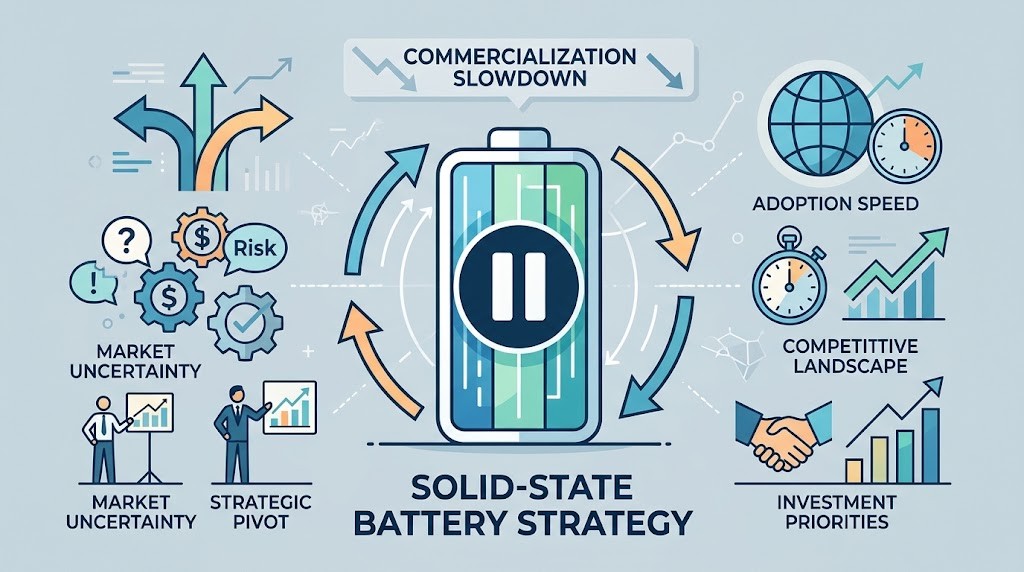
電気自動車(EV)市場の拡大に伴い、次世代バッテリーとして期待されてきた全固体電池ですが、商用化を目の前にして高い製造コストや大量生産の限界といった現実に直面しています。
1. 記事要約:韓国企業の対応と「速度調節論」
10年以上にわたり期待されてきた全固体電池ですが、商用化時期が近付くにつれ、収益性に対する懸念から開発スピードを見直す「速度調節論」が浮上しています。
- 韓国主要3社の戦略差:
- サムスンSDI: 2027年下半期の量産目標を維持し、スピード開発を継続。エコプロBMとの共同開発を行い、試作品の検証を進める。超高級プレミアムEVやヒューマノイドロボットなど高価格帯の市場を狙う。
- LGエナジーソリューション: EV用は2029年初め、ヒューマノイド用は2030年へと目標時期を繰り下げ慎重姿勢へ転換。「市場を直接置き換える『ゲームチェンジャー』ではなく、市場を補完・拡張する『マーケットエクステンダー』」と再定義。
- SKオン: パイロット生産ラインによる開発を継続しつつ、商用化目標は2029年以降と長期的な視点を維持。
- 市場と技術の障壁:
- 市場では安価な中国製LFP(リン酸鉄リチウム)電池が主流となりつつあり、高価格な全固体電池の受け皿となる車種数に懸念がある。
- 固体材料同士の密着性不足、充放電時の割れ(クラック)、歩留まり(良品率)の確保など、工場での量産化に向けた技術的課題が存在する。
2. 関連情報:背景と市場環境
全固体電池の技術的特徴 液体の電解液を使用する従来のバッテリー(NCMやLFP)と異なり、電解質に「固体」を使用します。発火や爆発のリスクが極めて低く、エネルギー密度を高めることでEVの航続距離を大幅に伸ばせる点が特徴です。
- 世界の主要プレイヤーと市場予測
- 中国(CATL・BYD): CATLの倪軍CMOをはじめ、中国企業も大規模商用化には「少なくとも5年以上(2030年ごろ)」かかると見ています。当面は低価格なLFP電池や半固体電池で市場シェアを確保する戦略をとっています。
- 日本(トヨタ自動車など): トヨタなどは2027年から2028年の実用化を目指してパイロットラインの検証を進めています。
- 韓国業界における攻防
- 中国勢による安価なLFP電池の量産攻勢に対し、韓国勢は全固体電池に代表される「高付加価値製品」で差別化を図る必要があります。専門家からは、中国に国際標準や技術的リーダーシップを奪われる前に標準を創出すべきだとの指摘がなされています。
3. 今後の展望
全固体電池は「夢の技術」という期待の段階を終え、実用化とコスト管理を検証するエンジニアリング段階に入っています。
当面のEV市場拡大は低価格なLFP電池が牽引し、全固体電池は高級EVやロボティクスといった限られた領域から段階的に導入される見通しです。大規模量産の手法を確立し、コストダウンを実現できた企業が次の市場主導権を握ることになります。
出典:https://japanese.joins.com/JArticle/356804?sectcode=300&servcode=300
From “Dream Battery” to “Mass Production Reality”: The Current Status of Solid-State Batteries Globally and in South Korea
With the expansion of the electric vehicle (EV) market, solid-state batteries have been highly anticipated as the next-generation battery technology. However, as commercialization approaches, the industry faces harsh realities such as high manufacturing costs and mass production constraints.
1. Article Summary: Korean Companies’ Responses and the “Pacing Theory”
While solid-state batteries have been hailed for over a decade, a “pacing theory” (a sentiment favoring a recalibration of development speed) has emerged due to profitability concerns as commercialization draws near.
- Strategic Differences Among Korea’s Top 3 Makers:
- Samsung SDI: Maintaining its target for mass production in the second half of 2027, continuing rapid development. It has partnered with EcoPro BM for joint development and is testing prototypes, aiming for high-end markets such as ultra-luxury EVs and humanoid robots.
- LG Energy Solution: Postponing its mass production target to early 2029 for EVs and 2030 for humanoid robots, shifting to a more cautious stance. The company redefines solid-state batteries not as a “game changer” that will instantly replace the market, but as a “market extender” that will supplement and broaden it.
- SK On: Continuing development via its pilot production line while maintaining a long-term timeline targeting commercialization in 2029 or later.
- Market and Technical Barriers:
- Low-cost Chinese lithium iron phosphate (LFP) batteries are becoming mainstream, raising concerns about the limited number of EV models that can absorb the high cost of solid-state batteries.
- Technical hurdles remain for factory mass production, including poor contact between solid materials, cracking during charging/discharging cycles, and securing acceptable yield rates.
2. Related Information: Background and Market Environment
Technical Characteristics of Solid-State Batteries
Unlike conventional batteries (such as NCM or LFP) that use liquid electrolytes, solid-state batteries utilize a solid electrolyte. They feature an extremely low risk of fire or explosion and can significantly extend EV driving range by dramatically increasing energy density.
- Key Global Players and Market Outlook:
- China (CATL, BYD): Chinese companies, including CATL Chief Manufacturing Officer Ni Jun, believe large-scale commercialization will take “at least 5 more years (around 2030).” For now, their strategy focuses on securing market share with cost-effective LFP batteries and semi-solid-state batteries.
- Japan (Toyota, etc.): Toyota and other Japanese automakers are validating pilot lines with the goal of commercial application between 2027 and 2028.
- Competitive Dynamics in South Korea:
- In response to the mass volume push of inexpensive LFP batteries by Chinese rivals, Korean companies must differentiate through high-value-added products exemplified by solid-state batteries. Experts point out that South Korea must establish industry standards before China claims global leadership and sets the standard.
3. Future Outlook
Solid-state batteries have moved past the expectation stage of being a “dream technology” and entered an engineering phase focused on practical application and cost management.
In the short term, the expansion of the EV market will be driven by low-cost LFP batteries, while solid-state batteries are expected to be introduced gradually starting in high-end EVs and robotics. Companies that establish large-scale mass production methods and achieve cost reduction will hold the key to market dominance.

コメント