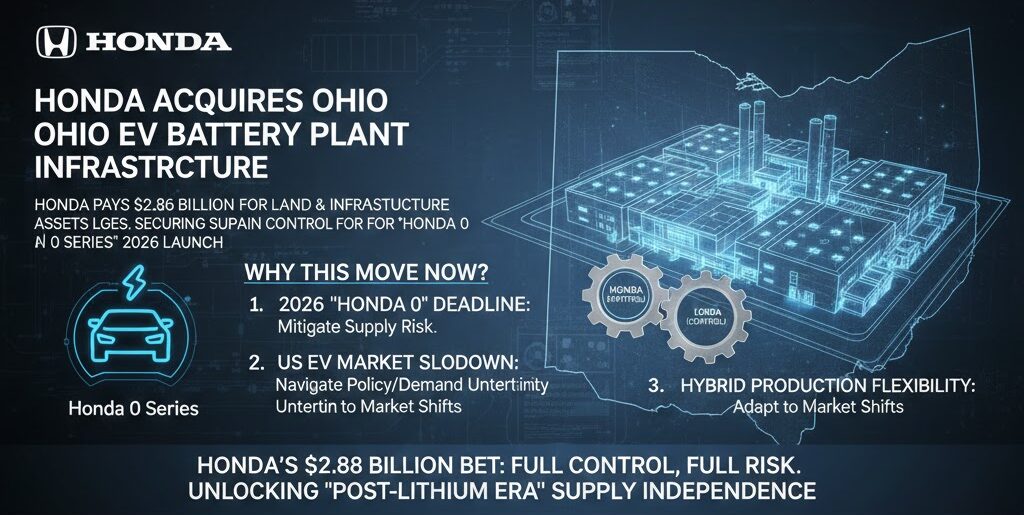
ホンダは、LGESと共同で建設を進めてきたオハイオ州のEV用電池工場の建屋およびインフラ資産を約4,500億円(約28.6億ドル)で買い取ることを決定しました。
- 取引内容: ホンダの米国法人がLGES側の資産を買い取り、合弁会社にリースバックする形式。土地と設備は対象外。
- 狙い: EV市場の不透明感や政治リスク(関税や税額控除の変化)に備え、電池供給の意思決定を自社でコントロールする「主導権」の確保。
- LG側の利点: 巨額の固定資産を切り離すことでバランスシートを軽量化し、需要停滞(キャズム)による経営リスクを軽減できる。
関連情報:なぜ今、この決断が必要だったのか?
このニュースを深く理解するための、3つの重要な背景情報を付け加えます。
1. 「2026年」というホンダの背水の陣
ホンダは2026年に次世代EV「Honda 0(ゼロ)シリーズ」を北米に投入します。これは、独自のソフトウェアOSやAI自動運転技術を搭載した、ホンダのEVシフトの命運を分ける基幹モデルです。
- 供給の確実性: 電池の供給が1ヶ月遅れるだけで、数千億円規模の販売機会損失につながります。今回の買収は、LG側の財務事情や経営判断に左右されず、自らのスケジュールで工場を動かすための「保険」です。
2. 米国EV市場の急激な「冷え込み」
記事にもある通り、米国ではEVの普及ペースが鈍化しています。
- 政策リスク: 米国政府によるEV税額控除の条件変更や、将来的な政権交代による関税引き上げの懸念が、メーカーに「守り」の姿勢を強めています。
- ライバルの動向: フォードがLGESとの供給契約を解消し、巨額の減損損失を計上するなど、電池メーカーへの依存リスクが表面化しています。ホンダはこうした他社の失敗を反面教師としています。
3. 「ハイブリッド(HEV)」への柔軟な転用
ホンダはこの資産取得により、「電池の用途」を自ら決められる自由を手に入れました。
- もしEV需要が想定を下回った場合、この拠点をハイブリッド車(HEV)用の電池生産に切り替えるなど、柔軟な運用が可能になります。これは、合弁相手のLGESにとっては「EV専用」の方が効率が良い一方で、車メーカーであるホンダにとっては「全方位の柔軟性」が生存戦略となるため、利害を整理した形です。
結論:ホンダが背負った「覚悟」の代償
今回の決断は、ホンダが「供給のリスクは全て自社で負うが、その代わり誰にも邪魔をさせない」という強い意思表示です。
| メリット | リスク |
| 意思決定の迅速化: 生産調整や設備投資を自社で即決できる。 | 固定費の負担: 需要が低迷しても、減価償却や維持費を払い続けなければならない。 |
| 戦略の柔軟性: EVだけでなく、HEV用への転用も視野に入れられる。 | 巨額の資金固定: 約4,500億円が不動産にロックされ、他の投資が制限される可能性。 |
この「自前主義への回帰」が、次世代EV「0シリーズ」の成功を支える盤石な基盤となるのか、あるいは経営を圧迫する重石となるのか。2026年の市場投入がその真価を問う最初のハードルとなります。
出典:https://news.yahoo.co.jp/articles/7e395e2fc1263140946415f8a95d5f2263114ee3?page=1
“No More Waiting on Others”: Honda Secures “Absolute Dominance” Over EV Supply Chain with $2.86B Buyout
Honda has decided to acquire the building and infrastructure assets of its joint-venture EV battery plant in Ohio, which it has been developing with LG Energy Solution (LGES), for approximately 450.0 billion yen (approx. $2.86 billion).
- Transaction Details: Honda’s U.S. subsidiary will purchase the assets from LGES and lease them back to the joint venture. Land and manufacturing equipment are excluded from this specific deal.
- Objective: To secure “dominance” and autonomy over battery supply decision-making in preparation for EV market uncertainty and political risks (such as changes in tariffs and tax credits).
- Benefits for LGES: By divesting massive fixed assets, LGES can lighten its balance sheet and mitigate management risks associated with the market slowdown (the “EV chasm”).
Contextual Information: Why was this decision necessary now?
To fully understand this news, here are three critical background factors:
1. Honda’s “Point of No Return” in 2026
Honda is set to launch its next-generation EV, the “Honda 0 Series,” in North America in 2026. This flagship lineup, featuring proprietary software OS and AI automated driving, is a make-or-break project for Honda’s EV shift.
- Reliability of Supply: Even a one-month delay in battery supply could result in hundreds of billions of yen in lost sales opportunities. This acquisition acts as “insurance,” ensuring the factory operates on Honda’s schedule, regardless of LGES’s financial situation or management shifts.
2. The Rapid “Cooling” of the U.S. EV Market
As mentioned in the reports, the pace of EV adoption in the U.S. is slowing down.
- Policy Risks: Concerns over changes to EV tax credit conditions and potential tariff hikes following future administration changes have pushed manufacturers into a defensive stance.
- Competitor Trends: Risks of over-reliance on battery makers are surfacing; for instance, Ford terminated a supply contract with LGES, resulting in massive impairment losses. Honda is learning from these industry setbacks.
3. Flexible Pivot to “Hybrid (HEV)”
By acquiring these assets, Honda has gained the freedom to decide the “final use” of the batteries.
- If EV demand falls below expectations, Honda can flexibly pivot the facility to produce batteries for Hybrid Electric Vehicles (HEV). While LGES prioritizes “EV-only” efficiency, Honda’s survival strategy relies on “multi-pathway flexibility,” aligning interests by separating ownership from operations.
Conclusion: The Price of Honda’s Determination
This decision is a powerful statement that Honda is prepared to “shoulder all supply risks in exchange for total operational independence.”
| Pros | Cons/Risks |
| Faster Decision-Making: Immediate internal authority over production adjustments and investments. | Fixed Cost Burden: Depreciation and maintenance costs must be paid even if demand stagnates. |
| Strategic Flexibility: Ability to pivot production from EVs to HEVs as needed. | Capital Lock-up: Approx. 450 billion yen is tied up in real estate, potentially limiting other investments. |
Whether this “return to insourcing” becomes the bedrock for the success of the “0 Series” or a heavy financial burden remains to be seen. The market launch in 2026 will be the first major test of this strategy.

コメント