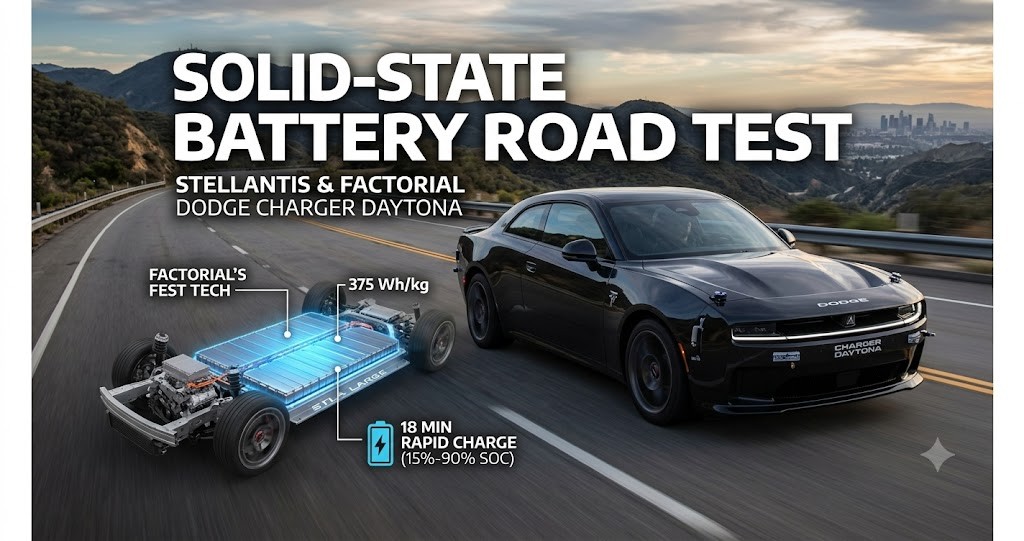
次世代EVの覇権を握る鍵とされる「全固体電池」は、これまで実験室やベンチテストでの目覚ましい成果が数多く報告されてきました。しかし、研究段階のセルを実際の自動車に組み込み、公道で安全かつ安定して走らせる「車載・実走行レベル」に到達した例は世界でも極めて限定的です。
こうした中、ジープやプジョー、ダッジなどの有力ブランドを擁するグローバル自動車メーカーのステランティスと、ファクトリアル社が、大型EVプラットフォーム(STLA Large)を採用した「ダッジ・チャージャー・デイトナ(Dodge Charger Daytona)」の開発車両に全固体電池パックを搭載し、路上試験を開始しました。これは、全固体電池の商業化が「理論」から「量産一歩手前の実証」のフェーズへ移行したことを示す象徴的なマイルストーンです。
発表の主要ポイントと達成されたスペック
今回のプロジェクトおよび電池の具体的な性能は以下の通りです。
1. ファクトリアル社の「FEST」技術
Factorial Electrolyte System Technology(FEST)と呼ばれる独自の固体電解質システムを採用しています。この技術は、高いエネルギー密度と優れた安全性を誇ります。
- 重量エネルギー密度: 375 Wh/kg
- 超高速充電: わずか18分で、充電深度(SOC)15%から90%まで充電可能
- 耐環境性: -30 ℃から45 ℃という極端な温度範囲でも高い信頼性を発揮(ステランティスでの77Ahセル試験による実証)
2. 独自のパック統合技術
単にセルを並べるだけでなく、ステランティスのエンジニアが設計した革新的な「特許取得済みの新しい機械構造」を用いて既存のバッテリーパックに統合。制御システムやパック設計を改良し、自動車業界の厳格な安全性・耐久性基準を満たしながら、全固体電池の性能を最大限に引き出すフルスタックのコラボレーションを実現しています。
3. ロードマップと路上テスト
現在開始されている路上テストプログラムを通じて、走行時および充電時におけるリアルタイムの安全性、信頼性、パックの性能調整(キャリブレーション)が進められます。
製造プロセスの優位性と経済的メリット
ステランティスのCTO(最高技術責任者)であるネッド・キュリック氏が指摘する通り、新型電池の導入において「既存の製造インフラとの互換性」はコストを左右する決定的な要素です。
ファクトリアル社のFEST技術は、既存のリチウムイオン電池の製造プロセスと高い互換性を持っています。全固体電池専用の巨額な新工場をゼロから建設する必要がなく、既存のギガファクトリー(リチウムイオン電池生産ライン)の設備を大幅に流用して展開できるため、大規模な量産化(工業化)へ向けた資本的支出(CAPEX)を最小限に抑えられるという強力な商業的優位性があります。
関連情報:ファクトリアル社のバックグラウンドと競合状況
このニュースの背景には、ファクトリアル社を巡る強力なグローバルアライアンスと、自動車業界の全固体電池開発レースの縮図が見て取れます。
1. 豪華な出資陣とメルセデス・ベンツでの実績
ファクトリアル社は、ステランティスだけでなく、メルセデス・ベンツ(Mercedes-Benz)、ヒュンダイ(Hyundai)、キア(Kia)、さらには米国の非営利戦略投資機関In-Q-Tel(CIA関連の投資機関)などの支援を受けている、全固体電池分野のトップランナーです。 同社はFESTプラットフォームのほかに「Solstice」と呼ばれるさらに先進的なプラットフォームも開発中であり、メルセデス・ベンツがテスト車両で行った実走行テストでは、1回の充電で1200 kmを超える航続距離を達成した実績を持ちます。
2. 完成車メーカー主導の路上試験トレンド
全固体電池の車載化を巡っては、日本のトヨタ自動車が2027~2028年のEV実用化に向けてパイロットラインでの製造技術確立を進めているほか、日産自動車も2028年度の量産化を目指して独自の全固体電池開発を進めています。今回のステランティスとファクトリアル社の動きは、これら日系メーカーの動きに対抗する欧米連合の強力な反撃の狼煙と言えます。
3. ハイエンド市場から量産EVへのアプローチ
今回テスト車両に選ばれた「ダッジ・チャージャー・デイトナ」は、高出力が求められるアメリカン・マッスルカー(スポーツクーペ)のEV版です。大容量エネルギーと高いCレート(急速充放電)を必要とするハイエンド車種で路上試験を行うことは、電池パックにかかる負荷や放熱性を最も過酷な環境でテストできるメリットがあります。ここでのデータを基にキャリブレーションを進めることで、将来的に幅広い量産型EV(STLAプラットフォーム採用車)へのシームレスな水平展開が可能になります。
Solid-State Batteries Finally Hit the Road! Stellantis and Factorial Begin Real-World EV Fleet Testing
Solid-state batteries, widely considered the key to dominating the next-generation EV market, have seen numerous remarkable breakthroughs reported in laboratories and bench tests. However, instances of integrating these research-stage cells into actual vehicles and driving them safely and stably on public roads—reaching a true vehicle-integrated, real-world fleet level—remain extremely limited worldwide.
In this landscape, Stellantis—a global automaker housing prominent brands such as Jeep, Peugeot, and Dodge—and Factorial have installed a solid-state battery pack into Dodge Charger Daytona development vehicles, which utilize the STLA Large EV platform, and have commenced road testing. This represents an iconic milestone showing that the commercialization of solid-state batteries has transitioned from “theory” to the phase of “pre-mass-production demonstration.”
Key Highlights and Achieved Specifications
The specific details of this project and the battery performance are as follows:
1. Factorial’s “FEST” Technology
The batteries utilize a proprietary solid electrolyte system called Factorial Electrolyte System Technology (FEST). This technology boasts high energy density and superior safety.
- Gravimetric Energy Density: 375 Wh/kg
- Ultra-Fast Charging: Capable of charging from 15% to 90% State of Charge (SOC) in just 18 minutes.
- Environmental Resilience: Demonstrates high reliability even under extreme temperature ranges from -30 deg C to 45 deg C (validated through 77Ah cell testing at Stellantis).
2. Proprietary Pack Integration Technology
Rather than simply lining up the cells, they have been integrated into existing battery packs using an innovative, patented new mechanical structure designed by Stellantis engineers. By refining the control systems and pack design, they have achieved a full-stack collaboration that maximizes the performance of the solid-state cells while meeting the automotive industry’s stringent safety and durability standards.
3. Roadmap and Road Testing
Through the newly launched road testing program, real-time safety, reliability, and battery pack performance calibration during driving and charging will be further refined and validated.
Manufacturing Process Advantages and Economic Benefits
As Ned Curic, Chief Technology Officer (CTO) of Stellantis, points out, “compatibility with existing manufacturing infrastructure” is a decisive factor dictating cost when introducing a new battery type.
Factorial’s FEST technology maintains high compatibility with existing lithium-ion battery manufacturing processes. Because it eliminates the need to build massive, specialized solid-state battery factories from scratch and allows extensive reuse of equipment from existing gigafactories (lithium-ion production lines), it offers a powerful commercial advantage by minimizing Capital Expenditure (CAPEX) for large-scale mass production (industrialization).
Related Information: Factorial’s Background and Competitive Landscape
Behind this news lies a powerful global alliance surrounding Factorial and a miniature reflection of the intense solid-state battery development race within the automotive industry.
1. Illustrious Backers and Track Record with Mercedes-Benz
Factorial is a front-runner in the solid-state battery sector, backed not only by Stellantis but also by Mercedes-Benz, Hyundai, Kia, and In-Q-Tel (a non-profit strategic investment firm for the US national security community). In addition to the FEST platform, the company is developing an even more advanced platform called “Solstice.” In real-world fleet testing conducted by Mercedes-Benz using slightly modified test vehicles, this technology achieved a driving range exceeding 1200 km on a single charge.
2. Trend of Automaker-Led Road Testing
Regarding the vehicle integration of solid-state batteries, Japan’s Toyota Motor is advancing the establishment of manufacturing technologies on a pilot line targeting EV commercialization around 2027–2028, while Nissan Motor is also developing its own solid-state batteries with an eye toward mass production in fiscal year 2028. This move by Stellantis and Factorial can be seen as a powerful counteroffensive from the Euro-American alliance against these Japanese automakers.
3. Approaching Mass-Market EVs from the High-End Market
The “Dodge Charger Daytona” selected as the test vehicle for this project is an EV version of an American muscle car (sports coupe) that demands high power output. Conducting road tests on a high-end vehicle requiring large energy capacity and high C-rates (rapid charging/discharging) offers the benefit of testing the battery pack’s load and heat dissipation under the most grueling conditions. Using the data gathered here for calibration will enable a seamless horizontal rollout to a wide range of mass-market EVs built on the STLA platform in the future.
コメント