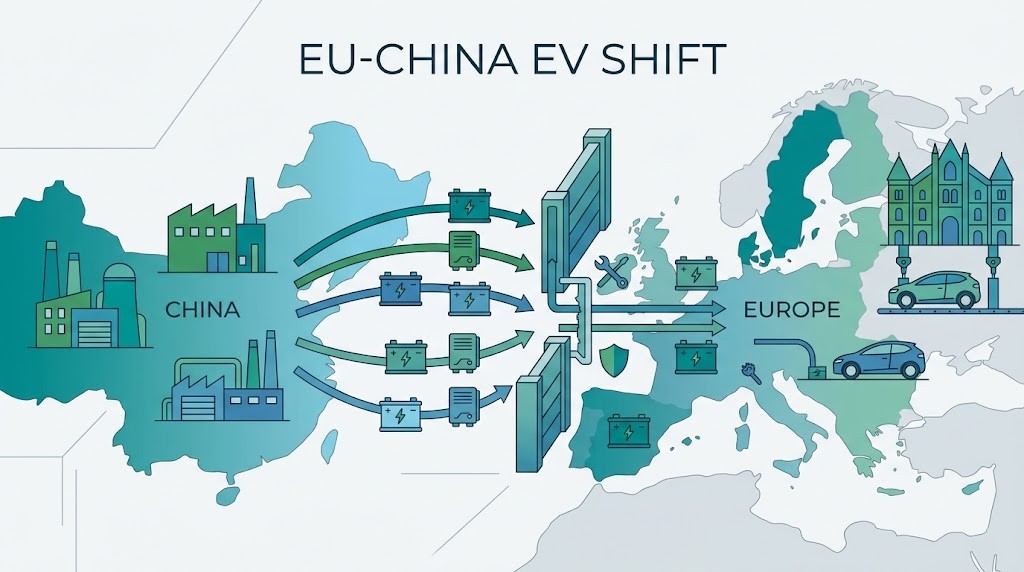
本ニュースは、「EUが中国製EV(電気自動車)に対する規制を強めているにもかかわらず、リチウムイオン電池やインバーターといった主要部品の対EU輸出が大幅に増加している」という一見矛盾する現象とその背景を報じたものです。
EUが高額な相殺関税を課したことで、中国自動車・電池メーカーは欧州内(特にハンガリーやオーストリアなどの中東欧)での現地生産・現地組み立てへ急速に舵を切りました。その結果、完成車ではなく製造に必要な中間財(バッテリーセルや基幹部品)の対EU輸出が急増するという結果をもたらしています。また、再生可能エネルギー分野でも民間の強い需要と中国製品のコスト優位性が輸出を強力に後押ししています。
以下に、ニュースの要点と関連する背景情報を整理しました。
ニュースの要点整理
1. 主な数値(2026年1〜9月/中国の対EU輸出データ)
- リチウムイオン電池
- 輸出額: 312億ドル(約4兆8800億円) / 前年同期比 46%増
- 特徴: 中国のリチウム電池輸出全体の約4割を占める。
- 急増した主要国: オーストリア(3.4倍)、ブルガリア(2.8倍)、ハンガリー(2.6倍)、ポーランド(2.3倍)。
- インバーター(電力変換装置)
- 輸出額: 17億ドル(約2660億円) / 前年同期比 34.5%増
- 急増した主要国: アイルランド、ポルトガル、ポーランドなど(倍増)。
- 市場占有率: 欧州のインバーター市場で中国企業のシェアは80%超。
2. 急増の要因と背景
- 完成車関税の回避に向けた「欧州現地生産」の本格化
- EUによる中国製EVへの追加関税(相殺関税)を避けるため、中国自動車メーカーや車載電池メーカーが中東欧での工場建設・生産拡大を急ピッチで進めています。
- これに伴い、組み立て用の電池セルやモジュールなどの中間財・基幹部品が中国から欧州の現地工場へ大量に送られる構造ができています。
- 欧州市場における再生可能エネルギー・蓄電需要
- 現地でのEV生産需要に加え、欧州における蓄電システム(ESS)や太陽光発電市場の底堅い需要が中間財の消費を支えています。
- EU規制の限界と民間需要の強さ
- EUは公的補助・公的資金事業から中国製品を排斥する規制を進めていますが、民間(商業用・産業用・住宅用屋根置き等)市場は対象外です。
- 技術力と価格競争力で圧倒的優位に立つ中国製品が民間市場で選ばれ続けています。
3. 主な中国企業の動き(欧州進出・現地生産の例)
- 小鵬汽車(Xpeng): オーストリアの受託生産会社と提携。
- 比亜迪(BYD): ハンガリー工場の稼働開始(2026年第4四半期を予定)。
- 長安汽車(Changan Auto): 今後4年間でEU域内の生産能力を拡大予定。
- CATL(寧徳時代)など: ハンガリーなどで超大型の電池工場の稼働・建設を進めており、地域サプライチェーンを形成中。
【関連情報・補足解説】なぜ「規制強化」でも輸出が増えるのか?
1. 完成車(CBU)から「部品・中間財(CKD/SKD)」への輸出構造の変化
EUは中国製完成車EVに対して相殺関税を課しましたが、車載電池単体や製造用部品に対する関税体系は異なります。 そのため、中国メーカーは「完成車を輸出すれば高関税がかかるなら、欧州で組み立てる」戦略に一斉に舵を切りました。その結果、完成車の輸出抑制分を上回るペースで電池セルやインバーターなどのコア部品輸出が急伸するという「逆転現象」が生じています。
2. ハンガリーや中東欧が「中国企業の欧州拠点」となる理由
- 親中的な政策と優遇措置: ハンガリーなどはEU加盟国でありながら中国企業からの投資を積極的に誘致しています。
- コスト優位性とサプライチェーンの結集: 西欧諸国に比べて労働コストや工場建設コストが抑えられるため、車載電池大手のCATLやEVEエナジー、EV大手のBYDなどが相次いで現地工場を構えています。
3. インバーター市場における「脱中国化」の難しさ
インバーターは太陽光発電や蓄電池で「直流を交流に変換する」不可欠な装置です。 EUはサイバーセキュリティリスクや経済安全保障を理由に公的調達から排除する動きを強めていますが、欧州勢の生産能力不足とコスト差により、民間市場では中国製品に頼らざるを得ないのが現状です。
出典:https://www.recordchina.co.jp/b995964-s25-c20-d0193.html
Chinese Battery Exports to the EU Surge 46% Despite Stricter EU Regulations, Inverters Also Soar: Background and Structural Factors
This news highlights a seemingly paradoxical phenomenon: despite the European Union (EU) tightening regulations on Chinese electric vehicles (EVs), exports of key components such as lithium-ion batteries and inverters to the EU have increased significantly, along with the underlying factors driving this trend.
In response to high countervailing duties imposed by the EU, Chinese automotive and battery manufacturers have swiftly shifted toward local production and assembly within Europe, particularly in Central and Eastern European countries like Hungary and Austria. As a result, exports of intermediate goods required for manufacturing—such as battery cells and core components—rather than finished vehicles, have surged. Furthermore, strong private-sector demand and the cost competitiveness of Chinese products in the renewable energy sector are powerfully driving export growth.
Below is a summary of the key points of the news and relevant background information.
Key Points of the News
1. Key Figures (Jan–Sep 2026 / China’s Export Data to the EU)
- Lithium-ion Batteries
- Export Value: $31.2 billion (approx. 4.88 trillion yen) / Up 46% year-on-year
- Key Feature: Accounts for nearly 40% of China’s total lithium battery exports.
- Countries with Notable Surges: Austria (up 3.4x), Bulgaria (up 2.8x), Hungary (up 2.6x), Poland (up 2.3x).
- Inverters (Power Converters)
- Export Value: $1.7 billion (approx. 266 billion yen) / Up 34.5% year-on-year
- Countries with Notable Surges: Ireland, Portugal, Poland, among others (more than doubled).
- Market Share: Chinese companies hold over 80% of the European inverter market.
2. Drivers and Background Behind the Surge
- Acceleration of “Local European Production” to Avoid Tariffs on Finished EVs
- To circumvent additional EU countervailing duties on Chinese-made EVs, Chinese automakers and battery manufacturers are accelerating factory construction and production expansion across Central and Eastern Europe.
- Consequently, a structural dynamic has emerged where large volumes of intermediate goods and core components—such as assembly-use battery cells and modules—are shipped from China to local European plants.
- Renewable Energy and Energy Storage Demand in the European Market
- In addition to local EV production needs, robust demand in Europe’s energy storage systems (ESS) and solar power markets supports the consumption of intermediate goods.
- Limits of EU Regulations vs. Strong Private Demand
- While the EU moves forward with regulations excluding Chinese products from publicly funded projects, the private sector (commercial, industrial, residential rooftop installations, etc.) remains exempt.
- Chinese products continue to be favored in private markets due to their overwhelming technological capabilities and price competitiveness.
3. Moves by Major Chinese Companies (Examples of European Expansion and Local Production)
- XPeng Motors: Partnered with a contract manufacturer in Austria.
- BYD: Scheduled to commence operations at its Hungary plant in Q4 2026.
- Changan Auto: Plans to expand production capacity within the EU over the next four years.
- CATL & Others: Constructing and operating mega-scale battery plants in Hungary and elsewhere, establishing a regional supply chain.
[Related Information & Supplementary Analysis] Why Are Exports Increasing Despite “Tighter Regulations”?
1. Structural Shift in Exports: From Finished Vehicles (CBU) to “Components & Intermediate Goods (CKD/SKD)”
The EU imposed countervailing duties on finished Chinese EVs, but the tariff structures for standalone EV batteries and manufacturing components differ. As a result, Chinese manufacturers adopted a collective strategy: “If exporting finished vehicles incurs high tariffs, we will assemble them in Europe.” Consequently, a “reversal effect” has occurred, where exports of core components like battery cells and inverters are expanding at a pace that outweighs the reduction in finished EV exports.
2. Why Hungary and Central/Eastern Europe Are Becoming “European Hubs for Chinese Firms”
- Pro-China Policies and Incentives: Countries like Hungary are actively attracting investment from Chinese companies while maintaining EU membership.
- Cost Advantages and Supply Chain Agglomeration: Lower labor and plant construction costs relative to Western Europe have prompted major battery manufacturers like CATL and EVE Energy, alongside EV giants like BYD, to build facilities in the region.
3. Challenges in “Decoupling from China” in the Inverter Market
Inverters are indispensable devices that convert direct current (DC) to alternating current (AC) in solar power and battery storage systems. Although the EU is strengthening measures to exclude them from public procurement due to cybersecurity risks and economic security concerns, production capacity shortages and cost disparities among European manufacturers force the private market to remain dependent on Chinese products.

コメント