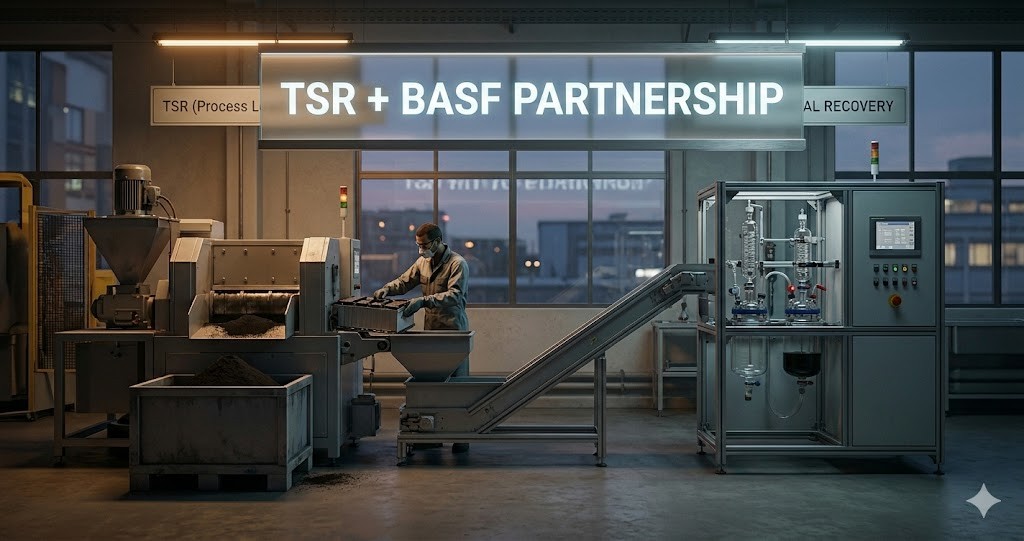
電気自動車(EV)シフトが進む欧州において、電池材料の確保は経済安全保障上の最優先事項となっています。今回、リサイクル大手のTSRグループと化学大手のBASFが手を組んだことは、原材料の外部依存を減らし、欧州域内で完結する「クローズドループ(循環型経済)」の構築に向けた大きな一歩となります。
1. 提携の概要と役割分担
両社は、使用済みEVバッテリーの回収から再生材料の製造まで、バリューチェーン全体で協力します。
- TSRグループ(上流工程担当):
- 解体と放電: 傘下のBLC(Rhenusとの合弁)を通じて、安全な解体と放電処理を実施。
- ブラックマスの製造: バッテリーを破砕・選別し、リチウム、コバルト、ニッケルを含む濃縮粉末「ブラックマス」を製造。
- ネットワーク: 欧州190拠点以上のネットワークを活用した物流と原料調達。
- BASF(下流工程担当):
- 高度なリサイクル: シュヴァルツハイデ工場(ドイツ)にて、ブラックマスから金属を化学的に回収。
- 材料再製造: 回収した金属を、再び正極活物質(CAM)の原料として利用。
2. 補足情報:欧州の規制背景と市場動向
この提携の背景には、欧州連合(EU)による厳しい規制と戦略があります。
- 欧州電池規則 (EU Battery Regulation): 2023年に施行されたこの規則により、新しいバッテリーには一定割合の「リサイクル材料」の使用が義務付けられます(例:2031年までにコバルト16%、リチウム6%、ニッケル6%など)。
- 重要原材料法 (CRMA): 域外への依存を減らすため、リサイクルによる自給率の向上を掲げています。
- 競合他社の動き: 欧州ではテラノーヴァ(Terra Nova)などの新興勢力に加え、自動車メーカー自身もリサイクル事業への投資を加速させています。
3. 戦略的な意義
- 地政学的リスクの低減: 現在、リチウムやコバルトの精錬は中国が大きなシェアを握っています。欧州内でリサイクルを完結させることは、供給網の安定に直結します。
- 環境負荷の低減: 鉱山からの新規採掘に比べ、リサイクルによる金属回収は二酸化炭素(CO2)排出量を大幅に削減可能です。
- 産業競争力: 効率的な物流(TSR)と高度な化学プロセス(BASF)を組み合わせることで、コスト競争力のある再生原料の供給を目指します。
4. 企業概要(2025年実績含む)
- TSR Group: レモンディス傘下。年間870万トンの金属をリサイクル。
- BASF: 2025年の売上高は約600億ユーロ。正極活物質のグローバルリーダーであり、循環型ソリューションへの移行を加速中。
出典:https://www.basf.com/global/en/media/news-releases/2026/04/p-26-056
Strategic Partnership: TSR Group and BASF to Strengthen EV Battery Recycling in Europe
As the shift toward electric vehicles (EVs) accelerates in Europe, securing battery materials has become a top priority for economic security. The collaboration between TSR Group, a leading metal recycler, and BASF, a chemical giant, marks a significant step toward establishing a “closed-loop” circular economy within Europe.
1. Overview of Cooperation and Roles
The two companies will collaborate across the entire value chain, from the collection of end-of-life (EOL) batteries to the production of recycled materials.
- TSR Group (Upstream Operations):
- Dismantling and Discharging: Handling the safe dismantling and discharging of vehicle batteries through its subsidiary BLC.
- Black Mass Production: Processing EOL batteries into “black mass,” a powder concentrated with lithium, cobalt, and nickel.
- Logistics: Leveraging a network of over 190 sites across Europe for material collection and flow management.
- BASF (Downstream Operations):
- Advanced Recycling: Operating a recycling facility at its Schwarzheide site in Germany to extract metals from black mass.
- Material Cathode Production: Utilizing recovered metals to produce new Cathode Active Materials (CAM).
2. Context: European Regulations and Market Trends
This partnership is driven by strict EU regulations and strategic goals:
- EU Battery Regulation: Mandates the use of a specific percentage of recycled content in new batteries (e.g., 16% cobalt, 6% lithium, and 6% nickel by 2031).
- Critical Raw Materials Act (CRMA): Aims to increase self-sufficiency by boosting domestic recycling rates to reduce external dependencies.
- Competitive Landscape: Besides established chemical firms, startups and major automakers are also intensifying investments in recycling infrastructure within the EU.
3. Strategic Significance
- Reducing Geopolitical Risk: Currently, a large portion of metal refining is concentrated in China. Completing the recycling loop within Europe directly enhances supply chain stability.
- Environmental Impact: Recovering metals through recycling significantly reduces CO2 emissions compared to primary mining.
- Industrial Competitiveness: By combining TSR’s logistics with BASF’s chemical expertise, the partnership aims to provide cost-competitive recycled raw materials.
4. Company Profiles
- TSR Group: A member of the REMONDIS Group, recycling 8.7 million tons of metal annually.
- BASF: Achieved sales of approximately 60 billion EUR in 2025. A global leader in battery materials, driving the transition to a sustainable chemical industry.

コメント