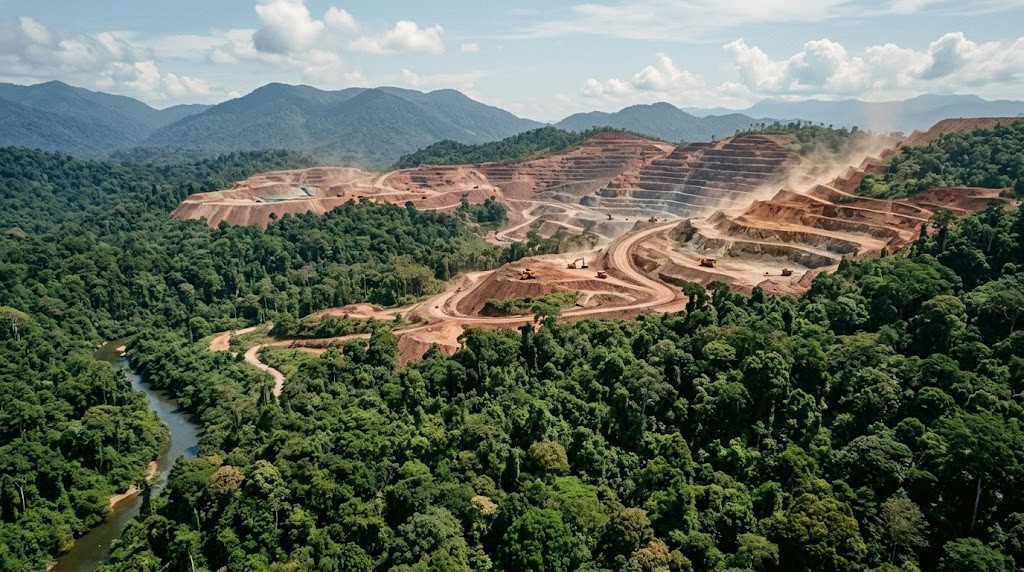
近年の脱炭素社会への移行において、温室効果ガスを排出しない電気自動車(EV)の需要が急増しています。しかし、その中核部品であるリチウムイオンバッテリーの原材料採掘、特に「ニッケル」のサプライチェーンをめぐっては、環境保護や先住民族の権利に関する深刻な課題が浮き彫りになっています。欧米の大手自動車メーカーが調達するバッテリーの裏側で、現地の原生林破壊や生態系の喪失が引き起こされている実態について以下にまとめます。
1. 問題の核心:EVバッテリーと森林破壊のつながり
- スラウェシ島での大規模開発: 世界最大のニッケル鉱床を有するインドネシアのスラウェシ島において、チャハヤ鉱山およびヘンジャヤ鉱山の開発が、原生林の広範囲な森林破壊を引き起こしていることが衛星分析などから判明しました。
- 先住民族への影響: ニッケルが豊富な土地には、先住民族のトラキ族が居住しており、長年守ってきた森や生活基盤が脅かされています。長老のワディムラ氏は「森を破壊することは、私たち自身の命を破壊することだ」と訴えています。
- サプライチェーンの経路:
- 鉱山で採掘された鉱石は、モロワリ工業団地の製錬所で精製され、混合水酸化物沈殿物(MHP)に加工されます。
- これらは中国の加工工場(浙江華友コバルトなど)を経由し、世界最大の電池メーカーであるCATLなどに供給されています。
- さらに、中国からポーランドなどを経由して、フォルクスワーゲンや韓国のLGグループなどの主要メーカーへ製品が渡っていることが貿易データや企業開示から明らかになっています。
2. 環境への甚大な負荷と背景
- CO2排出量の急増: 昨年発表された研究によると、採掘権益地での森林伐採により、最悪の鉱山からのニッケルがもたらす二酸化炭素排出量は、これまで報告されていた数値の最大500倍に達する可能性があると指摘されています。
- 規制の形骸化: チャハヤ鉱山などが位置する「生産林」は本来工業活動が制限されるべきエリアですが、ニッケルの需要急増に伴い、歴代のインドネシア政府が例外措置を設けるなど安全対策を弱めてきた背景があります。
- 違法伐採と行政処分: カハヤ鉱山を運営するSulawesi Cahaya Mineral(SCM)社は、許可された区域の境界を越えて数百ヘクタールの森林を違法に伐採したとして、行政処分を受けています。同社は、華友やCATLなどが株主に含まれるグループ傘下の企業です。
3. 自動車メーカーおよび関連企業の対応
本件で名前が挙がっている主な自動車メーカーやサプライヤー(フォルクスワーゲン、フォード、テスラ、メルセデス・ベンツ、ボルボ、ゼネラルモーターズ、ステランティス、ヒュンダイ、ルノーなど)の多くは、環境や人権リスクの深刻さを認識していると表明しています。
- サプライチェーンにおけるリスクを真摯に受け止め、デューデリジェンスや現地監査の実施を進めているとする企業がある一方で、具体的なサプライヤー関係の詳細については契約上の義務を理由に開示を控える動きも見られます。
- CATL、華友、SCM、テスラなどの主要プレイヤーからは、一連の指摘に対してコメントが得られていない状況です。
4. 解決に向けた提言と今後の展望
- 需要の抑制とリサイクルの重要性: 専門家や環境団体は、大型SUVの普及などによる過剰な鉱物需要を見直す必要性を警告しています。
- 公共交通機関の利用促進、小型車の選択、そしてバッテリーのリサイクル体制を改善することで、新しく採掘するニッケルなどの需要を大幅に削減できる可能性があると指摘されています。
The Link Between EV Batteries and Deforestation: Supply Chain Challenges for Major Automakers
In the recent transition toward a decarbonized society, the demand for electric vehicles (EVs), which emit no greenhouse gases, has been surging. However, serious challenges regarding environmental protection and indigenous rights have come to light surrounding the raw material supply chain for lithium-ion batteries—their core component—particularly concerning nickel. Below is a summary of how the batteries sourced by major Western automakers are linked to the destruction of local primary forests and the loss of ecosystems.
1. Core of the Issue: The Link Between EV Batteries and Deforestation
- Large-Scale Development on Sulawesi Island: Satellite analysis and other data reveal that the development of the Cahaya and Hengjaya mines on Sulawesi Island, Indonesia—home to the world’s largest nickel deposits—has caused widespread deforestation of primary forests.
- Impact on Indigenous Peoples: The nickel-rich land is inhabited by the indigenous Toraki people, whose long-protected forests and livelihoods are now threatened. Tribal elder Wadimura stated, “Destroying the forest means destroying our own lives.”
- Supply Chain Route:
- Ore extracted from the mines is refined at smelters in the Morowali Industrial Park and processed into mixed hydroxide precipitate (MHP).
- These materials pass through processing plants in China (such as Zhejiang Huayou Cobalt) and are supplied to companies like CATL, the world’s largest battery manufacturer.
- Trade data and corporate disclosures reveal that products are then transported from China via countries like Poland to major manufacturers, including Volkswagen and South Korea’s LG Group.
2. Severe Environmental Footprint and Background
- Surge in CO2 Emissions: A study published last year highlighted that deforestation in mining concessions could make carbon dioxide emissions from nickel at the worst-performing mines up to 500 times higher than previously reported figures.
- Weakening Regulations: Although the Cahaya mine and others are located in designated “production forests” where industrial activities should normally be restricted, successive Indonesian governments have weakened safeguards and introduced exemptions to accommodate the soaring demand for nickel.
- Illegal Logging and Administrative Sanctions: Sulawesi Cahaya Mineral (SCM), which operates the Cahaya mine, faced administrative sanctions for illegally clearing hundreds of hectares of forest beyond its permitted boundaries. SCM is a subsidiary under a corporate group whose shareholders include Huayou and CATL.
3. Responses from Automakers and Related Companies Many of the major automakers and suppliers named in this case (including Volkswagen, Ford, Tesla, Mercedes-Benz, Volvo, General Motors, Stellantis, Hyundai, and Renault) have stated that they recognize the severity of environmental and human rights risks.
- While some companies state that they take supply chain risks seriously and are proceeding with due diligence and field audits, others refrain from disclosing specific details about supplier relationships, citing contractual obligations.
- Major players such as CATL, Huayou, SCM, and Tesla have not responded to requests for comment regarding these allegations.
4. Recommendations for Solutions and Future Outlook
- Demand Reduction and the Importance of Recycling: Experts and environmental organizations warn of the need to curb excessive demand for minerals driven by trends such as the boom in large SUVs.
- Potential for Demand Reduction: It is pointed out that the demand for newly mined nickel could be significantly reduced by promoting public transportation, encouraging the choice of smaller vehicles, and improving battery recycling systems.

コメント