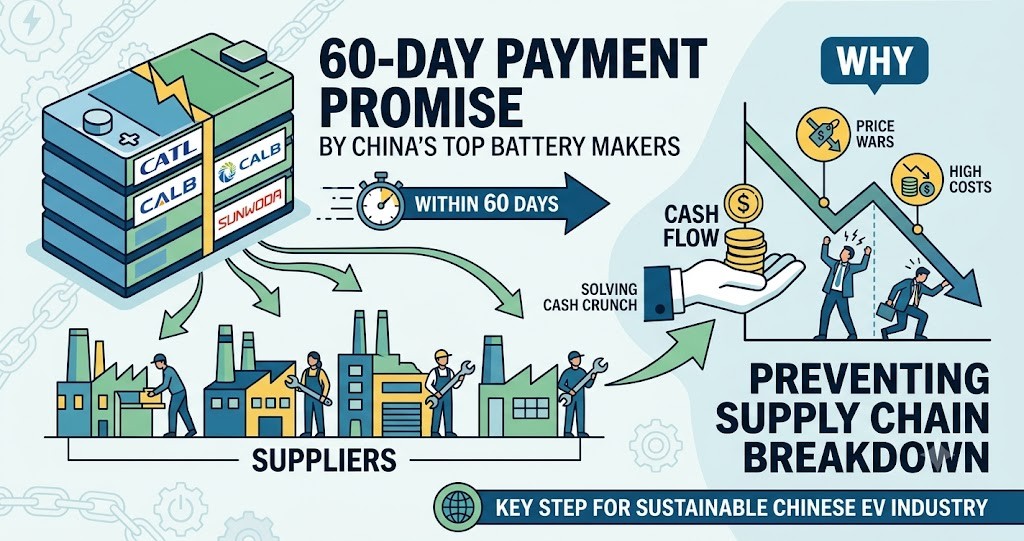
世界の電気自動車(EV)市場をリードする中国ですが、激しい価格競争や需要の伸び悩みにより、自動車業界全体が深刻な利益率の圧迫に直面しています。この歪みは特に、立場の弱いサプライチェーンの下請け業者(中小サプライヤー)への「支払いの遅延」という形で現れていました。
こうした中、2026年6月29日、中国の車載電池大手各社がサプライヤーへの支払いを迅速化(60日以内)することを公式に約束しました。本記事では、この決定の背景にあるマクロ経済や業界の現状といった関連情報を補足しながら、今回の取り組みが持つ意味をまとめます。
- 1. 支払いを迅速化する「60日ルール」への約束
- 2. なぜ今、支払い遅延が問題になっているのか?
- 3. 【関連情報】中国EV市場の「価格破壊」とサプライチェーンへのシワ寄せ
- 4. アライアンスの提言と今後の展望
- 結論:産業チェーンの崩壊を防ぐための防衛策
- 11 Major Chinese Battery Manufacturers Including CATL Pledge “Payment Within 60 Days”: Relieving Suppliers Bearing the Brunt of the EV Price War
- 1. Pledging to Follow the “60-Day Rule” for Faster Payments
- 2. Why Have Payment Delays Become a Problem Now?
- 3. [Related Information] “Price Destruction” in the Chinese EV Market and Its Strain on the Supply Chain
- 4. Recommendations from the Alliance and Future Outlook
- Conclusion: Defensive Measures to Prevent the Collapse of the Industrial Chain
1. 支払いを迅速化する「60日ルール」への約束
中国自動車用電池イノベーションアライアンスが主導した今回のイニシアチブには、中国を代表する主要な車載電池・蓄電池メーカー11社が応じました。
- 主要な参加企業: 世界最大手のCATL(寧徳時代)をはじめ、CALB(中創新航)、Sunwoda(欣旺達電子)といった業界トップクラスの企業が名を連ねています。
- 約束の内容: 必要な商品や部品を供給する業者に対し、原則として「60日以内」に代金を支払うことを約束しました。
- 背景にある政府の動き: 2025年、中国当局はすでに大手企業に対し、ほとんどの支払いを60日以内に行うことを義務付ける規則を発布していました。今回の業界アライアンスによる声明は、この政府規則の実効性を担保し、業界全体で遵守していく姿勢を明確にしたものです。
2. なぜ今、支払い遅延が問題になっているのか?
このイニシアチブの背景には、バッテリーメーカーとサプライヤーの双方が抱える深刻な財政難があります。
- 長期化する支払周期の弊害: 親会社や大手メーカーからの支払いサイクルが過度に長くなると、サプライヤーのキャッシュフロー(資金繰り)が即座に悪化します。これにより、研究開発や技術革新への投資能力が奪われ、結果として産業チェーン全体の長期的な発展が阻害されるという危機感が高まっていました。
- 投入コストの増加: バッテリー自体は安価になったものの、自動車の生産コストにおいては今でも大きな割合を占めています。さらに、イラン戦争に関連した地政学的リスクに伴うインフレなどが原因で、原材料やエネルギーの投入コストが増加。特に中小サプライヤーは、コスト高と支払い遅延のダブルパンチで深刻な資金不足に陥っていました。
3. 【関連情報】中国EV市場の「価格破壊」とサプライチェーンへのシワ寄せ
今回のニュースの背景を深く理解するために、中国EV市場の構造的な課題についての関連情報を補足します。
- 泥沼化する価格競争(価格戦): 中国国内のEV市場では、テスラやBYDを筆頭に激しい値下げ競争が続いています。これにより自動車メーカーは車載電池メーカーに激しい値下げ圧力をかけ、電池メーカーはさらにその下の部材サプライヤー(正極材、負極材、セパレーター、鉄鋼など)へコスト削減を要求するという連鎖が起きています。
- 2025年6月の自動車メーカーの誓約: 実は、同様のトラブルは1年前にも起きていました。2025年6月、鉄鋼メーカーなどのサプライヤー側が「自動車メーカーからの支払いが遅すぎる」と公に不満を表明したことを受け、中国の大手自動車メーカー各社が同様の支払い迅速化を約束しています。今回の電池メーカーによる約束は、まさにその流れが電池セクターにも波及した形です。
4. アライアンスの提言と今後の展望
バッテリーエコシステム全体の大手企業を代表する同アライアンスは、単に60日ルールを課すだけでなく、企業の規模に応じた柔軟な対応も促しています。
- 規模に応じた交渉: 小規模なサプライヤーには厳格に60日以内に支払いを行う一方で、比較的規模の大きいパートナー企業に対しては、お互いに無理のない妥当な条件でビジネスの交渉を行うよう呼びかけています。
結論:産業チェーンの崩壊を防ぐための防衛策
中国のEV産業が今後も国際的な競争力を維持するためには、目先の利益だけでなく、末端のサプライヤーを含めた「サプライチェーン全体の持続可能性」が不可欠です。
今回のCATLなどの大手による約束は、過酷な価格競争の裏で悲鳴を上げていた中小サプライヤーを救済し、中国のEV・電池産業が共倒れになるのを防ぐための極めて重要な防衛策と言えます。
出典:https://batteryindustry.net/chinese-ev-battery-makers-pledge-to-pay-suppliers-more-quickly/
11 Major Chinese Battery Manufacturers Including CATL Pledge “Payment Within 60 Days”: Relieving Suppliers Bearing the Brunt of the EV Price War
While China leads the global electric vehicle (EV) market, the entire automotive industry is facing a severe squeeze on profit margins due to intense price competition and slowing demand growth. This distortion has manifested particularly as “delayed payments” to vulnerable subcontractors (small and medium-sized suppliers) within the supply chain.
Under these circumstances, on June 29, 2026, major Chinese automotive battery manufacturers officially pledged to expedite payments to suppliers within 60 days. This article supplements the decision with relevant information such as the macroeconomic background and the current state of the industry to summarize the significance of this initiative.
1. Pledging to Follow the “60-Day Rule” for Faster Payments
Eleven leading automotive battery and energy storage manufacturers representing China responded to this initiative, which was spearheaded by the China Automotive Battery Innovation Alliance.
- Major Participating Companies: The lineup includes top-tier companies in the industry, starting with the world’s largest manufacturer CATL, alongside CALB and Sunwoda.
- Details of the Pledge: In principle, these companies have promised to pay vendors supplying necessary goods and components within 60 days.
- Government Actions in the Background: In 2025, Chinese authorities had already issued a regulation requiring large companies to make most payments within 60 days. This statement by the industry alliance ensures the effectiveness of this government rule and clarifies the stance of complying with it across the entire industry.
2. Why Have Payment Delays Become a Problem Now?
Behind this initiative lies the serious financial distress experienced by both battery manufacturers and suppliers.
- Adverse Effects of Prolonged Payment Cycles: When payment cycles from parent companies or major manufacturers become excessively long, the cash flow of suppliers deteriorates immediately. This raises a growing sense of crisis that suppliers are being stripped of their capacity to invest in research and development or technological innovation, ultimately hindering the long-term development of businesses across the entire industrial chain.
- Increase in Input Costs: Although batteries themselves have become cheaper, they still account for a significant portion of vehicle production costs. Furthermore, input costs for raw materials and energy have increased due to inflation linked to geopolitical risks, such as the war involving Iran. Small and medium-sized suppliers, in particular, were facing severe funding shortages due to the double punch of high costs and payment delays.
3. [Related Information] “Price Destruction” in the Chinese EV Market and Its Strain on the Supply Chain
To deeply understand the background of this news, here is additional context regarding the structural challenges of the Chinese EV market:
- The Quagmire of Price Competition (Price War): In the domestic Chinese EV market, fierce price-cutting competition continues, led by Tesla and BYD. As a result, automakers place heavy downward pressure on automotive battery manufacturers, creating a chain reaction where battery manufacturers demand cost reductions from the component suppliers below them (such as cathode and anode materials, separators, and steel).
- Automaker Pledges in June 2025: In fact, similar trouble occurred a year ago. In June 2025, after suppliers such as steelmakers publicly expressed dissatisfaction about slow payments from automakers, major Chinese car manufacturers made a similar promise to expedite payments. This current pledge by battery manufacturers shows that the exact same trend has now rippled into the battery sector.
4. Recommendations from the Alliance and Future Outlook
Representing major companies across the entire battery ecosystem, the alliance is not merely imposing the 60-day rule but is also encouraging flexible responses based on corporate scale.
- Negotiation Based on Scale: While strictly enforcing payments within 60 days for small-scale suppliers, the alliance urges companies to negotiate business dealings with relatively larger partner companies under reasonable terms that are mutually manageable.
Conclusion: Defensive Measures to Prevent the Collapse of the Industrial Chain
For China’s EV industry to maintain its international competitiveness moving forward, the sustainability of the entire supply chain—including end-tier suppliers—is indispensable, rather than just short-term profits.
This pledge by giants like CATL serves as a crucial defensive measure to rescue small and medium-sized suppliers who have been crying out behind the scenes of a brutal price war, preventing the Chinese EV and battery industries from collapsing together.
コメント