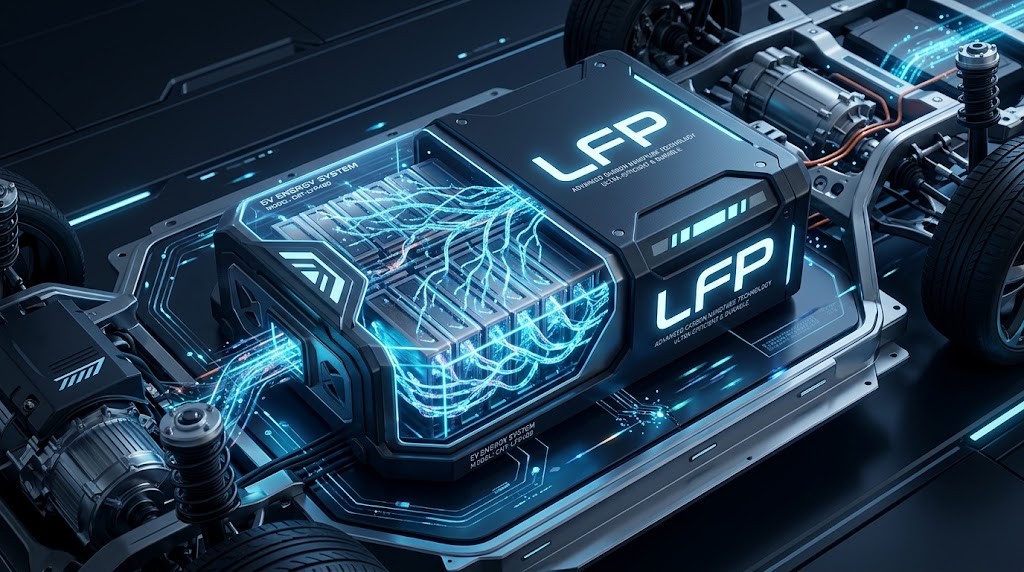
韓国の電池大手SK Onが、リン酸鉄リチウム(LFP)電池の正極製造コストを削減する新たな導電材分散技術(CNT粉末適用工程)を開発し、同社の「第2回未来技術院学術大会」にて大賞を受賞しました。中国勢が優勢を誇るLFP電池市場において、韓国メーカー各社は価格競争力の強化とサプライチェーンの効率化を最重要課題に掲げています。本件は、導電材の主流であるペースト形態から粉末形態への転換を図ることで、材料費および物流コストの双方を低減させる画期的な技術的アプローチとして注目されます。以下に、本ニュースの要約と技術的・市場的背景を交えた詳細な解説をまとめました。
ニュースの要約と研究成果の概要
- CNT粉末工程の開発(大賞受賞):
- 従来使われていた高価なカーボンナノチューブ(CNT)ペーストを粉末形態に置き換え、正極素材へ均一に分散させる技術を確保。
- 電池性能を維持しつつ、ペースト溶媒コストや保管・輸送コストの削減を実現。今後、実際の量産ラインへの適用を検討予定。
- 次世代電池・解析技術の研究(最優秀賞・優秀賞など):
- 最優秀賞: 高エネルギー密度化に向けた「大面積パウチ型リチウムメタル電池」の電極設計技術。
- 優秀賞: 充放電の繰り返しや保管条件による容量低下および内部抵抗の増加を予測する性能劣化モデル。
- 基調講演: 延世大学校のイ・ヨンミン教授による「デジタルツイン技術(仮想空間での電池設計・状態分析)」の動向解説。
- イベント概要:
- 2026年10月14日~15日に韓国・大田の未来技術院で開催。
- 電池工程、セル、システム、素材、次世代技術、プラットフォームの6分野から計300本余りの課題が出品(前年比15%増)。
補足・関連情報と考察
- CNT(カーボンナノチューブ)導電材の技術的背景:
- LFP(リン酸鉄リチウム)正極材は、NCM(ニッケル・コバルト・マンガン)系などの三元系材料と比較して電子電導性が極めて低いという物理的特性を持ちます。そのため、電極内の電子伝導パスを確保する導電材(CNTなど)の均一分散が不可欠です。
- 一般的にSWCNT(単層CNT)やMWCNT(多層CNT)は凝集しやすいため、NMP(N-メチル-2-ピロリドン)などの溶媒にあらかじめ分散させたペースト状態で電極スラリー調製に投入されるのが主流です。しかし、ペーストは液相での保管管理や輸送重量の増大、溶媒コストが課題となっていました。
- 粉末分散化によるコストインパクト:
- 粉末形態のまま正極材や他材料と乾式・湿式でダイレクトに均一分散できれば、液状ペーストの製造工程・管理工程をスキップでき、原材料調達およびグローバル拠点(米国、ハンガリー、中国など)への物流コストを大幅に抑制可能です。量産における分散性の再現性が実証されれば、LFP電池のコスト競争力を底上げする強力な技術要素となります。
- リチウムメタル電池とデジタルツイン:
- 最優秀賞となった大面積パウチ型リチウムメタル電池は、従来の黒鉛(グラファイト)負極をリチウム金属箔に置換することで体積エネルギー密度の大幅向上が期待される次世代技術です。
- また、基調講演で触れられたデジタルツイン技術は、実験の試行回数を削減し、開発期間の短縮や劣化予測精度の向上に寄与するため、今後の電池開発インフラとして重要性が高まっています。
出典:https://finance.biggo.jp/news/1c6e9667-08e1-4e08-948a-6cbced507bbe
SK On Develops CNT Powder Dispersion Technology to Reduce LFP Battery Manufacturing Costs — Wins Grand Prize at Internal Academic Conference
Major South Korean battery manufacturer SK On has developed a new conductive additive dispersion technology (applying a CNT powder process) that reduces the cathode manufacturing costs of lithium iron phosphate (LFP) batteries, winning the Grand Prize at the company’s 2nd Future Technology Institute Academic Conference. In the LFP battery market where Chinese companies dominate, strengthening price competitiveness and optimizing supply chains have become top priorities for South Korean manufacturers. This development attracts attention as a breakthrough technical approach to reducing both raw material and logistics costs by transitioning from conventional paste-based conductive additives to powder form. Below is a detailed summary combining the news overview and technical and market background.
Summary of News and Research Achievements
- Development of CNT Powder Process (Grand Prize Winner):
- Secured technology to uniformly disperse carbon nanotube (CNT) powder into cathode active materials, replacing conventional expensive CNT pastes.
- Achieves cost reductions in paste solvents, storage, and transportation while maintaining battery performance. Applications to actual mass production lines are under evaluation.
- Research on Next-Generation Batteries and Analytical Technologies (Top Excellence & Excellence Awards):
- Top Excellence Award: Electrode design technology for large-area pouch-type lithium metal batteries aimed at higher energy density.
- Excellence Award: Degradation model predicting capacity loss and internal resistance increase based on charge-discharge cycling and storage conditions.
- Keynote Lecture: Presentation by Professor Young-min Lee of Yonsei University on trends in digital twin technology (virtual-space battery design and status analysis).
- Event Overview:
- Held on October 14-15, 2026, at the Future Technology Institute in Daejeon, South Korea.
- Over 300 research topics submitted across six categories: battery processes, cells, systems, materials, next-generation technologies, and platforms (a 15% increase year-over-year).
Supplementary Information and Insights
- Technical Background of CNT Conductive Additives:
- LFP (lithium iron phosphate) cathode materials inherently possess extremely low electronic conductivity compared to nickel-cobalt-manganese (NCM) ternary materials. Uniform dispersion of conductive additives like CNTs is essential to form effective electronic conduction paths within the electrode.
- Because single-walled CNTs (SWCNT) and multi-walled CNTs (MWCNT) easily agglomerate, they are typically pre-dispersed in solvents such as NMP (N-methyl-2-pyrrolidone) to form pastes before being added to electrode slurry preparation. However, liquid-phase pastes present challenges regarding storage management, increased transport weight, and solvent costs.
- Cost Impact of Powder Dispersion:
- Directly dispersing CNTs in powder form uniformly with cathode materials via dry or wet methods bypasses liquid paste manufacturing and handling steps. This significantly reduces raw material procurement and logistics costs to global production hubs (such as the US, Hungary, and China). Demonstrating reproducible dispersion in mass production would make this a key technology for boosting LFP battery cost competitiveness.
- Lithium Metal Batteries and Digital Twins:
- The award-winning large-area pouch-type lithium metal battery replaces conventional graphite anodes with lithium metal foil, promising a major boost in volumetric energy density as a next-generation technology.
- Digital twin technology, highlighted in the keynote speech, reduces physical trial-and-error, shortens development cycles, and improves degradation prediction accuracy, making it an increasingly vital element of future battery R&D infrastructure.


コメント