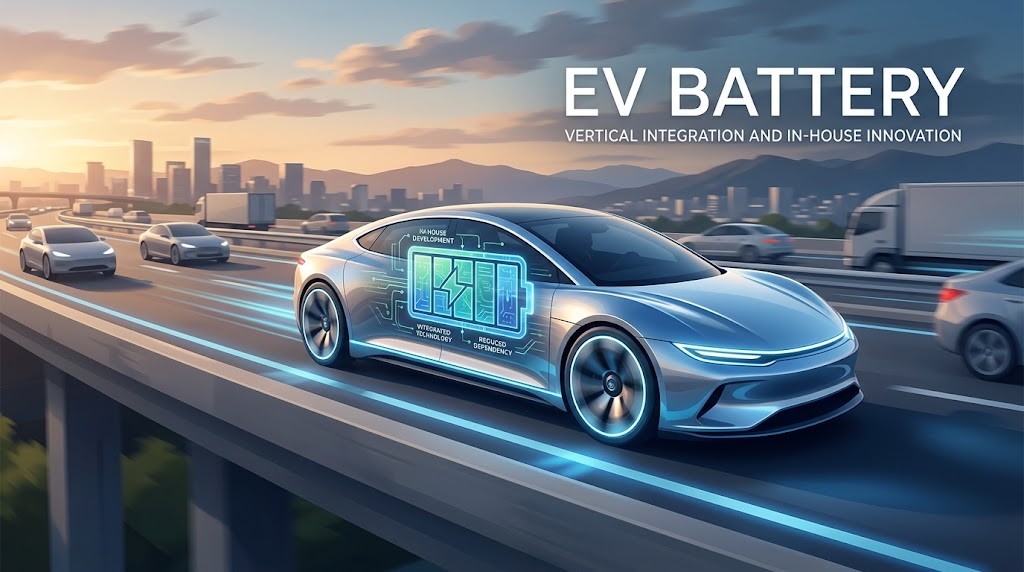
中国のNEV(新エネルギー車)市場において、車載電池をめぐる自動車メーカーと大手電池メーカーの力量関係に大きな変化が生じています。コストや主導権の確保、さらには調達リスクの分散を目的として、自動車メーカーが電池の自社開発や提携先の多角化を進める最新動向について、関連情報を加えてまとめました。
中国NEVメーカーが車載電池の自社開発・多角化を加速させる背景と現状
1. 概要と主な背景
- 依存度引き下げの狙い:車載電池はNEV車両コストの40%から60%を占める最大の部品です。自動車メーカー各社は、市場での価格競争力を高めると同時に、業界最大手であるCATL(寧徳時代)への過度な依存から脱却を図っています。
- 株式市場への影響:CATLの株価は9月中旬に急落(1日で6%超下落)し、5月の年初来高値から4ヶ月余りで30%以上下落する局面がありました。
2. 各NEVメーカーの具体的な動き
自動車メーカーは自社開発・投資・マルチサプライヤー化を同時並行で進めています。
- 理想汽車 (Li Auto)
- 子会社を通じてSunwoda (欣旺達動力) へ26億5000万元 (約622億7579万円) の増資計画を発表。
- 将来的には自社開発電池を全車種に搭載する方針を表明。
- 小米汽車 (Xiaomi EV)
- 「龍甲電池」の発表会を開催し、CALB (中創新航) および Sunwoda との戦略的提提携を発表。
- 上海蔚来汽車 (NIO)
- 上海市にて新たな電池R&D (研究開発) 拠点の建設を進展中。
- 小鵬汽車 (XPeng)
- CALB や EVE Energy (億緯リチウムエナジー) など、CATL以外の電池メーカーとの提携関係を強化。
3. メーカーが抱く「収益差」と「主導権」への懸念
自社開発やマルチサプライヤー化を急ぐ裏には、電池メーカー側との強い格差が存在します。
- 収益力の著しいギャップ
- CATL:2026年上半期の親会社帰属純利益は432億8400万元 (約1兆171億円、前年同期比42%増)。
- 主要自動車メーカー15社:同期間の純利益合計は210億4800万元に留まり、CATL1社の半分以下。
- 主導権と供給リスク
- SNE Researchのデータによると、2026年上半期のCATLの世界車載電池シェアは約40%に到達。
- 電池の供給優先順位や技術仕様、生産能力の配分を1社に握られることで、自動車メーカー側の生産計画全体が左右されるリスクが顕在化していました。
4. 関連情報・補足解説
【電池構造と技術のブラックボックス化回避】
電池は航続距離、急速充電、安全性、寿命などNEVの基本性能を左右する核心部材です。自動車メーカーにとって、電池技術をブラックボックス化させず自社で制御することは、車両設計の最適化やトータルコスト削減に不可欠となっています。
【今後の業界構造への見通し】
自動車メーカーの電池自社化は、既存電池メーカーの単純な衰退を意味するわけではありません。むしろ、圧倒的な1強状態から「新たなパワーバランス」へと移行し、リスク分散と健全な価格競争を通じた業界全体の利害再配分・共存共栄へ向かう機会になると見られています。
出典:https://topics.smt.docomo.ne.jp/article/recordchina/world/recordchina-RC_995220
Tectonic Shift in China NEV Market: Automakers Accelerate Departure from CATL Reliance
In the Chinese NEV (New Energy Vehicle) market, a major shift is occurring in the balance of power between automakers and major battery suppliers. Below is a detailed summary, supplemented with relevant context, on the latest trend of automakers advancing in-house battery development and diversifying partnerships to control costs, secure strategic initiative, and mitigate supply chain risks.
Background and Current Status of Chinese NEV Makers Accelerating In-House Battery Development and Diversification
1. Overview and Key Background
- Targeting Reduced Dependence: EV batteries represent the largest single component cost, accounting for 40% to 60% of total NEV manufacturing costs. Automakers are seeking to break away from excessive reliance on market leader CATL while boosting market price competitiveness.
- Impact on the Stock Market: CATL saw its stock price plunge sharply in mid-September (dropping over 6% in a single day), falling more than 30% from its year-to-date high recorded in May over a four-month period.
2. Specific Actions by NEV Manufacturers
Automakers are simultaneously pursuing in-house development, strategic investments, and multi-supplier strategies.
- Li Auto
- Announced a capital injection plan of 2.65 billion RMB (approx. 62.28 billion JPY) into Sunwoda EVB through a subsidiary.
- Expressed an intention to equip all future vehicle models with in-house developed batteries.
- Xiaomi EV
- Held a launch event for its Dragon Armor Battery and announced strategic partnerships with CALB and Sunwoda EVB.
- NIO
- Advancing construction of a new battery research and development facility in Shanghai.
- XPeng
- Strengthening partnerships with non-CATL battery suppliers such as CALB and EVE Energy.
3. Concerns Over Earnings Disparity and Control Right
Behind the urgent move toward in-house development and multi-sourcing lies a stark disparity between automakers and the leading battery manufacturer.
- Severe Profitability Gap
- CATL: Net profit attributable to the parent company in H1 2026 reached 43.284 billion RMB (approx. 1.0171 trillion JPY, up 42% year-on-year).
- Top 15 Automakers: Combined net profit for the same period stood at 21.048 billion RMB, less than half of CATL alone.
- Control Right and Supply Risks
- According to SNE Research data, CATL reached nearly 40% of the global EV battery market share in H1 2026.
- Having battery allocation priority, technical specifications, and production capacity distribution concentrated in a single supplier exposed automakers to the risk of having their overall production schedules dictated by the supplier.
4. Relevant Context and Supplementary Analysis
[Preventing Battery Technology Black-Boxing]
Batteries are core components determining fundamental NEV performance metrics, including driving range, fast charging capability, safety, and cycle life. For automakers, keeping battery technology transparent and under internal control is essential for optimizing vehicle integration and lowering total costs.
[Outlook on Future Industry Structure]
The shift toward in-house battery capability by automakers does not simply mean the decline of established battery manufacturers. Instead, the market is moving away from a dominant single-player structure toward a new balance of power, paving the way for risk mitigation, healthy price competition, and co-existence through rebalanced industry interests.

コメント